Agriculture
On 2 September, officials from Nakaseke District Local Government sat in front of Parliament's Public Accounts Committee (Local Government) and delivered a figure that stopped the room. Of the Shs25 billion disbursed to parish SACCOs in the district under the Parish Development Model, exactly Shs28.2 million had been recovered over the past year — and even that, the district's PDM focal person Robert Kaggwa conceded, had come in voluntarily.
Under the Parish Revolving Fund arrangement, Shs6.46 billion was supposed to flow back into Nakaseke's SACCO accounts during financial year 2025/26 so that the next cohort of households could borrow. What returned amounts to roughly four-tenths of one per cent of that target.
“Government is investing a lot of money; if Nakaseke alone has been given Shs25 billion and they have failed to recover even Shs100 million in the first phase of recovery, how are other districts performing on the parish revolving fund?” committee chairperson Betty Nambooze asked, according to a Parliament of Uganda account of the session.
Three days later, on 5 September, a different meeting convened at the district headquarters in Butalangu — this one between sub-county and parish leaders and the local security apparatus. The subject was cattle theft. John Ssenyonjo Anyakire, chairperson of Kasiiso Parish in Kito Sub-county, told the meeting that thieves had raided villages in his parish on three consecutive nights the previous week and driven off more than twenty cows. Residents, he said, later intercepted a vehicle they suspected of carrying the stolen animals and set it on fire.
Two meetings, one balance sheet
Read separately, these are routine local-government stories: a recovery hearing and a rustling complaint. Read together, they describe a structural flaw in Uganda's largest anti-poverty credit programme.
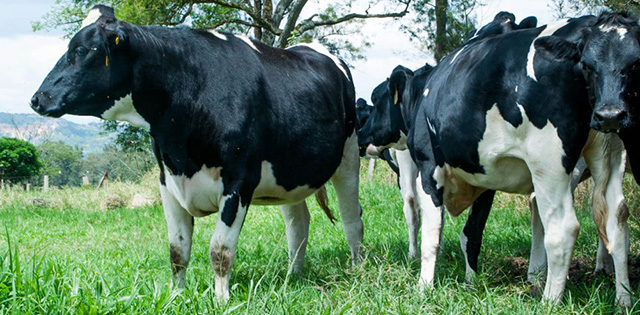
The PDM channels roughly Shs100 million a year to each parish SACCO, on-lent to member households in enterprise loans. In cattle-corridor and mixed-farming districts such as Nakaseke — which sits on the Luweero ranching belt — a very large share of that money is converted, almost immediately, into livestock. A cow is the most liquid, most culturally trusted store of value available to a rural household. It is also the only PDM asset that can be walked off a farm at three in the morning.
Nakaseke's leaders made that link explicit at the Butalangu meeting: the rise in theft, they warned, threatens the success of the programme precisely because so many beneficiaries put their loans into animals. What Parliament is chasing as a repayment failure may, in a measurable share of cases, be an asset-loss failure. The borrower has no cow, no income stream from the cow, and no realistic path to servicing the loan.
This is a collateral problem in the strict sense. Formal lenders manage it with registration, insurance and enforceable security. The PDM, by design, does none of these things. It lends without conventional collateral to households that do not hold titled land — that is the entire point of the model. But it has not paired that generosity with any mechanism to protect the asset the money buys.

The enforcement gap
Nakaseke's parish leaders were blunt about what happens after a theft. Ssenyonjo said farmers who report stolen animals to police receive little or no assistance, and that some of the thieves are believed to be armed. “Even when we report these cases to the police, we do not receive the assistance we expect,” he said. “Sometimes, officers do not even pick up our calls.”
District Police Commander SP Christopher Ssendijja pushed back, blaming livestock owners who negotiate privately with suspects after arrest — settlements that collapse prosecutions — and alleging that in some cases the thieves are the cattle owners' own children. Both explanations can be true at once, and both point to the same conclusion: there is no reliable way, at present, to establish who owns a given animal once it has left the kraal.
Uganda has legislated for exactly this. The National Livestock Identification and Traceability Act was passed to create a national register of animals, primarily to satisfy export-market demands for disease and provenance traceability. Its unrealised second use is domestic: a tagged, registered animal is far harder to sell at a roadside market. Roll-out has been slow, and in districts like Nakaseke the practical effect on the ground is close to zero.
State Minister for Kampala and Nakaseke Central MP Joseph Kabuye Kyofatogabye, who attended the Butalangu meeting, urged local leaders to work more closely with security agencies — the standard response, and one that leaves the underlying design gap untouched.
Not a Nakaseke problem
The recovery numbers elsewhere suggest Nakaseke is representative rather than exceptional. In Katakwi District, roughly Shs33.8 billion has been disbursed to 109 parish SACCOs; about Shs6 million has been recovered, from five individuals. In Kira Municipality, PAC heard in March that around Shs2 billion had gone out and Shs67.4 million had come back. The two-year grace period on the first PDM cohorts expired in March 2026, which means the country is only now discovering what its repayment culture actually looks like.
Nakaseke's officials offered a procedural explanation: beneficiaries were never properly guided on how to repay once the grace period ended. Recovery now runs through the Wendi mobile wallet, with the repayment credited to the SACCO account and confirmation messages sent to the borrower, the SACCO chairperson and the Ministry of Finance. Kaggwa said accounting officers at lower local governments have been instructed to enforce recovery, and that radio talk shows and community meetings are being used to explain the guidelines.
The same hearing surfaced an older warning. Under the Youth Livelihood Programme, Nakaseke had recovered Shs3 million against an outstanding balance of Shs923 million, according to the Auditor General's report for the year ended December 2025. The accounting officer's explanation was that most beneficiary groups had disintegrated, making enforcement “practically unfeasible.” Uganda has run this experiment before.
What it means for farmers and for the fiscus
For the household, the arithmetic is unforgiving. A PDM loan of Shs1 million buys a heifer. If the heifer is stolen and never recovered, the household carries a debt with no productive asset behind it, and — because the SACCO is a revolving fund — its neighbours lose their turn in the queue. Non-recovery is not a victimless default; it is a transfer away from the next cohort of borrowers in the same parish.
For the wider livestock economy, the timing is bad. Beef has been trading at roughly Shs18,000–20,000 a kilogramme in recent months as foot-and-mouth quarantines in Ntungamo, Kazo and Kamwenge, drought and disease have thinned the national herd. High prices raise the return on stealing an animal at exactly the moment when a stolen animal is hardest for its owner to replace.
And for the Treasury, the Nakaseke hearing lands awkwardly. Government is simultaneously arguing that agricultural credit must expand — through the Uganda Development Bank's recapitalisation, the AgriConnect Compact with the World Bank, and the Uganda Bankers' Association's call for a step change in patient capital — while its flagship retail credit vehicle is returning less than one per cent of what it lends. That contrast will be read, fairly or not, as evidence about Ugandan smallholders' creditworthiness.
The cheaper fix
There are two obvious interventions, and neither requires new money at scale. The first is to finish what the traceability law started: tag PDM-financed livestock at the point of purchase, register the animal against the borrower's SACCO account, and make the tag a condition of the loan. That converts an anonymous asset into a traceable one and gives police something to work with.
The second is insurance. The Uganda Agriculture Insurance Scheme passed one million insured farmers earlier this year on the back of a Shs5 billion annual government premium subsidy, but its products are overwhelmingly weather-index covers for crops. Livestock mortality and theft cover, bundled into the PDM loan at origination, would cost a fraction of the Shs6.46 billion Nakaseke alone is failing to recover.
Parliament's committee asked Nakaseke to show that it had done its part before blaming beneficiaries. The district's answer, so far, is a Wendi app and a radio campaign. The cows, meanwhile, keep leaving at night.
Published By | Features Editor