In Kasese, nearly 1,000 cattle died in a month and milk output fell 97%. Across the west, dairy farmers are selling animals at a fraction of their value. The rains are due, but the losses will outlast the dry spell.
Agriculture
What happened
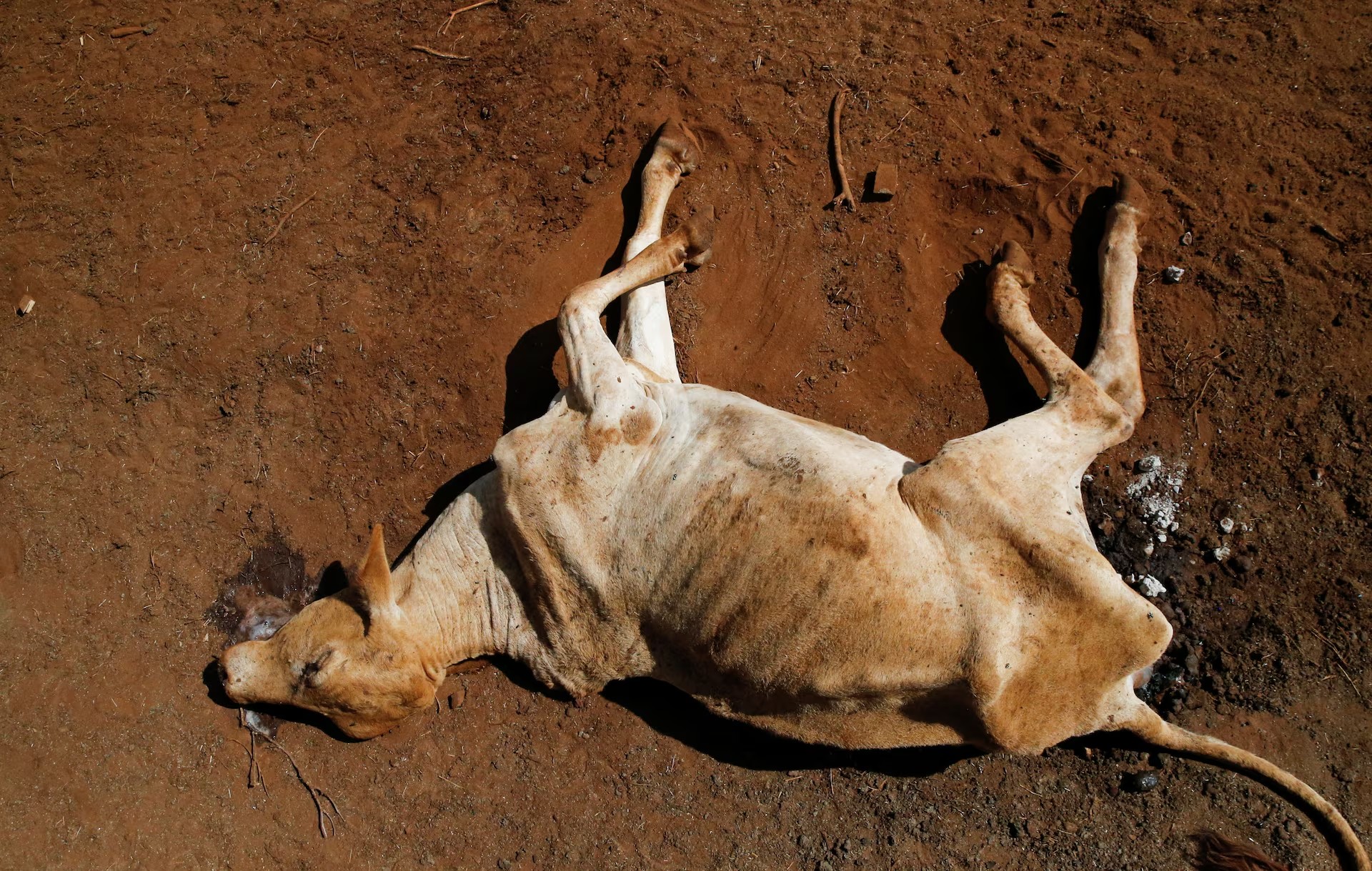
In Nyakatonzi Sub-county, Kasese District, nearly 1,000 cattle have died in the past month, Nile Post reported on 21 September 2026. A month earlier, reporters visiting the same part of the cattle corridor counted almost 300 deaths in two weeks. Farmers say hundreds more have died since as water points and grazing land dried up.
Cattle keepers say the animals are dying mainly of hunger and dehydration. "The cattle are dying every day because there is no enough food and water. The weak ones are the first to collapse," said Ham Natuhwera, a cattle keeper in the area.
Milk production has fallen even further. Kenneth Muyambi, chairperson of the Nyakatonzi Cattle Keepers Cooperative, said members used to produce about 40,000 litres a day or more. "Now we are getting less than 1,000 litres," he said. That is a drop of more than 97%. For households where the daily milk cheque pays for school fees, food and farm inputs, their main income has effectively stopped.

Distress sales: the hidden loss
The deaths are the most visible part of the crisis, but distress sales may cost farmers more. Farmers told Nile Post that a cow that would normally sell for Shs2 million to Shs3 million now goes for as little as Shs150,000, which is 5% to 7.5% of its usual value. "Even then, buyers still want to negotiate," Natuhwera said.
This is how drought destroys wealth in pastoral economies. When grazing fails everywhere at once, every herder tries to sell weak animals before they die, and prices collapse. Cattle bought cheaply now can be fattened and resold for several times as much once pasture recovers. The gain goes to traders and better-resourced ranchers who can afford feed and water. The loss falls on smaller herders, who give up breeding stock they will struggle to replace.
Officials advised the obvious, and cruel, response. Deputy Resident District Commissioner for Bukonzo, Lt Maate Magwara, urged farmers to "reduce the number of animals competing for the available pasture" while government works on longer-term measures such as valley dams. In practice, with prices this low, destocking means selling at a loss.
Kasese is not an outlier
Kasese is the most severe case so far of a problem across Uganda's western dairy belt.
In Ntungamo, the district production officer, Dr Yake Basulila, reported in late August that daily milk output had fallen to 35,000–45,000 litres, from about 65,000 litres in semi-dry seasons and up to 90,000 litres in the rains. Ntungamo was also dealing with foot-and-mouth disease (FMD). Its outbreaks escalated in February and March, and quarantines limited market access for about eight months until they were lifted in August. In Mbarara City, daily collections fell from about 20,000 litres to 5,000–8,000 litres. Retail prices rose to about Shs2,500 a litre from Shs1,200. Lakeside Dairy's factory intake fell from about 200,000 litres a day to about 120,000, and anthrax quarantines in some districts made the shortage worse.
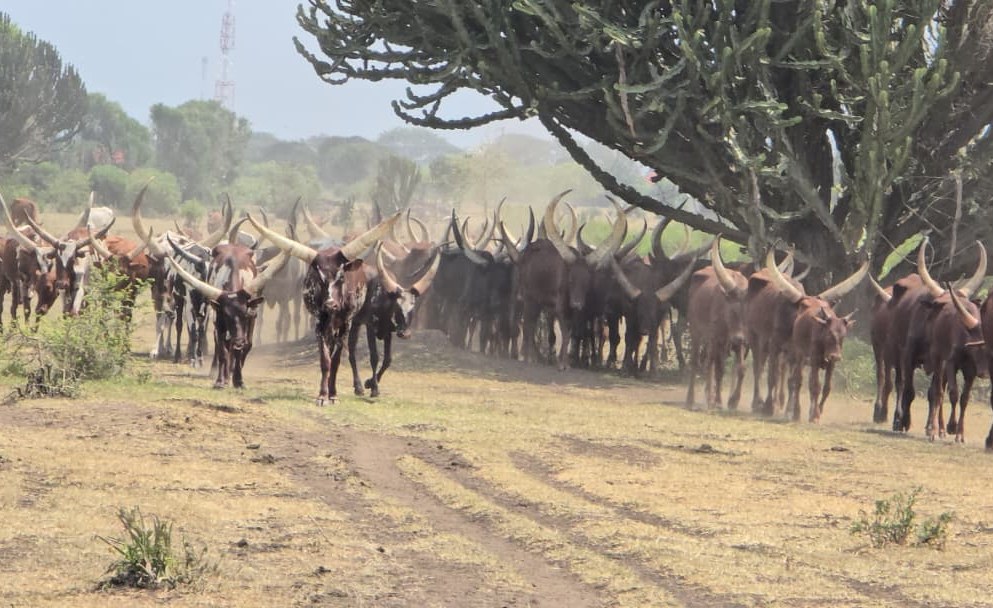
Processors have told customers about the problem. JESA Farm Dairy issued a public notice on 18 August announcing "a temporary shortage due to the prolonged dry season, which has affected all dairy farming communities." The Dairy Development Authority's managing director, Samson Akankiza Mpiira, told Uganda Radio Network in early September that almost every dam in the cattle corridor had dried up, forcing herders to walk animals long distances to find water. He said production in the corridor normally falls by 40–50% in the dry season, but this year's dry season started in May in some places and ran into September. That is much longer than the usual June to early August dry spell.
Buyers report that quality is also falling. Lakeside Dairy's quality manager, Mark Wamala, said the long dry period had lowered milk density and increased dilution, as some traders add water to raw milk to make up volume.
The regional pull
The shortage is also driving up competition for milk from outside Uganda. Kenya's Trade Cabinet Secretary, Lee Kinyanjui, confirmed in early September that Kenya was importing Ugandan milk to cover a domestic shortfall. The Kenya Dairy Board recorded a 3.7% fall in formal deliveries to processors in July, and expected further declines in August and September.
This reverses the pattern of 2023–2025, when Kenya repeatedly suspended import permits for Ugandan processed and powdered milk. That pushed processors such as Brookside Uganda to cut back and sent exporters looking for markets in Nigeria and Algeria. Ugandan dairy farmers now have strong demand from Kenya but little milk to sell. Exporters could benefit from the higher prices, but Ugandan consumers and smaller processors could face tighter supplies and higher prices.
Uganda still has a structural surplus in normal years. It produces about 5.4 billion litres a year, has about 145 processing plants, and consumes about 64 litres per person a year compared with about 120 in Kenya. This year shows how weather-dependent that surplus is.
Why the rains won't end it
The Ministry of Water and Environment forecasts near-normal to above-normal rainfall from September to December, with El Niño expected to strengthen. Rain will refill water points and regrow pasture within weeks. It won't bring back dead animals or breeding stock sold at Shs150,000 a head. A cow sold in September is lactation lost for next year. Heifers sold now mean fewer calves in 2027.
Heavy rain on land that is bare and trampled also brings new risks for livestock. Wet seasons after droughts often bring outbreaks of tick-borne and vector-borne diseases, and weakened animals are less able to fight them off. The FMD outbreaks in Ntungamo, Kazo, Kamwenge and Nakasongola this year, and the new national FMD cost-recovery vaccination scheme, mean animal health services will be stretched at a time when farmers have the least cash to pay.
Policy: dams, feed banks and credit
The government's response so far is mostly long-term. Agriculture Minister Frank Tumwebaze told New Vision on 9 September that the drought was "unprecedented" and that his ministry was discussing "a big irrigation program" with the Ministry of Finance. He said irrigation had not been a priority "because nature had been on their side for many years." Local officials in Kasese are pointing to valley dams. The Dairy Development Authority is encouraging farmers to make and store hay and silage so they have feed in dry seasons.
These are the right measures, but they won't help this season. Three gaps stand out.
The first is emergency feed and water. There is no visible national mechanism to truck water or subsidise feed for cattle-corridor herders during a declared drought, even though the losses in Kasese alone, at even Shs1.5 million per head, come to well over a billion shillings in a month.
The second is livestock insurance. The Uganda Agriculture Insurance Scheme covers livestock in principle, but take-up among smallholder herders is low. An index-based product that paid out automatically when pasture fell below a set level would have paid Nyakatonzi's farmers weeks ago.
The third is credit to restock. The Microfinance Support Centre, which is taking 8% per annum loans to drought-hit groups in Kigezi this week, and the Parish Development Model's revolving funds could be directed to herders rebuilding their herds, with repayment grace periods that match the time it takes a heifer to calve.
What it means
For farm households, this drought has turned cattle, normally a safe store of wealth, into a loss. For processors, it means months of low intake and high raw-milk prices before volumes recover. For consumers, milk will cost more into the fourth quarter. For the economy, it shows how exposed one of Uganda's growing agricultural export earners is to the weather. The cattle corridor produces much of the country's milk surplus, and it still depends almost entirely on rain-fed pasture.
Farmers in Nyakatonzi are waiting for rain. The larger question is whether government acts on dams, feed reserves and insurance once the rains return and the pressure to act fades.
Published By | Features Editor