AGRICULTIRE
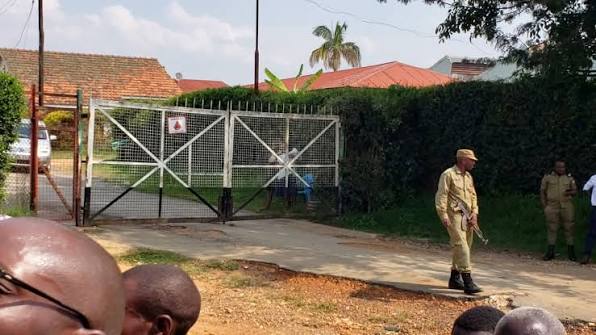
A High Court judgment voiding a year of board decisions at Igara Growers Tea Factory has laid bare billions of shillings in unpaid wages, pension arrears and farmer debts — and raised hard questions about how Uganda's smallholder-owned agro-processing giants are governed.
BUSHENYI
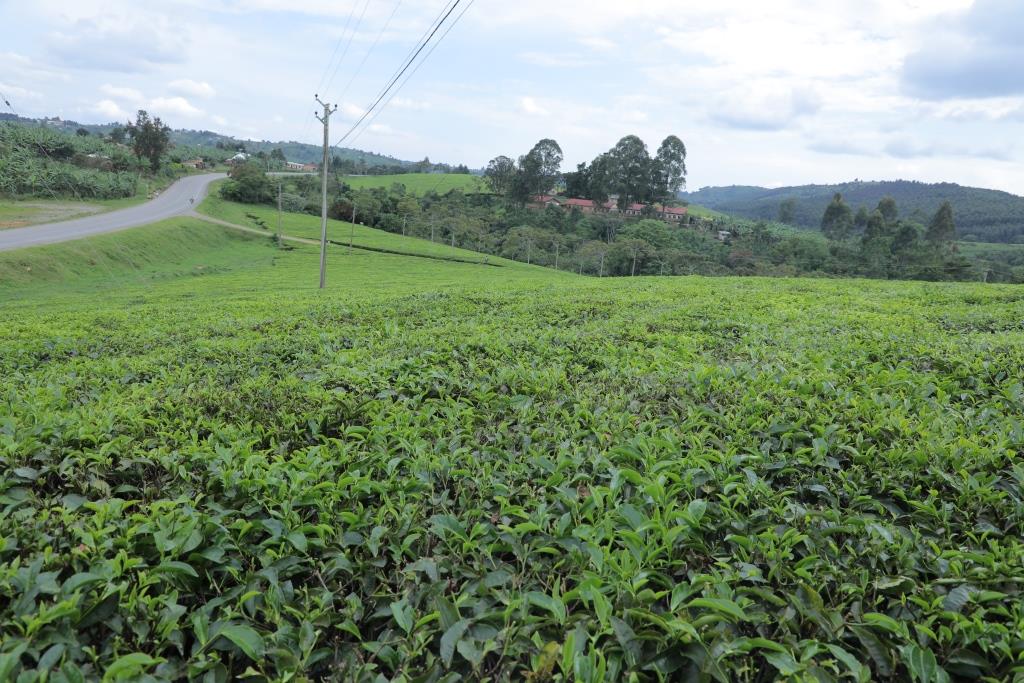
For more than 7,000 smallholder tea farmers spread across five zones of Bushenyi, Buhweju and Sheema districts, Igara Growers Tea Factory Limited has for nearly six decades been more than a processing plant. It is a community institution, one of the last surviving symbols of a 1960s poverty-reduction experiment that turned green leaf into one of south-western Uganda's most reliable sources of household income. That institution is now at the centre of a governance crisis that has exposed unpaid wages, unremitted pension contributions and mounting debts to the very farmers who own it.
On August 21, 2026, Justice Amos Kwizera of the High Court in Bushenyi delivered a judgment that effectively nullified more than a year of decisions taken by the factory's sitting Board of Directors, ruling that the board's mandate had expired at the end of August 2025. The court ordered the company to convene an Extraordinary General Meeting (EGM) within six months to elect a lawfully constituted board — a ruling company leaders say they will respect, even as they insist it will not disturb decisions already taken.
The case, and the numbers that have surfaced around it, illustrate a problem that reaches well beyond one tea factory: the fragility of farmer-owned cooperative governance structures at a moment when Uganda is leaning on cooperatives, SACCOs and out-grower companies to carry a large share of its agro-industrialisation strategy.

A dispute nearly a year in the making
The petition that led to last week's ruling was filed on October 18, 2025, by four smallholder shareholders — Willis Bashasha, Asuman Batangaya, Ronald Rwankangi and Hannington Katarikwe — later joined by a fifth, Godfrey Agaba Turikwendera. Backed by 382 shareholders holding 117,869 shares, the group accused the sitting board of overstaying its mandate, pushing through unlawful elections, and mismanaging the company's affairs.
Their petition detailed a company in financial distress: unremitted statutory deductions from employees' pay, unpaid green-leaf suppliers, and what industry commentary has since put at roughly UGX21.1 billion in disputed liabilities. Court filings referenced separately by Ugandan media put salary arrears owed to employees at about Shs1.4 billion, unremitted National Social Security Fund (NSSF) contributions at about Shs1.7 billion, and more than Shs6 billion allegedly owed to tea out-growers for green leaf they had already delivered.
The legal road to last week's judgment was not straightforward. The High Court initially dismissed the shareholders' petition in May 2026 on the grounds that they had not exhausted administrative remedies available to them. The farmers then took their case to the Uganda Registration Services Bureau (URSB), the state agency responsible for company registration.
While that administrative review was pending, the disputed board pressed ahead regardless, convening an Annual General Meeting on June 24, 2026, to confirm newly elected zonal directors — a move the petitioners say was itself unlawful given the board's expired mandate. URSB Registrar Daniel Nasasira responded on July 10, 2026, by barring the disputed directors from filing any further company resolutions or statutory returns, and referring the underlying legal question back to the High Court for a definitive ruling.
“Having carefully considered all the evidence placed on record, notwithstanding the expiry of their mandate, the persons purporting to act as directors of the Company proceeded to convene and conduct the Annual General Meeting of June 24, 2026, without any recourse whatsoever to a court of competent jurisdiction,” Nasasira wrote in his ruling.
The court's reasoning
At the High Court, the respondent board's lawyers argued that the Registrar of Companies lacked jurisdiction to intervene at all, noting that the four original applicants held just 5.98 percent of the company's shares. Justice Kwizera rejected that objection, noting that the complaints extended well beyond an ordinary boardroom squabble.
“The complaints presented before the Registrar were not confined to the validity of the Board's tenure or to an ordinary dispute concerning the election of directors,” the judge ruled. “They included allegations concerning the irregular deduction and non-remittance of employees' statutory deductions... irregularities in the nomination, vetting, and election of the Board, and failure to pay suppliers of green leaf despite receipt of proceeds from tea sales.”
On the substantive question, the court examined a special resolution passed at the company's EGM on January 31, 2025, which the judge found had explicitly limited the board's tenure “until August 2025.” The board had argued its mandate remained open-ended under the company's 2011 Articles of Association. Justice Kwizera was unpersuaded, finding that the board could not selectively invoke the Articles when convenient while ignoring a resolution its own members had passed.
“A party cannot approbate and reprobate in relation to the same instrument,” he ruled, declaring all board actions taken after August 2025 — including the disputed June 2026 AGM — “without authority and therefore null and void.”
Because the company currently has no board capable of lawfully convening a meeting, and no certified membership register, the court invoked Section 138 of the Companies Act, empowering it to order and supervise the convening of the EGM required to elect a new board. Each party was directed to bear its own legal costs.
What it means for farmers
For the smallholders who brought the case, the ruling registers as vindication after nearly a year of legal wrangling. “It is the farmers of tea that have won the case, not me as an individual,” Bashasha said after the judgment, adding that the next priority is a forensic audit of the company's finances “to avoid future pitfalls.” Leonard Beinomugisha, chairperson of Igara Tea Growers, said he would study the full judgment before commenting further, noting only that “the ruling is a ruling.”
The stakes for ordinary out-growers are significant. Green-leaf tea is typically paid for within days of delivery precisely because farmers depend on that cash flow for household expenses, school fees and farm inputs; a reported Shs6 billion backlog in unpaid supplier payments represents real hardship accumulated over months for thousands of families. Unremitted NSSF contributions, meanwhile, threaten the retirement savings of factory employees who may discover, years from now, that deductions taken from their pay were never forwarded to the pension fund — a pattern that has recurred at other Ugandan public and quasi-public institutions in recent years.
A pillar built, and tested, over decades
Igara's troubles carry particular weight because of the factory's history. Incorporated in 1969 and originally operated under the Uganda Tea Growers Corporation, the factory processes green leaf grown by smallholders across Bushenyi, Buhweju and Sheema. It survived the political instability of the 1970s, underwent a decade-long European Union-funded rehabilitation beginning in 1989, and was fully divested to local farmers between 1995 and 2000 as part of Uganda's wider privatisation drive — alongside sister factories Mabale, Mpanga and Kayonza. That transition to full community ownership was, at the time, held up as a model of smallholder economic empowerment.
Tea remains one of Uganda's significant agricultural exports, and the sector as a whole has been navigating its own volatility this year, including a rebound in prices at the Mombasa auction and a government-backed revival package aimed at clearing debt owed to nursery operators. Igara's crisis is a reminder that price recovery at the auction floor means little to farmers if the governance structures between the farm gate and the export market are dysfunctional.
The road ahead
The High Court's order gives Igara up to six months — until roughly February 2027 — to hold a court-supervised EGM and install a new board. Whoever takes over will inherit a company with disputed debts, a fractured membership register, and, if the shareholders' forensic audit demand is heeded, a full accounting of how the company arrived at this point.
For the wider cooperative and out-grower sector, the case is likely to be studied closely. Uganda's Parish Development Model and national cooperative revival push depend heavily on farmer trust in collectively owned institutions; a protracted, headline-grabbing governance collapse at one of the country's oldest smallholder tea companies is unlikely to make that trust easier to build elsewhere.
Published By | Features Editor