Written By | Staff Writer
For farmers preparing inputs for Uganda's second planting season, the practical consequence of all this is timing risk
Agriculture
Uganda's government has spent years building an architecture of subsidised schemes meant to get cheaper money into the hands of farmers — the Agricultural Credit Facility, the Parish Development Model, the Uganda Agriculture Insurance Scheme, and a growing list of SACCO partnerships with commercial banks. Yet even as that architecture expands, the everyday reality for a farmer walking into a bank branch is moving in the opposite direction: credit is getting more expensive, and banks are getting more cautious about lending to agriculture at all.
Bank of Uganda's latest credit conditions survey, covering the quarter ending March 2026 and drawn from 31 regulated financial institutions — commercial banks, credit institutions and microfinance deposit-taking institutions — found that lenders reported a net tightening of credit standards across most sectors of the economy. Agriculture was among the hardest hit, with a net tightening score of 13.5 percent, behind only building, mortgage, construction and real estate at 20.4 percent, and ahead of personal and household lending (8.0 percent) and business services (3.9 percent). In plain terms: more banks are pulling back from agricultural lending than are loosening it, at a moment when farmers already borrow at some of the highest rates in the economy.
That rate gap is stark. According to Bank of Uganda data, the average agricultural lending rate reached 20.7 percent in the three months to March 2026, compared with an overall average lending rate of 18.65 percent across all sectors. Agriculture, in other words, is not just harder to get a loan for — it is also, on average, the more expensive sector to borrow into, even though it employs the largest share of Uganda's workforce and anchors the country's export earnings.
Why Banks Are Pulling Back
The tightening is not primarily a story about farmers behaving badly with borrowed money. Bank of Uganda's own survey attributes the shift to a cluster of external shocks that hit the economy in the first quarter of 2026. Escalating geopolitical tensions tied to the US-Israel war with Iran disrupted global supply chains and pushed up energy prices, raising operating costs across the economy. For agriculture specifically, higher fuel and input costs translate directly into higher production costs for borrowers, which in turn increases the risk that loans will not be repaid on time — precisely the kind of repayment risk that makes loan officers more conservative.
Compounding the shock, Uganda's shilling depreciated by about 5.4 percent between February and April 2026, driven largely by the same global risk aversion and oil-price volatility. Bank of Uganda responded by raising the Cash Reserve Ratio from 9.5 percent to 11 percent — a move expected to pull roughly Ush4.84 trillion (about $1.27 billion) out of interbank market liquidity, aimed at protecting the exchange rate by discouraging speculation and reducing the central bank's need to intervene in the forex market. That is standard monetary policy for defending a currency, but it also means less money circulating through the banking system overall, at a time when banks were already growing warier of agricultural risk.
There is a further, less visible factor: the winding down of USAID-funded projects across the country over the past year and a half. The closure of that programming triggered job losses in civil society organisations, vacated commercial office and residential property, and eliminated a stream of procurement opportunities that had indirectly supported hotels, transporters and local suppliers linked to the agricultural value chain. For lenders assessing whether a farmer, agro-processor or rural trader is a safe bet, that combination of shrinking donor-funded activity and currency instability adds up to a harder environment to price correctly — and when in doubt, banks tighten.
A Two-Speed Credit System
What makes the picture more complicated is that this tightening at the level of mainstream commercial lending is happening at the same time as a genuine expansion of subsidised, government-linked credit. The Agricultural Credit Facility — a partnership between government, Uganda Development Bank, commercial banks, microfinance deposit-taking institutions and credit institutions designed to offer farmers and agro-processors better terms than conventional loans — had financed 11,358 loans worth a cumulative UGX1.35 trillion (about $366 million) by December 2025. In the final quarter of 2025 alone, UGX5.04 billion (about $1.37 million) was disbursed to 1,156 micro-borrowers through loans capped at UGX20 million, aimed specifically at smaller farmers who would otherwise struggle to qualify.
Separately, commercial banks have been racing to capture the SACCO channel as a lower-risk way of reaching rural borrowers at scale. Stanbic Bank Uganda, for instance, cut its lending rate to agriculture-focused SACCOs to 10 percent per annum, with multipurpose SACCOs accessing financing at 12.5 percent and eligible SACCOs able to borrow up to Shs7 billion, all under the bank's Women, Youth and Farmers programme backed by a Shs1 trillion commitment. That is roughly half the average agricultural lending rate reported in Bank of Uganda's own survey — a sign that where banks lend through cooperative structures with shared risk and peer accountability, they are willing to price credit far more cheaply than they will for individual borrowers walking in off the street.
The result is what amounts to a two-speed credit system: farmers who can access a SACCO with a bank partnership, or who qualify for the Agricultural Credit Facility's more favourable terms, can borrow at rates roughly half those available on the open market. Farmers without access to either — often the smallest, most isolated, and least formally documented — are left facing average rates above 20 percent, precisely as banks are tightening who qualifies at all.
The Gender Gap Inside the Gap
Within even the subsidised channels, the credit squeeze is uneven. Women, who form the backbone of Uganda's smallholder agricultural workforce, remain sharply underrepresented in the Agricultural Credit Facility: as of December 2025, women accounted for just 23 percent of beneficiaries and received only 3 percent of the total value disbursed under the scheme. That gap points to a structural problem that goes beyond interest rates — women farmers are less likely to hold the formal land titles, business registration, or collateral that lenders typically require, even when a subsidised facility exists specifically to widen access.
Analysts who track the scheme note that the core problem is not simply that capital is expensive, but that delivering it efficiently to farmers whose borrowing needs are small, seasonal and costly for banks to assess remains fundamentally difficult. Public policy can lower the headline cost of funding — as the Agricultural Credit Facility and SACCO partnerships are designed to do — but whether that translates into actual access on the ground still depends on how individual banks, MDIs and SACCOs translate policy incentives into workable lending standards for the ordinary farmer.
What It Means for the Season Ahead
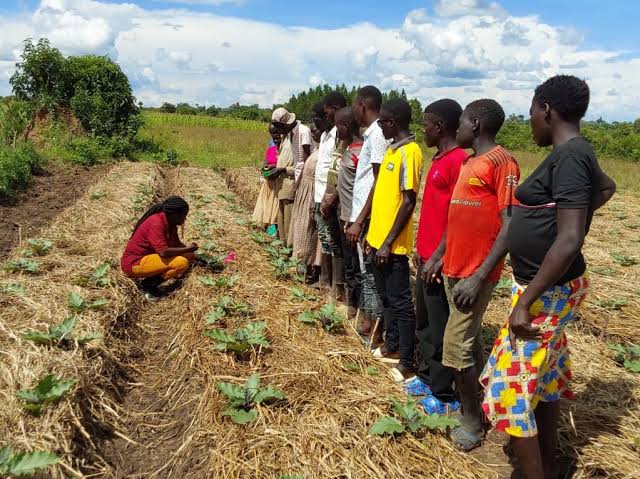
For farmers preparing inputs for Uganda's second planting season, the practical consequence of all this is timing risk. Seasonal agricultural borrowing is, by definition, urgent — a farmer needs seed, fertiliser and labour financed in the weeks before planting, not months later once a loan application clears a more cautious credit committee. A banking sector that is simultaneously raising its guard on agricultural risk and holding interest rates near 21 percent makes that seasonal financing window narrower and more expensive to use, even as government-backed schemes try to plug the gap from the other direction.
The tension between these two trends — a tightening mainstream banking sector and an expanding but still limited subsidised lending architecture — is likely to remain one of the defining structural challenges for Uganda's agricultural transformation agenda over the coming year. Unless commercial lenders find ways to price agricultural risk more accurately, and unless subsidised schemes close their persistent gender and reach gaps, the farmers most in need of affordable, timely credit will keep finding themselves furthest from it.



