Written By | Staff Writer
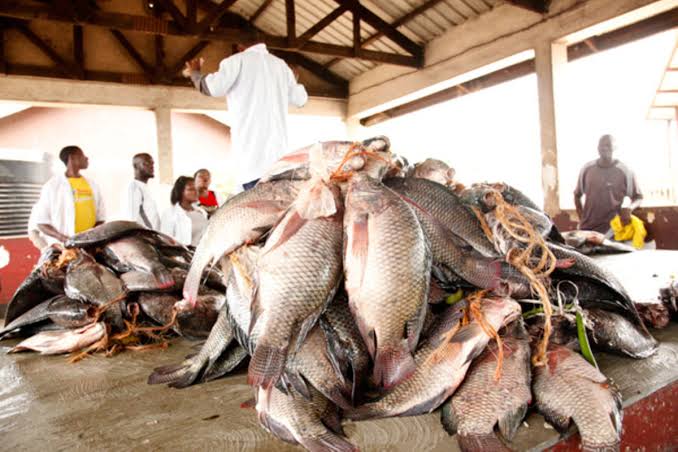
August's inflation data says food is calm. The fish counter says otherwise — and the reasons run from Lake Victoria's nets to the diesel pump.
Agriculture
A quiet headline hiding a loud number
When the Uganda Bureau of Statistics released its August 2026 Consumer Price Index at Statistics House at the end of last week, the headline was reassuringly dull. Annual inflation edged up to 4.1 percent, from 4.0 percent in July. Core inflation moved to 3.5 percent from 3.4 percent. Food crops and related items rose to 2.1 percent from 1.6 percent. By the standards of the last four years, these are numbers a finance minister can live with.
But the CPI is an average, and averages conceal. Buried in the same release is a table of national average retail prices that tells a much sharper story about what is happening to Ugandan diets. Over the twelve months to August 2026, a kilogramme of mukene — the silver cyprinid that has for generations been the country's cheapest animal protein — rose from Shs17,600 to Shs22,321. That is a jump of roughly 27 percent. Smoked Nile perch went from Shs34,187 to Shs41,478, up about 21 percent. Cassava flour, the drought-season fallback staple across the north and east, climbed from Shs1,837 to Shs2,212, a rise of over 20 percent.
Set against those numbers, matooke actually got cheaper, falling from Shs1,035 to Shs971 a kilogramme. Dry beans fell too, from Shs4,372 to Shs4,061. Off-layer chicken barely moved, from Shs14,627 to Shs14,922.
That divergence is the story. Uganda is not experiencing a general food price crisis. It is experiencing a very specific squeeze on processed staples and on fish — the two categories that poorer households rely on hardest when the garden underperforms.
Why the fish numbers matter more than they look
Juliet Nakayenga, the Principal Statistician in charge of price statistics at UBOS, attributed the rise in annual core inflation — which excludes volatile food crops, fuel and utilities — to higher prices for rice, dried fish, maize flour and cassava flour. Dried fish appearing as a driver of core inflation is unusual, and it is significant. Core inflation is meant to capture the persistent, structural component of price movement. Fish showing up there suggests the market is not responding to a bad month of weather. It is responding to something that has not gone away.
That something is supply. Mukene catches have thinned sharply since the government banned the so-called ‘hurry-up’ fishing method in February, a measure introduced to protect immature Nile perch and other species from being swept up in fine-meshed silverfish nets. At landing sites such as Bwondha in Mayuge District, the price of a basin of silverfish had by mid-year moved to around Shs120,000, from Shs70,000 to Shs80,000 before the ban. Around Jinja and on Lake Kyoga, traders reported an even steeper climb from Shs45,000–Shs50,000 to as much as Shs150,000 a basin.
The Nile perch picture is no better. Uganda's Nile perch export volumes fell to roughly 2,000–2,200 tonnes in January and February 2026, the weakest start to a year in two decades, against peaks of 5,000–6,000 tonnes in better seasons. When the export grade is scarce, processors compete harder for the same fish, and the domestic market pays the difference. The 21 percent rise in smoked Nile perch retail prices is what that competition looks like from a market stall in Kalerwe.
Enforcement, stocks and a deadline in twelve days
None of this is an argument that the enforcement was wrong. Lake Victoria's fish stocks have been in documented decline for years, and the Fisheries and Aquaculture Act 2023 and its accompanying regulations exist precisely because the previous free-for-all was consuming the resource base. The State Minister for Fisheries has set 15 September 2026 as the deadline for everyone engaged in fishing and aquaculture to register and hold a licence, with species-specific licensing, protected breeding areas, closed seasons and standardised gear all coming into force.
The point is rather that conservation has a price, that price is currently being paid at the retail counter, and nobody has yet said who is supposed to absorb it. The Economic Policy Research Centre has estimated that the fisheries sector underpins around five million livelihoods in Uganda. A large share of those are not boat owners but small traders, smokers, dryers and market sellers — disproportionately women — whose margins do not stretch across a doubling in the cost of a basin.
For consumers, the arithmetic is starker still. Mukene has historically been the protein of last resort: cheap enough to buy in handfuls, dried so it needs no cold chain, dense enough in calcium and micronutrients that nutritionists have long argued it is one of the best value foods in the country. When its price rises 27 percent in a year while matooke falls 6 percent, households do not simply substitute. They eat less protein.
The diesel multiplier
Fish is not the only pressure point, and the second one compounds the first. UBOS put annual Energy, Fuel and Utilities inflation at 14.3 percent in August, marginally down from 14.9 percent in July but still the most inflationary basket in the index. Petrol carried annual inflation of 28.5 percent and kerosene 31.1 percent. In national average retail terms, a litre of petrol moved from Shs5,099 to Shs6,529 over the year, and diesel from Shs4,733 to Shs6,647 — a rise of more than 40 percent.
Diesel is the hinge on which Uganda's food distribution turns. It runs the outboard engines that reach the fishing grounds, the trucks that move dried fish from Buvuma and Kalangala to upcountry markets, and the mills that turn cassava and maize into flour. A 40 percent increase in diesel does not stay in the transport line of the CPI; it migrates into the price of every commodity that has to travel. That is a large part of why cassava flour, which is not scarce, is nonetheless 20 percent more expensive than a year ago.
The map of who is hurting
The regional breakdown reinforces the picture. Kampala's high-income households recorded the highest annual inflation of any group measured, at 4.9 percent, though their drivers were communication charges and alcoholic beverages rather than food. Jinja Centre came second at 4.8 percent, up from 4.2 percent, and there the driver was unambiguously food: food and non-alcoholic beverages inflation in Jinja jumped to 4.1 percent from 2.5 percent in a single month. Jinja sits at the head of the mukene trade.
Mbale Centre recorded 4.3 percent, Kampala's middle-income group 4.1 percent, Masaka 4.0 percent, Arua 3.4 percent and Gulu 3.0 percent. Mbarara posted the lowest rate at 2.9 percent, helped by easing housing and transport costs — an odd result for a region that has spent the season reporting collapsed milk collections after drought and disease.
What the central bank is watching
The Bank of Uganda's Monetary Policy Committee held the Central Bank Rate at 9.75 percent, and Governor Michael Atingi-Ego said the inflation forecast had been revised downward, with core inflation projected to average 4.0 to 4.5 percent and headline inflation 5.5 to 6.0 percent over the next twelve months. He was careful to add that clarity on the path and underlying drivers was needed before further policy action, and that the risk of energy price shocks feeding into domestic expectations warranted caution.
Among the risks the central bank itself lists is adverse weather reducing agricultural output and pushing food prices up. That risk is not hypothetical. The Ministry of Water and Environment has forecast above-normal rainfall from August to December under a weak-to-moderate El Niño, following a drought that has already produced crop failure across Acholi and Karamoja. A second-season flood on top of a first-season drought would arrive into a market where fish and processed staples are already the fastest-rising items in the basket.
What follows from this
There are three practical implications, and none of them are monetary policy.
The first is that fisheries enforcement needs a parallel supply strategy or it will keep converting a conservation gain into a nutrition loss. Aquaculture is the obvious answer — cage farming on Lake Victoria already accounts for the overwhelming majority of national aquaculture output, and the EU cleared Ugandan farmed fish and animal products for export earlier this year. But farmed tilapia and catfish are not price substitutes for mukene, and the sector's growth targets are pitched at exports rather than at the domestic protein gap.
The second is that the 15 September licensing deadline will, on current form, remove more informal operators from the water in the short term than it formalises. If that is the intention, the price consequence should be planned for and communicated, not discovered at the market.
The third is that food inflation in Uganda is increasingly a fuel and logistics story rather than a harvest story. Cassava flour at Shs2,212 a kilogramme in a year when cassava itself is not scarce is a distribution problem wearing a food-price costume. Until the cost of moving food falls, headline inflation will keep looking calm while the items that poor households actually buy keep getting dearer.



