Feature
An admission at Hotel Africana
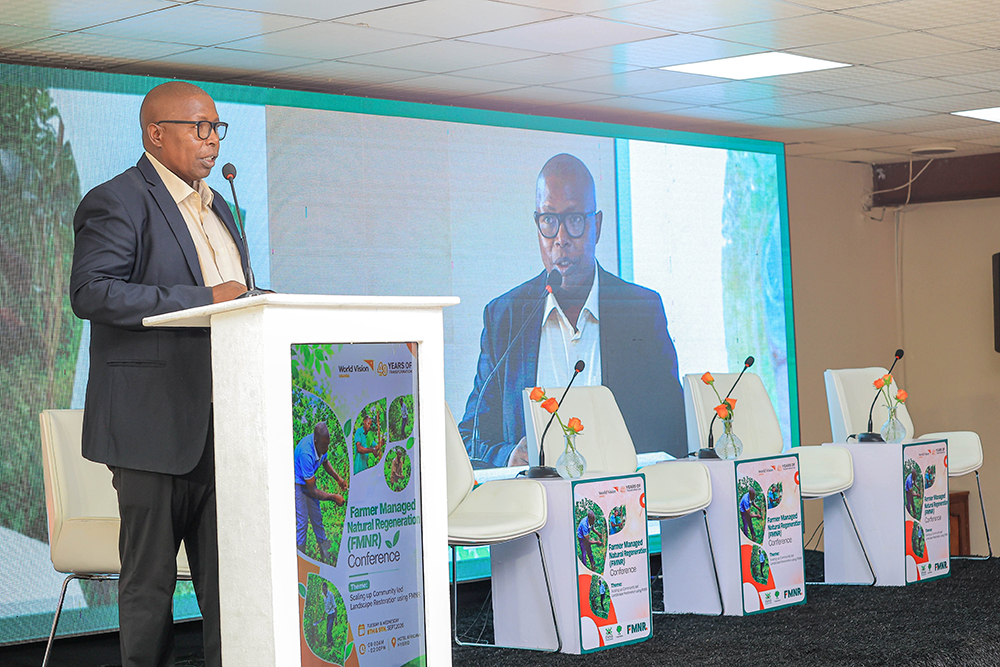
Government officials rarely open a conference by disputing their own good news. Bob Kazungu did exactly that on September 8 at Hotel Africana in Kampala, at the opening of the two-day Annual National Farmer Managed Natural Regeneration Conference, held under the theme "Scaling up Community-led Landscape Restoration using FMNR."
Uganda's forest cover, Kazungu noted, has improved from about 10 per cent in 2015 to 12.7 per cent in 2024. Then the assistant commissioner for forestry monitoring at the Ministry of Water and Environment told the room not to celebrate. "We are not happy with the current situation," he said. "Restoration efforts in the sense that we are not gaining as much as we are losing."
Two qualifications sit behind that statement, and both matter to farmers more than to foresters. The first is the baseline: 12.7 per cent is still barely half the 24 per cent Uganda recorded in 1990. The second is composition. Kazungu said the recent increase has been driven largely by the establishment of monoculture plantations, particularly eucalyptus and pine. Those are timber assets, not functioning landscapes. Eucalyptus in particular is a heavy water user, and its spread across catchments in a drought year is a live agricultural grievance in several districts. "We have to create a balance between our indigenous tree species and our exotics that we also promote," Kazungu said.
What FMNR actually is
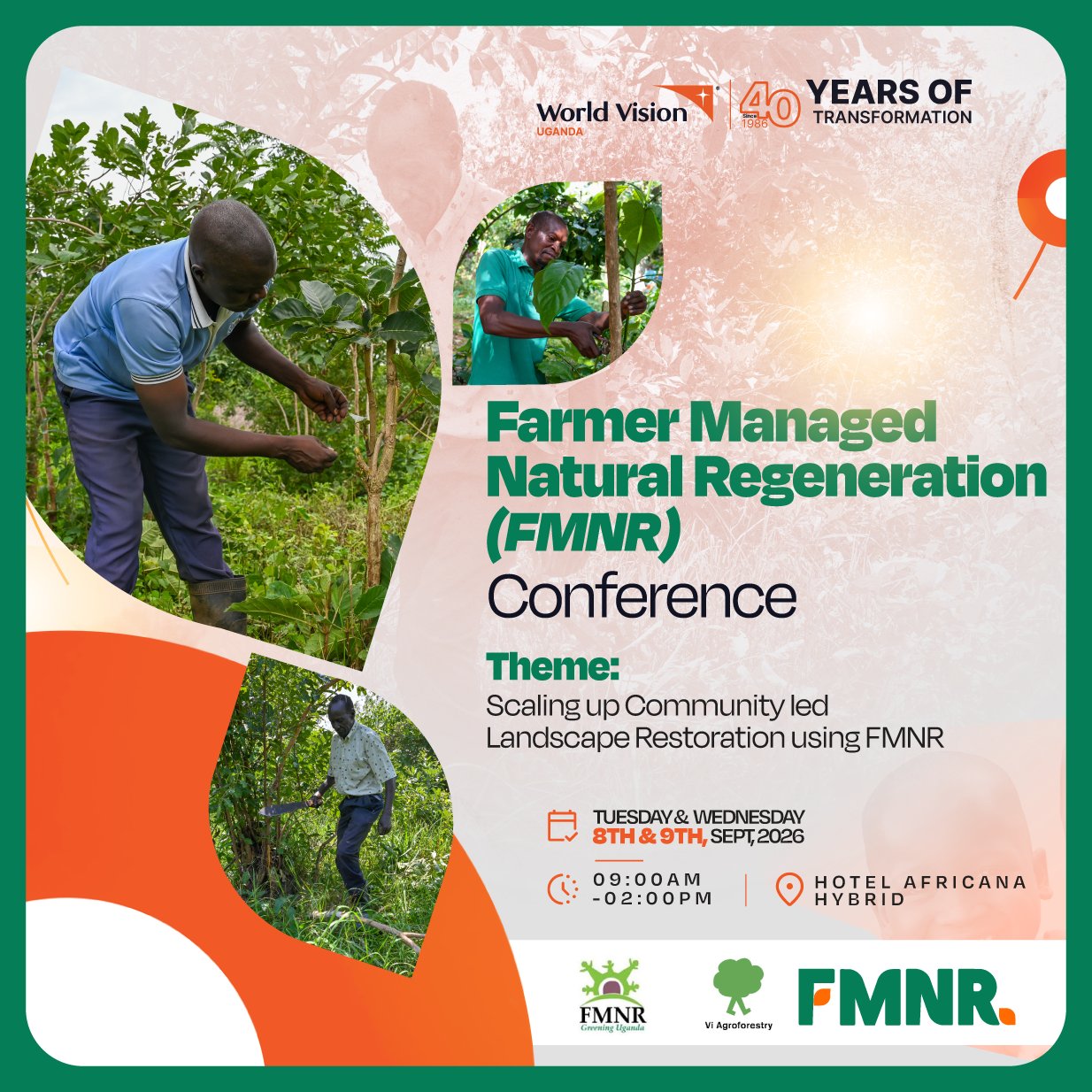
Farmer Managed Natural Regeneration is deliberately unglamorous. Rather than raising, transporting and planting seedlings, farmers identify trees and shrubs that are already regenerating on their land — typically shoots emerging from live stumps and intact root systems left behind after clearing — select the strongest stems, prune the rest, and protect what remains from fire, grazing and casual cutting. Uganda's forestry standards recognise the practice as a technically simple and inexpensive approach to restoring forest landscapes.
The key insight is that much of what looks like bare farmland is not biologically bare. Cleared land across Uganda's cattle corridor, northern districts and drylands often retains an extensive underground root network — an "underground forest" in the language of the practitioners — that will resprout if given a few seasons of protection. FMNR is essentially a management decision rather than a capital investment.
That is precisely the appeal to a ministry facing a procurement problem. Kazungu said the approach could help government reduce the cost of restoration at a time when there is high demand for seedlings and other planting materials. "Not all restoration interventions require procurement of seed, seedlings and vegetative planting materials," he said. "We could also use existing materials, the roots that require farmers to excite a little to be able to re-sprout."
The arithmetic of the deficit
The gap Uganda is trying to close is large enough that seedling-based restoration was never going to reach it. Kazungu said a Restoration Opportunities Assessment Methodology (ROAM) exercise conducted with partners identified about 8.4 million hectares of land in Uganda with restoration potential. Against that, the country's formal international commitment under AFR100 and the Bonn Challenge is 2.5 million hectares restored by 2030 — a target on which independent assessments suggest progress has been marginal, with restoration of degraded natural forest measured in the low thousands of hectares.
On the loss side, National Forestry Authority figures put annual destruction at more than 73,000 hectares of private forest and about 7,000 hectares of gazetted forest reserve, cut mainly for timber and charcoal. Kazungu listed the drivers: agricultural expansion, demand for firewood and charcoal, illegal logging and timber extraction, population growth, settlement, and weaknesses in governance and policy. Roughly 94 per cent of Ugandan households still cook with biomass — about 64 per cent on firewood and just under 30 per cent on charcoal — which means the loss driver is not a policy failure that can be legislated away but a daily energy need in almost every kitchen in the country.
Set the numbers side by side and the logic becomes clear. Restoring 8.4 million hectares by buying, raising, transporting and planting seedlings is not a financeable proposition for a ministry that competes for budget with irrigation, water for production and flood response. Restoring even a fraction of it by asking several million farmers to change how they manage regrowth on land they already control is at least arithmetically conceivable.
A network, not a project
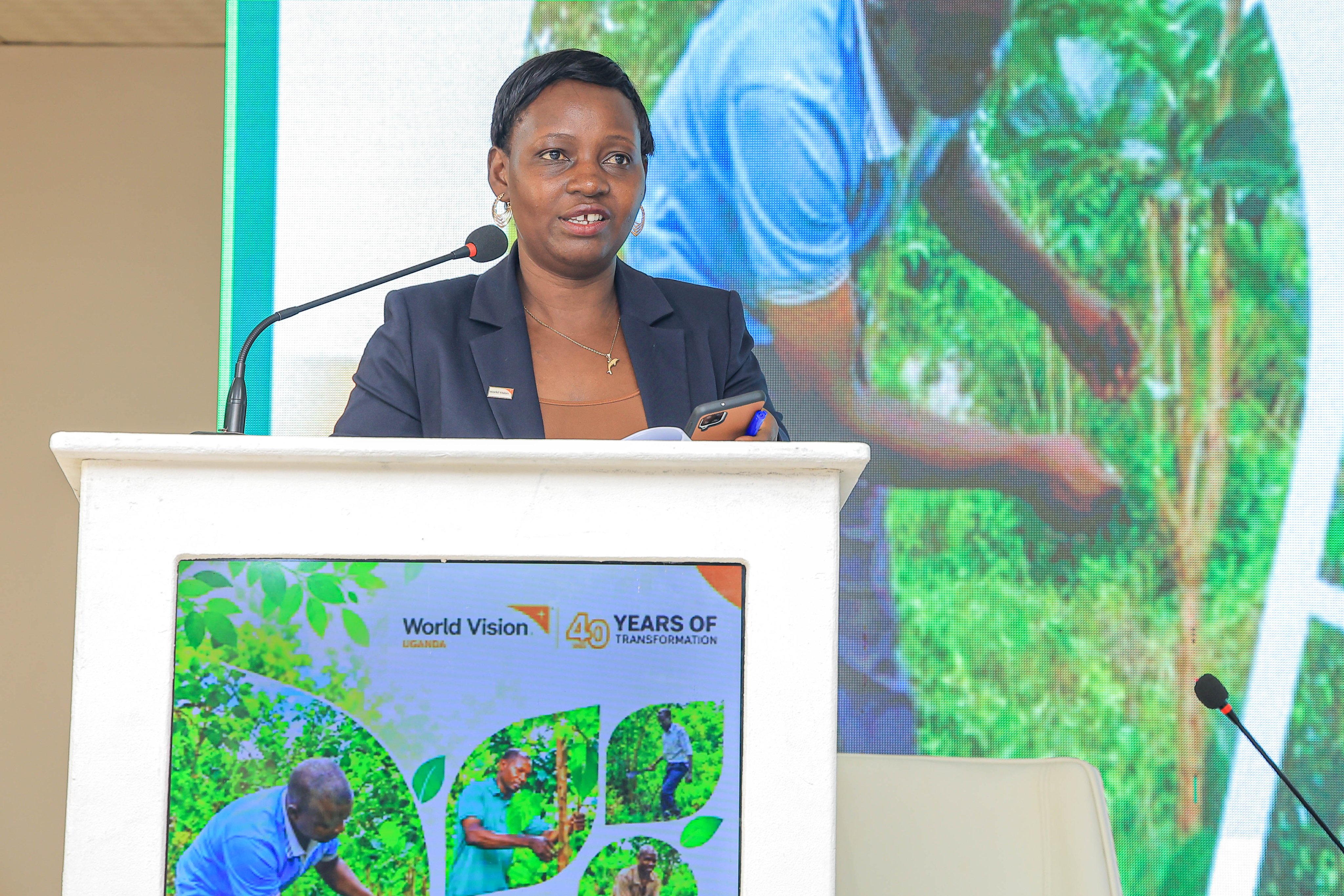
The institutional story running alongside the policy one is that FMNR in Uganda has outgrown its original donor project. Gusta Kiyingi, chairperson of the FMNR Network, told the conference the movement had grown considerably since the first national FMNR conference was convened by World Vision Uganda in 2014. The network now counts 105 member organisations — civil society groups, farmer organisations, faith-based bodies, community organisations and development partners — and has reorganised itself into six regional nodes to push the approach closer to communities.
Kiyingi was candid about what is holding it back: limited resources, coordination difficulties, competing land uses, climate variability, and gaps in data and evidence. That last item is the sharpest. FMNR's weakness as a policy instrument is that it produces no procurement trail, no seedling count and no ribbon-cutting. A district that plants 50,000 seedlings has a number to report; a district where 3,000 farmers stopped slashing regrowth has an outcome that is real but statistically invisible without deliberate monitoring.
Richard Ramsey, World Vision Uganda's programme development and impact director, said the organisation is working towards restoring 2.3 million hectares in Uganda through its broader restoration efforts, including a direct target of 570,000 hectares. "This is not a new practice. This is the simplest practice on the earth in many ways," Ramsey said. "And yet these things happen out in communities quietly. But I think what we need to do now is accelerate that progress."
Why this is a farming story, not an environment story
The temptation is to file FMNR under conservation. In a year like 2026, that would be a misreading. The FMNR Network describes the approach's benefits as improved soil fertility, biodiversity, food security and climate resilience — and each of those is a direct answer to a constraint Uganda's agriculture sector has spent the last quarter struggling with.
Soil fertility first. Uganda applies fertiliser at roughly one to 2.4 kilogrammes per hectare, among the lowest rates in the world, and the government's response has been a subsidised distribution drive — 173,913 bags flagged off at Entebbe on August 31, allocated first to tea, then coffee and cocoa. Nitrogen-fixing indigenous species regenerating in cropland deliver a slower, cheaper and more durable version of the same nutrient gain, on food crops that the fertiliser programme does not reach at all.
Second, water and heat. The drought that agriculture minister Frank Tumwebaze this week called unprecedented has exposed how little buffer rain-fed smallholders have. On-farm tree cover reduces soil temperature, cuts evaporative loss and slows runoff during the violent rainfall events that have flattened crops in Rukungiri, Rwampara and around Lake Kyoga this season. For coffee specifically, the argument sharpened in late August when a Royal Botanic Gardens, Kew study challenged the assumption that robusta is inherently climate-resilient, finding it heat-tolerant but distinctly drought-intolerant. Uganda is the world's leading robusta exporter, with 8.6 million bags and $2.3 billion in earnings in the year to May 2026, produced overwhelmingly on rain-fed smallholdings with under two per cent irrigation coverage. Shade and agroforestry are, for most of those farmers, the only drought buffer available in the next five years.
Third, fodder and fuel. Regenerated browse is dry-season feed — directly relevant to the goat-rearing push President Museveni announced for Karamoja on September 9 — and on-farm woodlots reduce the distance households travel for firewood, which is the mechanism by which a farmer's own regrowth gets cut in the first place.
What would make it stick
Three conditions determine whether the Kampala conference produces anything measurable. The first is tenure clarity: a farmer will only protect a regenerating stem for five years if the right to eventually harvest it is unambiguous, and Uganda's overlapping customary, kibanja and titled tenure arrangements frequently make it anything but. The second is the monitoring gap Kiyingi named — without district-level FMNR data, the practice cannot compete for budget against seedling programmes that generate reportable numbers. The third is a serious answer on cooking energy, because no restoration approach survives contact with 94 per cent biomass dependence indefinitely.
None of that diminishes what was conceded at Hotel Africana. A government that has watched forest cover fall from 24 per cent to 12.7 per cent, that is losing 80,000 hectares a year and that cannot afford to buy its way out, has publicly identified the cheapest asset it has: the root systems already sitting under Ugandan farmland, and the farmers who decide each season whether to slash them or let them grow.
Published By | Features Editor