Written By | Staff Writer

Bank of Uganda's latest figures show lending rates falling across almost every sector and private-sector credit growing at its fastest pace in years.
A cheaper year to borrow
Uganda's banks have started lending again, and they are lending more cheaply than at any point in over a year. According to the Bank of Uganda's Monetary Policy Report for August 2026, private-sector credit grew by an average of 13.80 percent in the three months to June, up from 11.53 percent in the three months to March, with growth touching 16.1 percent in June alone.
The money also got cheaper. The average weighted lending rate on shilling-denominated loans fell to 17.73 percent from 18.65 percent over the same period. In June the rate dropped to 16.9 percent from 18.3 percent in May — its lowest since April 2025. Almost every sector shared in the relief: trade fell to 17.0 percent, transport and communication to 14.8 percent, housing to 18.8 percent, mining and quarrying to 17.9 percent. Manufacturing was the lone exception, edging up to 17.4 percent from 17.0 percent.
Agriculture got cheaper too — to 19.6 percent from 20.7 percent. But look at where that leaves it. A farmer borrowing for fertiliser, seed or a heifer still pays roughly five percentage points more than a haulage firm buying a lorry, nearly three points more than a trader financing stock, and more than a household taking out a personal loan. In the sector that employs the largest share of Ugandans and contributes roughly a quarter of national output, credit remains the most expensive money in the economy.
The rest of the banking picture is unusually healthy. Net credit extensions nearly doubled to Shs2.89 trillion from Shs1.44 trillion, the share of loan applications approved climbed to 61.3 percent from 58.0 percent, and non-performing loans fell to 2.67 percent of gross lending — the lowest reading since December 2011. The central bank held its policy rate at 9.75 percent on 13 August, naming adverse weather among the risks it is watching.
The Shs490 trillion arithmetic
That caveat sat awkwardly alongside the mood at the Marriott Hotel in Nsambya on Friday 18 September, where the Uganda Bankers' Association convened its 9th Annual Bankers Conference. Finance Minister Henry Musasizi used the platform to press banks to cut rates further and push financing into productive sectors.
“Government cannot deliver Uganda's transformation alone. We need you, and indeed the banking and financial sector is central to the Tenfold Growth Strategy,” Musasizi told delegates. He called commercial rates of 18 to 20 percent one of the biggest barriers to investment, and urged banks to improve credit assessment, use data better within the legal framework, and expand risk-sharing and credit-guarantee mechanisms to shrink the risk premium baked into borrowing costs.
The scale of the ambition is worth pausing on. Musasizi said private-sector credit would need to grow from about Shs28 trillion today to roughly Shs490 trillion by 2040 for Uganda to reach a US$500 billion economy. He singled out agro-industrialisation as the first of the ATMS priority sectors banks should be financing, rather than concentrating lending in trade and consumption.
He also named the constituency that matters most here: the roughly eight million farmers expected to move into commercial production under the Parish Development Model. Those farmers, he said, should be able to save, borrow, insure, receive digital payments and invest. The verb in the middle of that list — insure — is the one the system is least equipped to deliver.
Bank of Uganda Governor Michael Atingi-Ego struck a similar note of impatience: “what matters now is turning commitments into funded and executable plans.” UBA chairperson Michael Mugabi, managing director of Housing Finance Bank, was blunter about the limits of the banking channel: “Bank credit alone cannot deliver the scale of financing required.”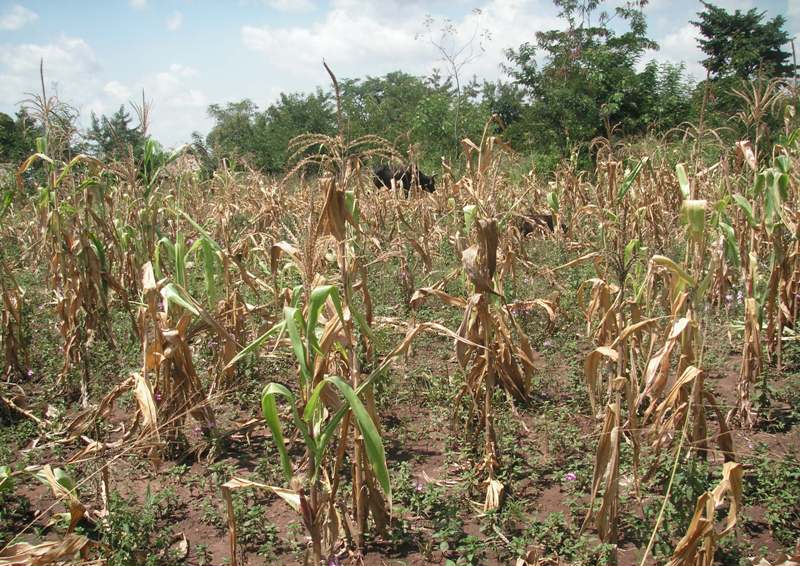
What the shift looks like in Sheema and Kabale
Two hundred kilometres west of the Marriott, the same story is playing out without the slide decks. In Kitagata, Sheema District, smallholders are moving off informal moneylenders onto structured credit from Kitagata Financial Services, a member-owned institution. “Farmers heavily relied on informal moneylenders who charged exorbitant interest rates, often resulting in the loss of land and other property when loans were not repaid,” said board chairman Edgar Mukundane. Emmanuel Kamugisha, a local businessman, put a price on it from experience: “One time, a section of my cows was taken by a moneylender when I delayed to pay the loan I had obtained.”
The demand was always there, waiting for a cheaper supplier. General Manager Joanita Nankunda said Kitagata's portfolio had risen from Shs1.2 billion to Shs8 billion in four years, helped by shareholder promotions rewarding consistent savers with livestock, farm tools and household items.
In Kabale, Nyabyumba Farmers' SACCO — founded in 2004 as a Farmer Field School — opened its fifth outlet on 18 September at Katuna, on the Rwandan border. Resident Jackson Ndabwine said people had previously spent Shs15,000 to Shs20,000 on transport to reach the nearest branch: a cost that rations credit as effectively as any interest rate.
But General Manager Ambrose Akankwasa used the opening to raise an alarm rather than take a bow, warning of growing food insecurity and a cash-flow crisis across Kigezi — partly, he said, from disrupted farming and dairy activity following intensified enforcement against cultivation in protected wetlands. Communities pushed out of the wetlands need alternative livelihoods and upland technologies, he argued, not simply a branch closer to home.
The layer that is missing
Which brings the argument to the part of the financial stack that barely exists for Ugandan farmers. John Makosya, Chief Operations and Impact Officer at Agro Consortium Uganda Limited, told theCooperator this week that SACCOs should stop treating insurance as somebody else's product. “What is stopping the SACCOs from insuring those loans they are giving to their members?” he asked, suggesting cooperatives could also help members insure expected yields where repayment depends on a single farming enterprise.
The logic is hard to fault. Agricultural credit is exposed to risks entirely outside the borrower's control — drought, excessive rain, hail, pests, disease, livestock loss. Every one of those is a repayment event, and every one is what lenders price into that 19.6 percent. If the risk is transferred, the premium should fall. If it is not, a cheaper headline rate simply means a farmer borrows more money to lose in a bad season.
Makosya pointed to technology as the way to make small policies viable: “Leverage satellite data, GPS mapping, and weather analytics to monitor farmers remotely, reduce field visits, and lower administrative costs.” Remote monitoring is what makes a modest premium on two acres worth writing at all. The obstacles he flagged are familiar and not small — affordability, claims assessment, settlement speed — and he stressed a point that gets lost in the enthusiasm: taking insurance alongside a loan does not mean every loss is compensated. A cooperative that oversells that will destroy trust faster than a moneylender ever did.
Why the timing matters
Uganda has just come through a drought that wiped out crops across Masaka, Isingiro, Luweero, Nakasongola, Teso, Acholi and Karamoja, and the country's flagship rural credit vehicle is already carrying the consequences. Parish Development Model recovery rates in several districts have been derisory — in Nakaseke, Shs28.2 million recovered against Shs25 billion disbursed. Much of that money went into crops that never came up.
That is not primarily a credit-discipline problem. It is an uninsured-risk problem wearing a credit-discipline costume. The Uganda Agriculture Insurance Scheme, covering around a million farmers with a state premium subsidy, has never been scaled to absorb a shock of this size.
The forecast is not reassuring either. The Ministry of Water and Environment's September-to-December outlook has an established El Niño episode intensifying over central, eastern and northern Uganda, with raised risk of extreme rainfall, hailstorms, strong winds and flash floods. Farmers who borrowed at 19.6 percent to replant after the dry spell are about to test how much protection a low interest rate offers against a hailstorm.
Institutions like Kitagata and Nyabyumba are precisely the intermediaries best placed to bundle credit with cover — they know their members, hold the repayment relationship, and are present in parishes where insurers are not. Whether they emerge from the ongoing Bank of Uganda licensing transition with the capacity to do it is a live question.
The bottom line for farmers
For a smallholder in Sheema or Kabale, the reading is mixed but useful. Credit is cheaper and easier to get than six months ago, and the worst-priced option — the village moneylender — is losing ground. That gain is real, and it is measured in land titles not lost.
But the price of farm credit still embeds a risk premium that nobody has taken off the farmer's shoulders. Until agricultural lending routinely arrives with cover attached — priced honestly, explained plainly, settled quickly — falling interest rates will mostly change the size of the debt a bad season leaves behind. Musasizi's list had five verbs in it. The financial system has learned four.



