Pests & Disease
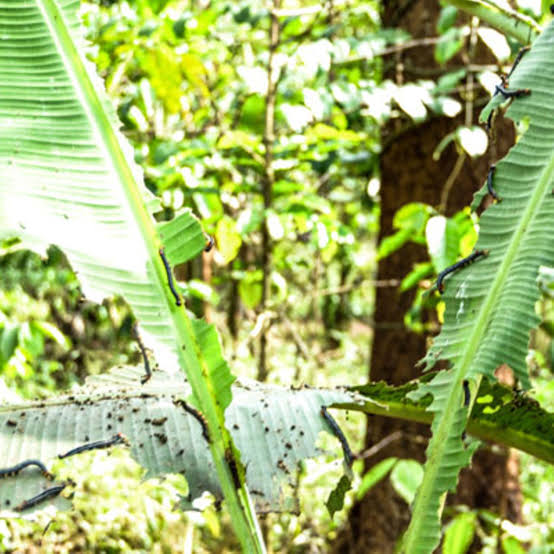
Black swallowtail caterpillars are again stripping gardens in Malongo Sub-county, crawling into homes, and leaving leaders appealing to the Office of the Prime Minister for pesticides the district says it cannot afford.
Agriculture
In the villages of Kyamatafari and Kikooba, in Malongo Sub-county of Lwengo District, the farming season has taken an unwelcome turn. Farmers report that black swallowtail caterpillars have attacked a wide range of crops, that some have wandered out of the gardens and into homes, and that the pesticides they have tried have not worked. Parents, according to a Nile Post report published on 27 October 2026, fear that small children could pick up the insects and put them in their mouths.
The outbreak is not new to the area, and that is what makes it a useful test of how Uganda handles localised pest emergencies that are too small to make national headlines but large enough to threaten a village's food supply. A similar infestation hit five Lwengo villages in 2023, and three years on the district is making much the same appeal, with much the same constraint: it says it does not have the money to buy pesticides and distribute them to farmers.

What farmers are seeing
Edward Kagoboka, the chairperson of Kyamatafari Village, told Nile Post that farmers are growing desperate because the pest threatens the crops on which households depend for both food and income. The report does not name the specific crops affected, and it gives no acreage, no estimate of losses and no caterpillar counts, so the scale of the damage is not yet independently measured. What it does record is a strong sense of alarm among local leaders. Madoc Kanyesigye, the Lwengo District Speaker, and Ronald Twijukye, the Malongo Sub-county chief, both called for urgent intervention to limit crop losses and protect livelihoods.
Farmers have asked the government for effective pesticides and other support, and local leaders want agricultural experts to visit, assess the infestation and recommend control measures. The district has gone a step further and appealed to the Office of the Prime Minister, the body that coordinates national disaster preparedness and response, treating the infestation as something closer to a disaster than a routine plant-health problem.
The timing compounds the worry. The report notes that recent drought and strong winds had already disrupted farming in the area, so households entering the second season were starting from a weaker position. Farmers fear the infestation could deepen food insecurity at a moment when the wider country is already under strain, a point taken up in our companion story on the latest national hunger assessment.

A pest with a history in Lwengo
The 2023 episode offers some context. Coverage from November 2023 described black swallowtail caterpillars damaging maize, beans, coffee and other essential crops in Lwengo Rural Sub-county, including the villages of Kabusirabo and Kyenvunikidde. Local officials quoted at the time included the district entomologist, Cyrus Mwesigwa, and the district agriculture officer, Mary Kampiire, who said the district lacked the capacity to fight the pest and asked for emergency support. The Resident District Commissioner, Hajji Ramadhan Walugembe, promised government action.
That 2023 coverage also recorded how local people understood the insect's behaviour: it tends to appear in the dry season, and fewer are seen in cold weather, when they are said to hide in holes underground. Another account, citing experts, noted that black swallowtails have two generations a year, with the first butterflies emerging between late April and early June after overwintering as chrysalides and a second group emerging in late summer. These are descriptions reported in the press rather than findings of a field study, but they point to something farmers and officials can use: the pest is seasonal and recurs, which means it can be anticipated.
The current report states that the Ministry of Health supplied pesticides during the 2023 outbreak and that residents used them to bring the pest under control. The report does not specify the quantity supplied, and this newsroom has not been able to confirm the detail independently. If accurate, it suggests that a rapid, modest intervention was enough last time, and that the present problem is partly one of delivery speed and budget rather than the absence of a known remedy.
Why a local outbreak becomes a national question
Uganda has an elaborate institutional framework for crop pests, from the Ministry of Agriculture, Animal Industry and Fisheries (MAAIF) to the National Agricultural Research Organisation (NARO) and district production offices. In practice, though, district governments carry the first response, and many operate on thin local budgets. When an outbreak strikes a sub-county in a district with no pesticide line item, the choice is between waiting for a central agency to notice and appealing upward. Lwengo has chosen to appeal, and in doing so has pointed to a gap: there is no obvious, automatic mechanism by which a confirmed, recurring pest outbreak in a single sub-county triggers central supply of control products.
There is also a technical question that the reports leave open. Farmers say the pesticides they have used have failed. That could mean the wrong product, the wrong dose, poor timing against the caterpillars' life stage, or products of doubtful quality. Uganda's wider concern about counterfeit and substandard farm chemicals, which the Agriculture Minister told Parliament about last week, makes the last possibility one that officials cannot dismiss. Without an expert diagnosis, farmers risk spending scarce money on inputs that do not work, and may use stronger chemicals unsafely around homes where caterpillars are now crawling.
The household dimension deserves attention too. When pests enter living spaces, the response is no longer only about crop protection. Spraying near homes and children carries its own health risk, and the reported fear that children might handle or eat the insects means that public-health and extension messaging need to travel together. Previous analyses of pesticide handling in Uganda have repeatedly found weak use of protective equipment and poor label comprehension, so any response that simply hands out chemicals without training could trade one problem for another.

What a good response would look like
Several steps follow from the evidence in the reports. First, an expert team from MAAIF, NARO or the district production office should confirm the species and the affected crops, and measure the area infested, so that the response is sized to the problem rather than to anxiety. Second, extension officers should advise on products that are registered for this pest, on dosage and timing, and on safe use near homes. Third, where affordable, hand-picking and destroying caterpillars in the early stages, a common low-cost practice in small outbreaks, can complement chemical control, though it is only practical on a limited scale.
Fourth, and most important for the long run, the district and the centre should treat the recurrence as a signal. If outbreaks have now appeared in 2023 and 2026, a seasonal early-warning routine, with surveillance by village agents in the months when the first generation emerges, would cost far less than a reactive appeal each time. The pattern in Lwengo is precisely the kind that planned monitoring is designed to catch.
What it means for farmers and the wider economy
For the households of Kyamatafari and Kikooba, the immediate stake is the next harvest and the food it provides. Lwengo sits in the Masaka sub-region, a coffee, banana and food-crop area that supplies markets in the central region, and local losses can feed into the market prices that urban consumers see. The effect of one sub-county's outbreak on national prices is likely to be small, but the same dynamics repeated across districts, with drought, pests and weak local budgets, are part of why food prices have been under pressure this year.
The larger lesson is about speed and responsibility. The outbreak has been reported, leaders have named the need, and a plausible remedy has been used before. What remains to be seen is whether the Office of the Prime Minister, MAAIF or the Ministry of Health will respond quickly enough to save this season's crops, and whether, having responded, anyone will build the surveillance and funding arrangements that would make the next appeal unnecessary.
This report is based on published accounts and does not include independent field observation. Figures on crop losses and the affected area were not available at the time of writing, and the caterpillar species has been identified in the reports as black swallowtail but has not been verified by a named expert in the current coverage.
Published By | Features Editor