Written By | Staff Writer
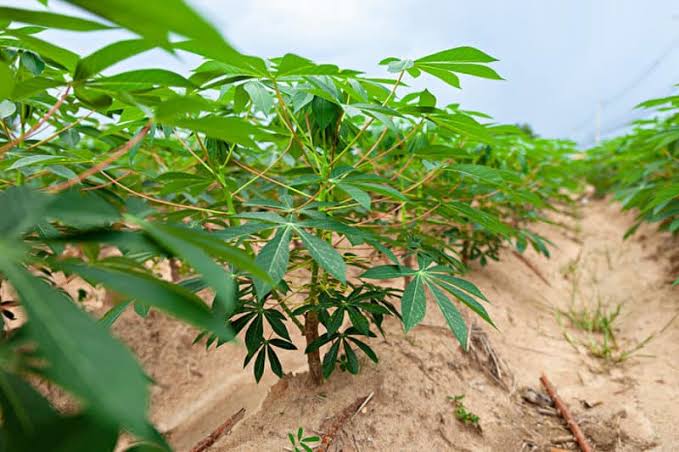
A new multiplication farm at Nabuin in Napak District aims to put clean planting material in the hands of 6,000 farmers, as hunger persists across the sub-region.
Agriculture
In Karamoja, the cruelest part of farming is the calendar. A crop that needs four months of reliable rain can be lost in three weeks of silence in the sky. That is why a quiet announcement from the National Agricultural Research Organisation (NARO) this week deserves more attention than its modest headline suggests: a 200-acre cassava multiplication and demonstration farm at the Nabuin Zonal Agricultural Research and Development Institute (ZARDI) in Napak District.
According to Nile Post, which reported on the initiative on 5 October 2026, the farm is being run under the Uganda Climate-Smart Agricultural Transformation Project (UCSATP). Its stated purpose is twofold: to multiply clean planting material of improved cassava varieties, and to show farmers how to grow the crop well. NARO expects the 200 acres to reach about 6,000 farmers, with roughly 200 farmer groups already engaged.
A farm that is also a nursery
The word 'multiplication' matters. Cassava is propagated from stem cuttings rather than seed, which means farmers who replant from their own gardens can pass on pests and viral diseases year after year. A dedicated multiplication site allows an institute to produce cuttings of known varieties in volume and distribute them to groups who then plant, harvest and, in time, become sources of cuttings for their neighbours.
Three varieties are being promoted at Nabuin, according to the Nile Post report: NAROCAS 1, described as well adapted to the region with good yield potential; NASE 14, noted as adaptable to local soils, high-yielding and quick-maturing; and NASE 19, listed for its high-yielding characteristics. Dr Walter Odongo, the Director of Nabuin ZARDI, put the logic plainly: "The intention here is about two-fold: one, to increase access to quality planting material, but also to demonstrate cassava production technology to the farmers."
The project is also a modest local employer. The report says about 50 local workers are engaged daily on the site at roughly Shs7,000 a day. That is a small wage by national standards, but in a sub-region where cash income is scarce it is a meaningful, if seasonal, injection.
Why cassava, and why now
The case for cassava in Karamoja rests on one characteristic: it keeps. Dr Ijara Anthony Raphael told the reporter that cassava can ensure food availability throughout the year because it can be harvested piecemeal and is always available when needed. The report adds that the crop can remain unharvested in the soil for more than two years, giving households what amounts to an underground food reserve. For families whose maize or sorghum fails, a cassava plot is a savings account that does not need a bank.
The timing is not accidental. The Monitor reported on 4 August 2026, citing the Integrated Food Security Phase Classification (IPC) assessment carried out by government and partners, that more than 473,000 people in Karamoja faced acute food insecurity between April and July 2026. The worst-affected districts named were Kaabong, Kotido, Karenga, Moroto and Nabilatuk, where more than 5 percent of the population was in emergency conditions and up to 45 percent faced crisis or worse. Those are sobering figures, and they explain why every institution working in the sub-region is now searching for crops that tolerate dry spells.
Cassava is not NARO's first move in that direction this season. On 20 July 2026 the organisation highlighted NAROsorg2, a drought-tolerant sorghum variety that matures in three months against four to six for traditional types. Ms Grace Akol, a farmer featured in that piece, expected to harvest more than 20 bags of unthreshed sorghum from one acre despite a three-month dry spell between April and June, to feed a household of 18. Sorghum and cassava are complementary rather than competing: sorghum gives a quick grain harvest in a short season, while cassava provides a long-lived reserve.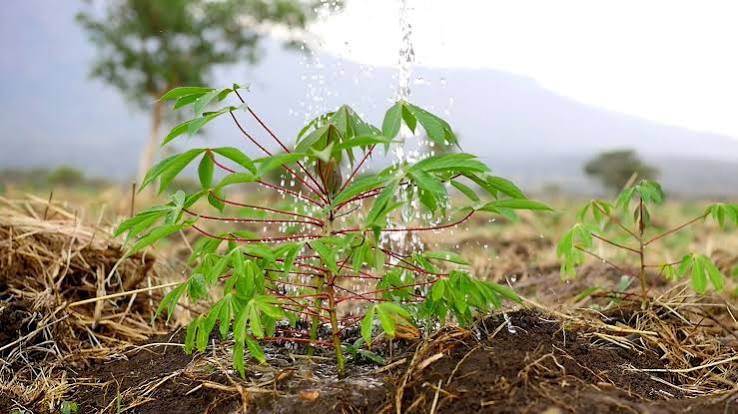
The policy backdrop
The Nabuin farm sits inside a wider political push. President Museveni announced a three-phase Karamoja food stabilisation strategy on 9 September 2026 at the Karamoja Cultural Event in Moroto, beginning with climate-resilient seed and livestock support and moving towards irrigation. Seed and cuttings are the cheapest, fastest part of any such plan, and they are exactly what a multiplication farm produces. If the strategy's short-term phase is to mean anything on the ground, someone has to grow the planting material first.
UCSATP itself has had a mixed public record in recent weeks. Earlier reporting in September flagged a gap between the project's co-funding commitments and the activation of farmer e-wallets in some districts. The Nabuin farm is a more tangible deliverable than a payment platform: acres planted, cuttings distributed, groups trained. It will be one of the easier UCSATP investments for outsiders to verify.
What could go wrong
Planting material is only the first link. Several risks deserve honest attention, and none of them is addressed in the available reporting, so they are offered here as analysis rather than as findings.
The first is delivery. Cuttings are bulky and perishable compared with a packet of seed. Reaching 6,000 farmers means moving material over long distances on poor roads, and planting it within days. The second is the rains: a multiplication farm that is not irrigated is itself exposed to the same dry spells it is meant to help farmers survive. Reporting does not say how the 200 acres will be watered, and that is a question worth putting to NARO. The third is the market. Cassava is a food-security crop first, but households that grow surpluses will need somewhere to sell or process them. Without a buyer, even a successful harvest risks becoming another story of produce rotting in the garden.
The fourth risk is cultural and dietary. Karamoja's agro-pastoral households have historically leaned on sorghum, maize and livestock products. Cassava is gaining ground, but extension work will need to include preparation, storage and processing, particularly if the crop is to be dried into chips or flour that keeps beyond the garden.
What it means beyond Napak
For farmers, the immediate implication is access: groups in the project's catchment should be asking their local ZARDI and district production offices how and when cuttings will be released, and on what terms. For policymakers, the lesson is that resilience is built from unglamorous things, such as nurseries, wages for planting labour, and demonstration plots that neighbours can visit. For the wider economy, every household that moves from relief dependence to a self-sustaining food reserve lowers the pressure on humanitarian budgets and on food prices elsewhere.
Uganda's national food-price picture has been dominated this season by weather shocks and fuel costs, with annual inflation hovering around 4.6 to 4.7 percent in September. Karamoja is a small share of national food output, but it is a large share of national food-insecurity headlines. A region that can feed itself through the dry months is a region that stops appearing in them.
The test of the Nabuin farm will not be the number of acres planted but the number of gardens, a year or two from now, where a household can pull a cassava root from the ground in the middle of a bad season and not have to wait for a food truck. That is a modest ambition, and in Karamoja it would be a historic one.



