Agriculture
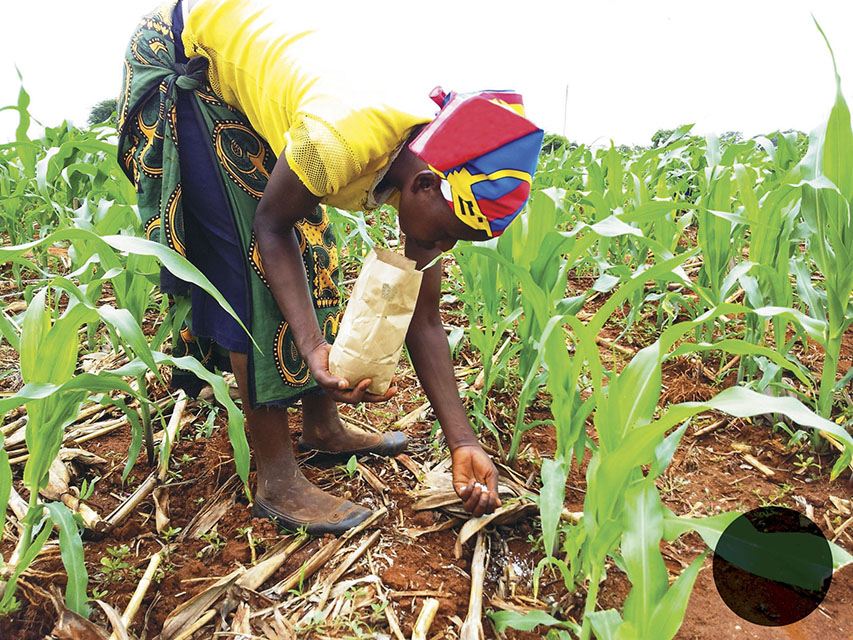
Uganda's Cabinet has approved a new national programme to procure and distribute fertiliser to farmers across the country, a decision announced on August 25, 2026, that puts the government back in the business of subsidising a farm input it has struggled for decades to get into the hands of smallholders at scale.
The resolution came out of a Cabinet meeting at State House, Entebbe, on Monday, August 24. ICT and National Guidance Minister Justine Kasule Lumumba told journalists the following day that the programme would run through the Ministry of Agriculture, Animal Industry and Fisheries and would target beneficiaries of the Parish Development Model, the government's flagship anti-poverty financing scheme.
"Through the Ministry of Agriculture, Animal Industry and Fisheries, the government will distribute fertilisers to farmers in different parts of the country," Lumumba said, according to Pulse Uganda's report on the briefing. "The intervention is intended to increase production, productivity of strategic crops and support beneficiaries under the Parish Development Model."
She added that the ministry would "work out the detailed implementation arrangement and communicate to the public, including information on the targeted crops, beneficiary areas and distribution process" — meaning that, for now, the country knows a fertiliser programme is coming but not which crops it will prioritise, which districts will benefit first, how many farmers will be reached, or what it will cost the treasury. Cabinet did signal one operational detail: it wants the rollout timed to the rains that have already begun falling in several parts of the country, so that farmers can apply fertiliser ahead of planting rather than after the growing window has closed.

A sector too big to keep starving of inputs
The timing puts a spotlight on just how central agriculture remains to Uganda's economy, and how far short its productivity still falls from potential. According to the Agriculture ministry's latest statistical abstract, the sector contributed about 26.2 percent of Uganda's gross domestic product in the 2024/25 financial year and grew 6.6 percent over the same period — a growth rate that outpaces population growth but lags behind what officials say is achievable with better inputs.
The raw output numbers are large. Uganda produced roughly 4.27 million tonnes of maize and 771,000 tonnes of beans in 2024, and milk production reached 5.4 billion litres. On the export side, coffee remains the country's single strongest agricultural earner: Uganda shipped 7.75 million 60-kilogramme bags in 2024/25 worth about $2.21 billion. Cocoa exports reached 72,545 tonnes worth $620.76 million, maize exports brought in $123.79 million, fruit and vegetable exports were valued at $102.56 million, and tea exports added $54.68 million.
Yet a World Bank assessment cited alongside the Cabinet announcement identifies low use of fertiliser, improved seed and machinery as among the biggest constraints holding Ugandan farmers back, alongside soil degradation and limited irrigation. Those constraints are not new to anyone who has followed the sector closely this year: an August 6 government review of the soil nutrient crisis found that Ugandan farmers apply only 1 to 2.4 kilogrammes of fertiliser per hectare, compared with roughly 32 kilogrammes per hectare in Kenya and 29 kilogrammes per hectare in Rwanda — among the lowest application rates in the region, on soils that have been cropped continuously for generations without replenishment. A separate finding from earlier this month showed that formal irrigation covers under 2 percent of Uganda's farmland, meaning that even well-fertilised fields remain highly exposed to the swings between drought and flood that have battered different parts of the country this year.
Most farmers in Uganda still depend entirely on rainfall, the ministry's own briefing materials acknowledge, which leaves production vulnerable to drought and to the kind of erratic, El Niño-linked weather patterns the Ministry of Water and Environment has been warning about since midyear. Pests and diseases compound the problem: the Agriculture ministry estimates pre-harvest losses of 10 to 20 percent from pests and disease alone, while post-harvest losses — from poor storage, weak market linkages and bad rural roads — can reach 20 to 30 percent of what is actually harvested. Uganda's Fourth National Development Plan lists limited mechanisation, poor market links, low fertiliser use and inadequate irrigation as the core barriers preventing agriculture from becoming a more productive, commercially oriented sector rather than a subsistence one.

Not the government's first attempt
This is not the first time in the past year that the government has tried to move the needle on fertiliser access. In 2025 it backed plans for a $180 million organic fertiliser factory at Kampiringisa with a proposed production capacity of 250,000 metric tonnes a year, and earlier this month the Agriculture ministry was still delivering organic fertiliser in smaller batches — including a 900-bag delivery to farmers in Ntungamo — under a co-funding arrangement aimed at chipping away at the same soil nutrient gap. What Cabinet approved this week is different in scale and design: rather than a single factory or a localised co-funding pilot, it is a national procurement-and-distribution commitment routed through the PDM structure that already channels low-interest loans to an estimated 39 parish-level cooperative societies across the country.
That routing choice carries its own risks. The PDM has faced sustained criticism this year over fund diversion, beneficiary vetting failures and slow disbursement — including a payment dispute in Masaka involving coffee seedling suppliers and a nationwide push for fresh SACCO elections after biodata mismatches and loan recovery problems surfaced in districts from Hoima to Kapchorwa. Layering a fertiliser distribution programme onto a financing vehicle that is still working through its own governance problems means the ministry will need tighter beneficiary lists and delivery tracking than some past PDM interventions have shown, if the input is to reach genuine smallholders rather than being diverted or resold.
There is also the counterfeit-input problem hanging over any large state fertiliser push. Uganda's seed sector already grapples with counterfeit products — a 2025 industry estimate put fake seed at 30 to 40 percent of what is sold to farmers — and there is no reason to assume fertiliser markets are cleaner. A state procurement programme could help by displacing lower-quality inputs sold informally, but only if procurement itself is transparent about sourcing, and only if the promised implementation details — crops, districts, delivery timeline — arrive before farmers miss the current planting window waiting for a programme that has, so far, been announced in principle only.
What success would look like
For farmers, the immediate test is simple: does fertiliser show up in their district before the rains that have already started in parts of the country move past the ideal application window. For the wider economy, the stakes are bigger. Uganda's food-crop inflation has already been running hot this year on the back of an earlier dry spell, and any productivity gain from better soil nutrition would help ease price pressure on staples at a moment when households are also absorbing higher fuel costs. A more productive maize and bean harvest would also feed into the country's broader push to close its agricultural trade gaps — from rice import dependency to a sugar sector eyeing new export markets — all of which ultimately trace back to the same underlying constraint the World Bank flagged: too many Ugandan farms are still working soils that have had almost nothing put back into them.
Whether this programme becomes the moment that changes that picture, or another announcement that outruns its own implementation, will depend on details the Agriculture ministry has not yet released. Cabinet has set the direction. The Ministry of Agriculture, Animal Industry and Fisheries now has to turn a one-paragraph resolution into bags of fertiliser reaching real farms before the rains move on.
Published By | Features Editor