Rubanda's farmers have waited since May for steady rain. Two portable solar pumps, a subsidised loan clinic and a doubling of transport costs show how far the drought's reach extends, and how thin the response is.
Agriculture Desk
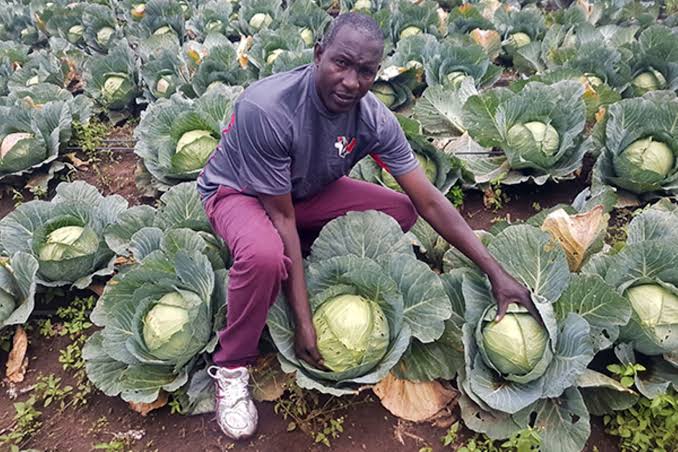
In Rubanda District, in the hills of south-western Uganda, a cabbage that sold for about Shs500 a few months ago now fetches around Shs3,000. The six-fold jump, reported by Nile Post on 20 October, is the sharpest price signal yet from a district that has been dry since May 2026. This week, farmers there received two portable surface solar-powered pumps to irrigate crops. Two pumps for a district-wide drought is a modest response, but the story of how they arrived, and of what the drought has done to prices from the Kigezi highlands to Kalerwe market in Kampala, says a good deal about how Uganda manages weather risk.
A district out of rain
Rubanda is among the districts that normally supply Kampala with Irish potatoes, beans, cabbages and other highland produce. At a Microfinance Support Centre loan clinic in September, Assistant Resident District Commissioner Hillary Bindeeba said the dry spell had affected "virtually every major crop" in the district, listing Irish potatoes, sweet potatoes, bananas, maize, beans, peas and sorghum. Some farmers who once harvested up to 100 bags of Irish potatoes for sale in Rubanda and Kampala had a poor season. District Vice Chairperson Prossy Kesafari said a typical household could not produce 100 kilogrammes of beans, 200 kilogrammes of sorghum or 100 kilogrammes of Irish potatoes.
These are local officials' observations rather than measured crop-loss data: the reports contain no rainfall records or percentage losses. That absence is itself a finding. Uganda's early-warning systems are strong on national forecasts, such as the Ministry of Water and Environment's El Niño outlook for September to December, but weak on district-level damage assessment that would guide relief and credit decisions in places like Rubanda.
The pumps, and where they came from
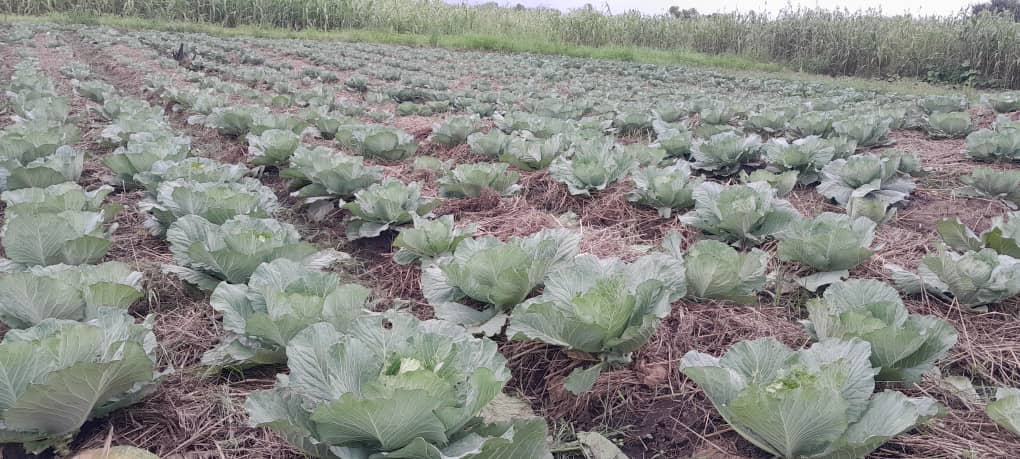
The two pumps were handed over in Kacerere Town Council in Rubanda West and in Ruhonwa Parish in Hamurwa Sub-county. According to Nile Post, they were obtained from the National Planning Authority after lobbying by Finance Minister Henry Musasizi, Rubanda District Woman MP Evelyn Ninsiima Kikafunda and Rubanda West MP Bruce Balaba Kabaasa. The same lobbying drive also sought delivery beds for health facilities, solar systems, water tanks, sewing machines and incubators.
That detail matters. The pumps did not arrive through an agricultural drought-response plan; they arrived through the political channel of constituency lobbying. It is a common route for public goods in Uganda, and it can work, but it makes equipment distribution depend on the access of local leaders rather than on assessed need. Rubanda's agricultural engineer, Ivan Mugisha, and assistant agricultural officer Asiimwe Savius used the handover to urge beneficiaries to maintain the pumps, and officers noted that their usefulness depends on how communities share access, manage water sources and keep up the equipment. Shared equipment on shared water is where such projects most often falter.
Why a dry hillside raises prices in the capital
The price effect reaches far beyond Rubanda. The Observer reported on 30 September, in a piece republished by Uganda Online, that wholesale shortages at Kalerwe Market in Kampala had pushed yellow beans from Shs4,000 to Shs6,000 a kilogramme, groundnuts from Shs6,500 to Shs8,000, and maize flour up by about 50 percent. Moving produce from Kabale to Kampala has doubled in cost, from Shs20,000 to Shs40,000, as higher fuel prices compound the supply shock, and traders pass that on to consumers.
The household response is revealing. Families are buying about half their usual quantities, and some are stretching meals with cabbage in place of beans. This substitution lowers the nutritional quality of meals, shifting away from protein just as cabbage itself becomes expensive in drought-hit areas. Vendors quoted by the paper doubted that prices would stabilise without a wider economic improvement, although some hoped that rains and better harvests around November could bring relief.
Put together, the Rubanda and Kalerwe reports describe a classic compound shock. A weather event cuts supply; fuel costs lift transport prices; and a weaker shilling and general inflation limit what households can absorb. Each factor alone would be manageable. Together they explain why food prices are hurting even in a year the Agriculture Minister has just described to Parliament as one of strong sector growth.
Credit that costs 8 percent, and a credit that costs more
The September loan clinic offers a glimpse of the finance side. The Microfinance Support Centre, a government institution, offers loans from 8 percent a year, about 0.67 percent a month, which its western Uganda regional manager Williams Okweda called subsidised. Group financing starts at Shs5 million, can fund small-scale irrigation systems and other productive equipment, and comes with enterprise development, financial literacy and mindset-change training before disbursement. Kesafari said local moneylenders charge more than 10 percent, though the report does not state whether that rate is monthly or annual.
Subsidised credit for irrigation is a sensible tool in principle. Its limits are practical. Group loans reward cohesive, organised farmers and can exclude the poorest households, who are also the most exposed. Officials themselves were cautious: Kesafari warned borrowers against putting borrowed money entirely into rain-fed crops while the drought persists, and Bindeeba suggested piggery and sheep rearing as income sources less dependent on rain. Advice to diversify is sound, but diversification needs start-up capital that a household with a failed potato crop does not have.

A comparison from Bukomansimbi
A story from central Uganda on 21 October helps size the response. In Bukomansimbi, the Ministry of Water and Environment completed a Shs2.78 billion project across Butenga and Kitanda sub-counties that brought irrigation to Makoomi, Kiwenjula and Lwemiriti villages and piped domestic water to Kyankoole and Kagologolo. The three irrigation schemes have combined storage of 120,000 litres and support about 36 acres. The cost covers domestic water too, so it should not be read as a per-acre price, but the scale is instructive: even a multi-billion-shilling project irrigates a few dozen acres.
District Agricultural Engineer Kaawo Mubarak Kawere told Nile Post that to increase the irrigated area, storage capacity must also increase. The ministry is considering a multipurpose bulk water system to move water from surplus areas, including Lake Victoria, to dry districts, with studies planned for Bukomansimbi, Kalungu, Lwengo and Masaka. Consultant Mariam Nakakande advised farmers to study the market and understand peak and off-peak seasons, which is exactly the lesson of Rubanda's cabbage: the farmer who has water when others do not captures the price.
What it means
For farmers in Kigezi, the immediate question is whether the rains forecast for the coming weeks arrive in time for the next planting. For consumers, price relief depends on that same harvest, not on any policy. For the government, the drought is a reminder that a sector growing at 6.4 percent nationally still has pockets where households are eating less and borrowing more.
Three actions would help. District-level crop-loss assessments would let credit and relief reach the hardest-hit places. Small-scale irrigation equipment, including solar pumps, needs a planned distribution route that does not rely on lobbying. And the storage-first logic from Bukomansimbi should shape future schemes, because pumps without stored or reliable water only move the shortage around. Until then, the cabbage price at Rubanda's markets will remain a better drought indicator than any statistic.
Published By | Features Editor