Written By | Staff Writer
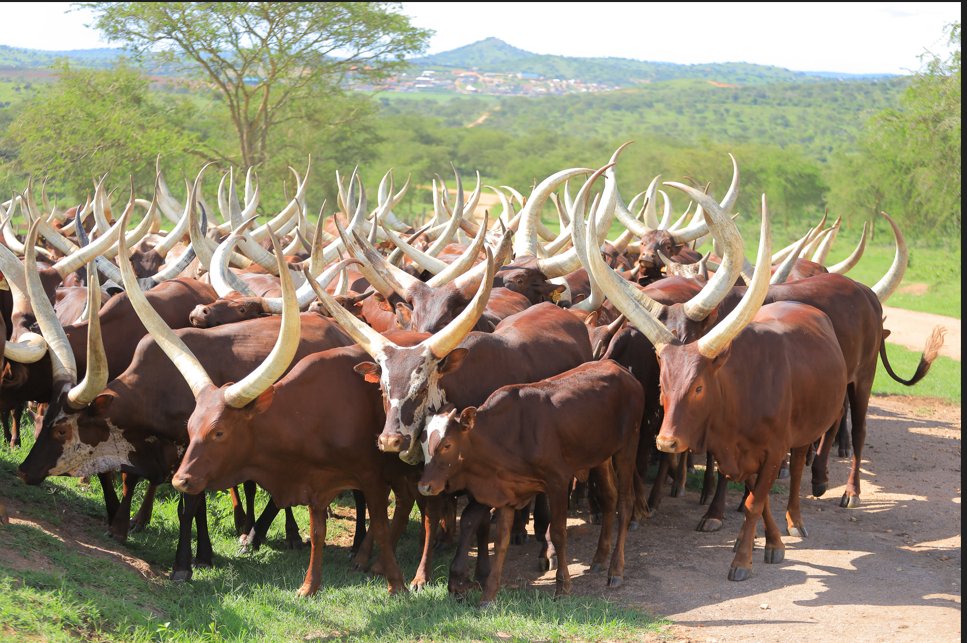
A three-year selection programme at Nshaara Conservation Ranch has raised average daily milk yield by 65 per cent. Can Uganda's iconic indigenous cattle become a dairy breed in their own right?
Agriculture
At the Nshaara Conservation Ranch in Kiruhura District, a quiet experiment is under way that goes to the heart of a long-running argument in Uganda's dairy sector: must a farmer abandon the indigenous Ankole longhorn, the long-horned symbol of western Uganda's pastoral culture, in order to earn a living from milk? Scientists at the National Animal Genetic Resources Centre and Data Bank (NAGRC&DB) say the answer may be no. Their selective-breeding programme, now about three years old, has lifted average daily milk yield in the ranch's herd by 65.4 per cent in two years, without a drop of exotic blood.
The figures were reported by Nile Post on 30 September 2026 and, if they hold up as the herd grows, they carry implications well beyond one ranch in Kiruhura: for the economics of the cattle corridor, for the cost of dairy farming, and for how Uganda thinks about the genetic assets it already owns.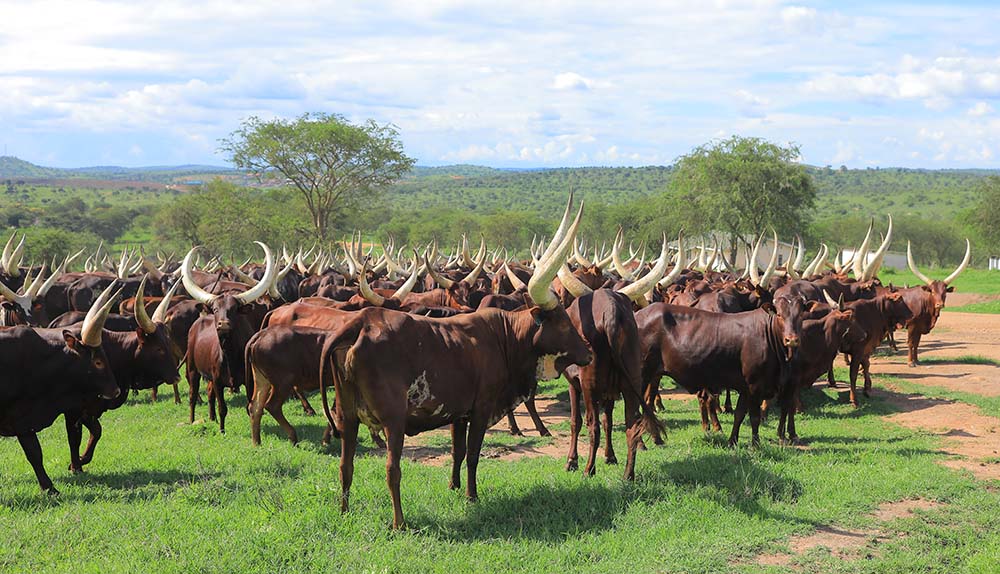
What the Nshaara numbers show
According to the NAGRC&DB data published in the report, the average daily yield at Nshaara rose from 5.2 litres in 2023 to 7 litres in 2024 and 8.6 litres in 2025. Over the same period, annual herd production climbed from 56,040 litres to 106,358 litres and then to 168,285 litres. The milking herd itself expanded from 24 cows to 60.
Two things are happening at once, and it is worth separating them. Part of the jump in total output is simply more cows being milked: the herd grew two and a half times. But the per-cow improvement is real, too. Yield per animal per day rose by 65.4 per cent, and the ranch's best selected cows are reported to give between 5 and 10 litres at a single morning milking. By comparison, the report notes that a typical conventionally managed Ankole cow yields about 2 litres. Using the published totals, our own back-of-envelope arithmetic suggests annual output per milking cow rose from roughly 2,300 litres in 2023 to roughly 2,800 litres in 2025, a gain of around a fifth, which is more modest than the daily headline figure but still meaningful for a breed long dismissed as a poor milker. (That per-cow calculation is this newsroom's estimate from the published totals, not a figure supplied by NAGRC&DB.)
Readers should also be cautious. The data come from a single, well-managed conservation ranch with a state breeding agency in charge of feeding, health and record-keeping. Whether a smallholder in Isingiro or Nakasongola, with a few cows, patchy pasture and no recording system, can reproduce them is the unanswered question.
How the programme works
Dr Innocent Tuwangye, the manager of Nshaara, described the method in plain terms: "We are identifying superior dairy traits that already exist within the pure Ankole population and systematically selecting and multiplying those genetics."
In other words, this is not crossbreeding and it is not an import programme. The scientists search the existing pure Ankole population for animals that already show better dairy characteristics, then breed from them, generation after generation. The selection criteria listed in the report are milk yield, lactation length, udder conformation and calving interval. Each matters commercially. A cow that gives more milk is obvious; one that stays in milk longer spreads her output over more months; good udder conformation reduces mastitis and makes hand milking easier; and a short calving interval means more calves and more lactations over a cow's productive life.
The approach is slow by design. Genetic gain through selection within a breed accumulates over generations, which is why a three-year record is best read as an encouraging early signal rather than a finished result. But that is also its attraction: improvements made this way are inherited, and they do not depend on a farmer continuing to buy expensive imported semen or replacement heifers.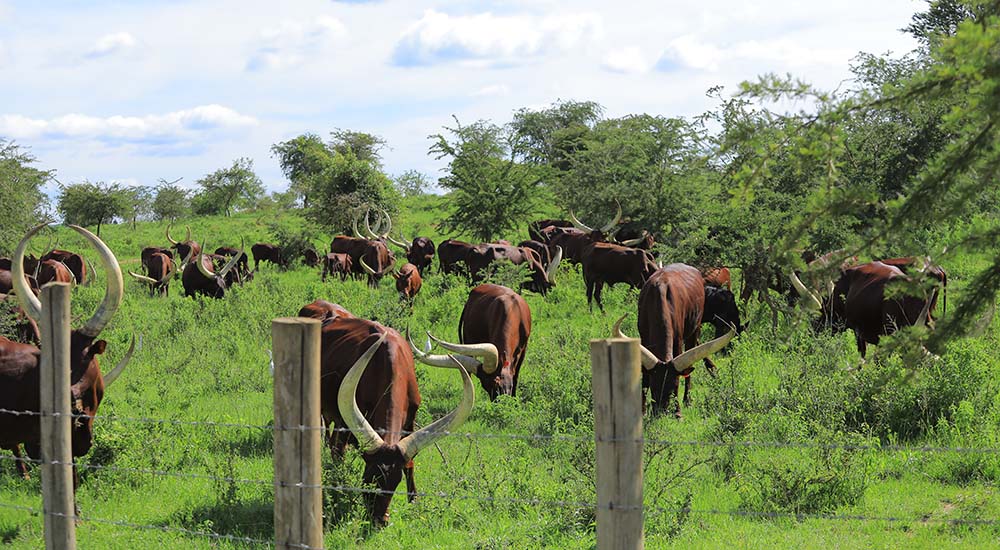
Why it matters: the economics of the cattle corridor
Uganda's cattle corridor, the dry belt running from the south-west through the centre to the north-east, is where indigenous breeds dominate and where climate stress is most acute. The Ankole's reputation rests on hardiness: it tolerates long walks to water, sparse forage and seasonal feed shortages better than high-yielding exotic dairy breeds such as Friesians, which demand better feed, more water and more veterinary care.
That hardiness has rarely been matched with productivity, and so farmers have faced a trade-off. They could keep the resilient Ankole and accept low milk volumes, or they could move to crossbreeds and exotics, and accept higher costs and higher risk. In a normal year the exotic route can pay. In a drought year it can be ruinous. Recent coverage has shown how exposed the corridor is: Nile Post reported on 21 September that around 1,000 cattle had died in a month in Nyakatonzi Sub-county in Kasese, and that daily milk collections there had collapsed. Independent reporting from 12 September quoted a Kumi farmer, Francis Okitoi, whose herd's output fell from over 45 litres a day to 21 as the dry spell bit.
Against that background, an animal that produces markedly more milk while keeping the Ankole's drought tolerance would shift the risk calculation for thousands of pastoral and agro-pastoral households. A cow giving 8 litres rather than 2 is not merely a better cow; at the same stocking rate, it can mean the difference between milk being a household food and milk being a cash crop.
The identity question
The headline of the Nile Post report says the cattle are bred for more milk "without losing their identity", and that phrase deserves attention. The Ankole is not just a production animal. In western Uganda it is tied to the status, ceremonies and history of pastoral communities, and to the country's tourism image. A breeding strategy that improves yield inside the pure breed protects that heritage in a way that wholesale crossbreeding cannot. It also guards against genetic erosion: as exotic and crossbred animals spread, pure Ankole numbers can decline, and with them the diversity that future breeders and climate-adaptation programmes may need.
This is part of NAGRC&DB's formal mandate. Its executive director, Dr Peter Beine, is named in the report as leading the agency, whose role covers both conserving indigenous animal genetic resources and making improved genetics available to farmers.
What has to happen next
Several steps will determine whether Nshaara's results turn into national impact. First, the data need independent scrutiny and publication in a form other breeders can test, including the heritability of the traits being selected. Second, the improved animals have to leave the ranch. That means a structured distribution system, such as bulls, semen or heifers placed with farmer groups and recorded over time, so that gains are verified under ordinary farm conditions rather than only on the ranch. Third, farmers need markets for the milk. Uganda's dairy chain has repeatedly seen farmers complain about low and fluctuating farm-gate prices, and extra litres are only valuable if there are collection centres and processors within reach.
Fourth, the programme will need sustained funding. Selection programmes can be undermined by short budget cycles; a herd that is only half-recorded for a few years loses much of its scientific value. Government has in recent weeks emphasised mechanisation, irrigation and input subsidies; a quiet, long-horizon investment in livestock genetics is less visible but arguably as important to productivity.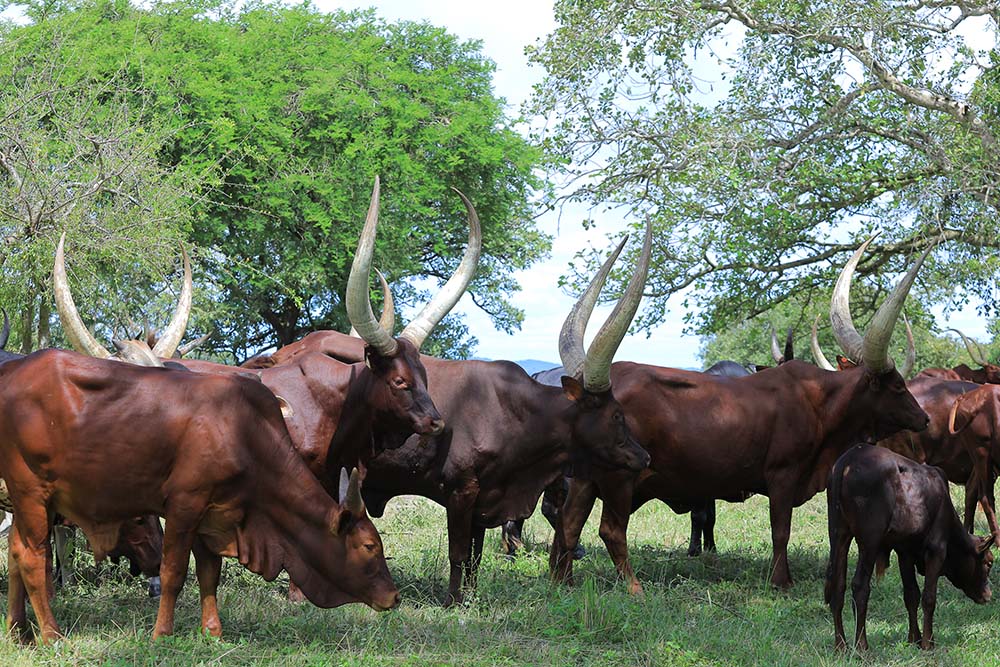
Implications for farmers and the wider economy
For farmers, the immediate message is cautious optimism. Pure Ankole herds are not necessarily a dead end for dairy, and farmers who already own good indigenous cows may be sitting on more potential than they realise. Practical steps, even before improved stock is widely available, include keeping simple records of each cow's yield and calving dates, culling the poorest performers, and asking NAGRC&DB for guidance on selecting breeding animals.
For the wider economy, dairy is one of the sectors where Uganda has had surplus capacity and regional export ambitions. Raising per-cow productivity within the large indigenous herd, rather than relying only on a small population of exotic cows, is a way of widening the base of milk supply at lower cost, and one that is more resilient to the El Niño-driven swings between drought and flood that forecasters have been warning about this season.
The honest summary is that Nshaara has produced a promising proof of concept, not yet a national solution. But in a sector that often pursues quick fixes from outside, a breeding programme that looks inward, at the animals Ugandan pastoralists have kept for centuries, deserves attention and patience.



