Written By | Staff Writer
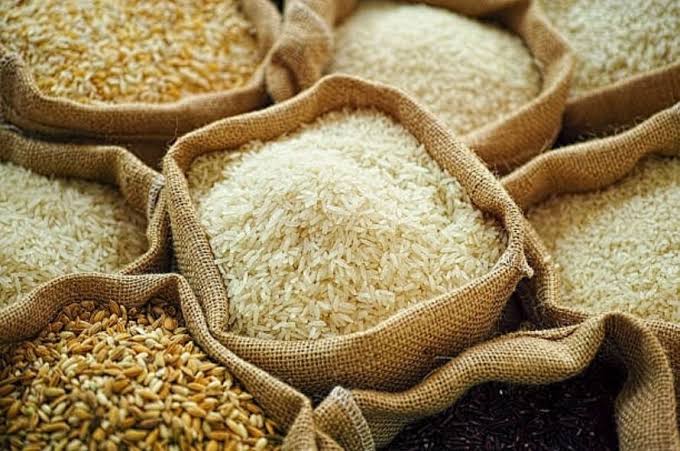
Supermarket shelves stocked with Tanzanian rice and Kenyan potatoes are forcing an uncomfortable question about a country that has spent decades calling itself the food basket of East Africa.
Agriculture
For decades, Uganda has carried the title "breadbasket of East Africa" as something close to a national identity — fertile volcanic soils, two rainy seasons in most regions, and a range of crops that supposedly meant the country would always be able to feed itself and its neighbours. That story is getting harder to tell. Rice increasingly arrives from Tanzania, Irish potatoes from Kenya, and a growing share of the fruits, onions and other fresh produce on Ugandan market stalls now crosses a border to get there. As Daily Monitor's Weekend edition reported this week, the shift is visible enough in ordinary markets that it is prompting economists, food-security analysts and even a senior official at the agriculture ministry to ask whether Uganda still deserves the title.
The rice numbers make the case starkest. According to World Bank trade data, Uganda imported 344.9 million kilogrammes of rice in 2022, worth roughly $146 million, with Tanzania supplying the overwhelming majority — 335.4 million kilogrammes worth $140.9 million. Pakistan, India, China and the United Arab Emirates made up the rest in much smaller volumes. Imports eased slightly in 2023, to 242 million kilogrammes worth $125 million, still dominated by Tanzania at 232.2 million kilogrammes. But the respite was brief: trade-data aggregator Volza recorded 9,090 rice import shipments into Uganda between May 2024 and April 2025, a 36 percent jump year-on-year, sourced from 1,904 foreign suppliers.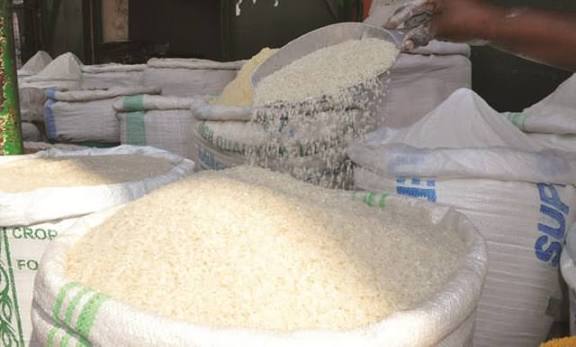
On the production side, the picture is just as sobering. Data from the Rice Business Sector Association Limited (RBSAL) shows domestic rice production has fallen to around 110,000 metric tonnes, against national demand estimated at 470,000 metric tonnes — a deficit of roughly 360,000 metric tonnes that has to be plugged mostly with Tanzanian rice. That gap did not open overnight: in November 2023 alone, Uganda produced 230,000 metric tonnes against the same 470,000-tonne demand figure, meaning the shortfall has roughly doubled in under two years even as the government's own strategy documents call for the opposite trajectory. Uganda's second National Rice Development Strategy (NRDS2), which targets self-sufficiency by 2030, aims to lift paddy production from 247,000 metric tonnes in 2023 to 717,000 metric tonnes, expand harvested area from 115,000 to 190,000 hectares, and raise yields from 2.1 to 3.8 tonnes per hectare — a plan whose first Annual Rice Sector Review Meeting only convened in May this year, underlining how early-stage the coordination effort still is relative to the size of the gap.
Why is this happening in a country with, on paper, some of the best growing conditions in the region? Dr Paddy Mugambe, a senior finance consultant at the Uganda Management Institute, points to structural weaknesses that have persisted despite years of government programming: smallholder farmers using traditional, rain-fed methods and recycled seed, resulting in "inconsistent production, low-quality and low-volume output, seasonal shortages, and high production costs." He argues that reduced tariffs among East African Community member states — a deliberate integration policy — now work against Ugandan producers by letting consumers and traders source cheaper or more reliable supplies from Tanzania and Kenya whenever local output falls short. Compounding the structural issues: limited irrigation, weak extension services, poor rural roads, fragmented landholdings, and constrained access to affordable finance — the same financing squeeze that Bank of Uganda's own survey data has shown tightening across the agricultural sector this year.
The sharpest criticism, though, comes from Job Kiija, associate director at Innovations for Democratic Engagement and Action (IDEA), who frames Uganda's shift from regional exporter to net food importer as "a fundamental failure of State capacity, regulatory oversight, and strategic economic governance." He points to Tanzania's state-led block farming programmes and Kenya's state-backed logistics investment as the kind of deliberate industrial policy Uganda has lacked, arguing that "natural endowments alone cannot compensate for weak institutional structures." Kiija is particularly pointed about the coexistence of rising food imports with regional hunger crises — Karamoja has recorded hunger-related deaths and emergency food procurement this year even as urban markets fill with imported rice and potatoes — calling it evidence of "a profound breakdown in national food distribution systems, State-led safety nets, and long-term agricultural planning." He traces the institutional failure back through the National Agricultural Advisory Services (NAADS), which he says became "heavily politicised, riddled with corruption," and into the Parish Development Model, which he argues repeats the mistake by distributing cash with limited oversight, mechanisation or extension support — a critique consistent with the loan-recovery and diversion concerns that have dogged PDM SACCOs elsewhere this year.
Post-harvest losses compound the production shortfall. Julius Bogere, a Kampala-based rice dealer, estimates that thousands of tonnes of food are lost annually "due to inadequate storage facilities, poor road networks, and weak value-addition systems," with much of Uganda's produce sold raw or wasted before reaching a buyer at all — losses independently estimated elsewhere at 30 to 40 percent of total output. Bogere contrasts this with Tanzania's expansion of irrigated, mechanised rice production and Kenya's investment in horticulture and potato value chains, both of which have let those countries meet domestic demand and still export surplus into Uganda.
Government's position on the politically obvious fix — taxing Tanzanian rice imports to protect local producers — is a firm no. Major General David Kasura Kyomukama, Permanent Secretary at the Ministry of Agriculture, Animal Industry and Fisheries, told Monitor that President Museveni has rejected repeated business-community proposals for import tariffs for three reasons: taxing Tanzanian rice would protect inefficient Ugandan producers rather than push them to compete; it risks retaliatory trade measures from Tanzania, a route through which much of Uganda's own coffee exports transit; and Uganda separately exports substantial volumes of milk and other animal products to Tanzania that a trade dispute could jeopardise. On production itself, Kasura Kyomukama noted that government policy actively discourages rice cultivation in wetlands on environmental grounds, pushing the sector toward what he called more sustainable production — even though locally grown rice, he acknowledged, remains comparatively expensive.
Kiija's prescription is a shift in emphasis rather than a tariff wall: a digitised track-and-trace system to fight counterfeit seeds and inputs, which he says MAAIF and the Uganda National Bureau of Standards have failed to adequately police, and a restructuring of PDM spending away from unconditional cash transfers toward communal irrigation, standardised storage silos and cold-chain infrastructure. Dr Mugambe's list overlaps significantly — rural roads, storage, agro-processing, affordable finance, cooperative strengthening, quality standards and better market information systems.
There is a note of cautious optimism buried in the trend line. Uganda's National Agricultural Research Organisation is reportedly nearing release of a homegrown aromatic rice variety intended to boost farmer incomes and cut into the import bill, part of the same NRDS2 push that produced this year's first sector review meeting. Whether that innovation, or the broader NRDS2 targets, can meaningfully close a gap that has widened even as the strategy has been in effect will depend on exactly the structural fixes — irrigation, finance, storage, extension — that analysts have been recommending for years without full implementation. Until then, Uganda's claim to the breadbasket title will keep running up against the rice sacks on Kampala's supermarket shelves stamped "Product of Tanzania."



