Agriculture
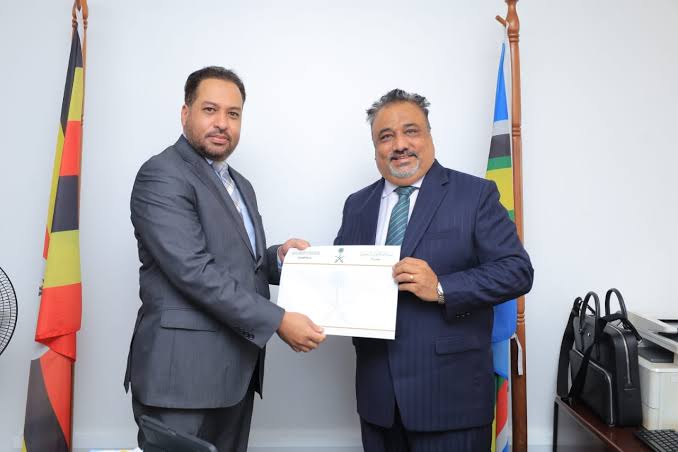
When Uganda's Minister of Trade, Industry and Cooperatives, Sanjay Tanna, sat down this week with the Kingdom of Saudi Arabia's ambassador to Kampala, Mohammed Bin Khalil Faroudah, the pitch was unusually direct. "We are here to work. Uganda is ready for business. The opportunities are immense, and we need your collaboration and support," Tanna told the ambassador, according to an account of the meeting reported by Nile Post on 5 August. Behind the diplomatic language sits a hard number: Uganda currently sells Saudi Arabia only about $9.11 million worth of goods a year, while buying roughly $149.15 million worth from the kingdom — fertiliser, plastics, sugar and other imports. It is a trade relationship tilted more than fifteen-to-one against Uganda, and closing that gap, Tanna argued, runs squarely through agriculture.
The meeting is the latest step in a broader Ugandan push to deepen economic ties with Gulf states — Saudi Arabia, the United Arab Emirates and Qatar chief among them — at a moment when the country is trying to convert years of agricultural output growth into durable export earnings rather than volatile, oversupplied domestic markets.
A Shift From Speculation to Demand
Central to Tanna's appeal was a policy shift Uganda has been signalling for much of the year: a move away from what officials call speculative production, in which farmers plant based on guesswork about what will sell, toward a demand-driven model in which production is aligned with confirmed buyers and contracts. "We need your support to find markets for our products. Uganda has enormous agricultural potential and is one of the most fertile countries in the region," Tanna said, listing maize, beans, milk, poultry, beef, fish, cassava, cocoa, honey and shea butter among the value chains he wants opened up to Saudi investment and export partnerships.
The rationale is straightforward: Uganda's farmers have repeatedly experienced the downside of production without secured markets. Bumper harvests of maize, matooke or beans can just as easily crash local prices as bring in export earnings if there is no buyer lined up beyond Uganda's borders or the wider East African Community. A demand-driven model, in theory, lets Gulf buyers commit to volumes in advance, giving Ugandan producers and processors the market certainty needed to invest in better seed, storage and processing capacity.
Sugar is the clearest test case Tanna put forward. Uganda, he said, currently produces close to 300,000 tonnes of surplus sugar annually — output beyond what the domestic and regional markets can readily absorb — and could expand production to 500,000 tonnes if it secures additional export destinations. That ambition lands at a delicate moment for East Africa's sugar trade: Kenya's decision in July to raise its sugar excise duty to $308 a tonne has already strained cross-border sugar commerce within the EAC, giving Ugandan millers like Kakira and Kinyara added incentive to look toward Gulf markets rather than rely solely on regional neighbours whose own trade policy is shifting.

The Meat Precedent
Uganda's pitch to Saudi Arabia is not purely aspirational. It has a recent, concrete precedent: on 26 May 2026, Uganda shipped its first consignment of chilled cut meat to the kingdom — 2,500 kilogrammes flown directly from Entebbe to Riyadh aboard a Flynas flight timed to arrive ahead of Eid al-Adha, one of the Gulf's peak meat-consumption periods. The shipment, a partnership between logistics firm Jet Fresh Cargo and Nakasongola-based Pearl Meat Industries, marked a step up in sophistication from earlier exports of whole carcasses: this was portioned, cartoned meat packaged to international retail standards and backed by full halal certification.
"This is the first time we are exporting Ugandan meat packed in cartons," said Jet Fresh Cargo managing director Wail Dagash at the time. "It may appear like a small adjustment, but it is a significant step in the right direction for value addition." The direct Entebbe-Riyadh route, which launched a little over a year earlier, cut transit times for perishables from as much as 15 hours via connecting flights to roughly four hours — a critical difference for chilled meat with a shelf life of about 14 days. Jet Fresh says it has since handled more than 500,000 kilogrammes of Ugandan perishable exports to Saudi Arabia, spanning fruit, vegetables, fish fillets and meat.
That single shipment illustrates both the opportunity and the infrastructure Uganda still needs to build at scale. Direct air cargo capacity between Entebbe and Riyadh remains limited — each Flynas flight carries up to 3.5 tonnes of freight, translating to roughly 10.5 tonnes a week — a fraction of what would be required to move meaningful volumes of beef, poultry, fish or dairy into a market of Saudi Arabia's size. Sustained growth, industry figures caution, depends on Uganda maintaining strict sanitary standards, expanding cold-chain infrastructure and building out processing capacity well beyond what currently exists.
Beyond the Farm Gate
Tanna's appeal to Riyadh went well past agriculture, folding in tourism (Murchison Falls National Park, Queen Elizabeth National Park, the Source of the Nile and the Rwenzori Mountains), mineral value addition, and — notably — early-stage discussions with a Saudi company about establishing a data centre in Uganda in partnership with an Indian firm. "I have already briefed the Minister of ICT, and we shall continue discussions before formally engaging you on the proposed data centre project," Tanna said, framing Saudi investment in artificial intelligence and digital infrastructure as a complementary opportunity alongside agro-processing.
For his part, Ambassador Faroudah welcomed the overture but pointed to the practical mechanism that would need to do the heavy lifting: the Saudi-Uganda Joint Technical Committee for Trade Development, established in 2025 but not yet fully operational. "We need to fast-track the implementation of the Joint Technical Committee. The officials and technical groups from both countries should meet together to discuss how to move this forward. I am more than willing," he said. The committee is meant to identify priority sectors, address regulatory and logistical barriers, and translate ministerial goodwill into actual contracts and investment flows — the step at which many such diplomatic overtures across Africa tend to stall.
Why the Timing Matters
Uganda's Gulf push is unfolding against a backdrop of genuinely strong agricultural performance that gives the pitch more substance than it might otherwise carry. UBOS preliminary data for the 2025/26 financial year shows the agriculture, forestry and fishing sector grew 6.5 percent, with cash crops expanding 12.1 percent, helping drive overall GDP growth to 6.4 percent — one of Uganda's strongest showings in years. Coffee exports alone brought in $2.3 billion over the twelve months to May 2026, an 11 percent increase in earnings on 16 percent higher export volumes, according to sector data, evidence that Uganda's produce can command serious money when it reaches the right buyers.
The Gulf, and Saudi Arabia in particular, represents a market Uganda has barely tapped relative to that production capacity. Where Uganda's engagement with Saudi Arabia to date has leaned on high-value, low-volume niches — coffee, tea, spices, and now a first tranche of chilled meat — Tanna's pitch this week is for something more structural: a demand-driven production system, coordinated through a functioning bilateral trade committee, that could eventually pull staple commodities like sugar, maize, milk and fish into Gulf supply chains at meaningful volume.
Whether that materializes will depend less on ministerial statements than on the unglamorous follow-through Faroudah gestured toward — technical meetings, sanitary protocol alignment, cold-chain investment and, ultimately, Saudi companies willing to commit capital rather than merely goodwill. For now, the $140 million trade gap between what Uganda buys from Saudi Arabia and what it sells remains the clearest measure of how much ground that follow-through would need to cover.
Published By | Features Editor