Written By | Staff Writer
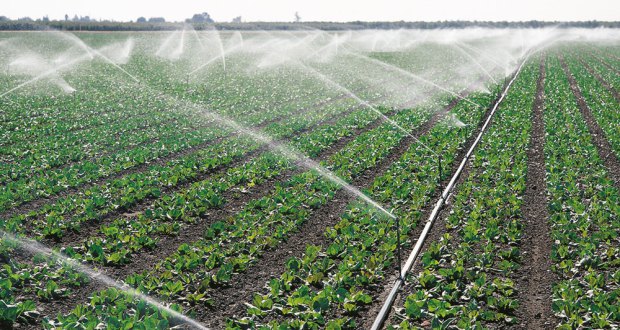
The National Irrigation Policy, finalised years ago, sets a target of bringing 1.5 million hectares under irrigation by 2040
Feature
In Kakumiro Town Council last week, Prime Minister Robinah Nabbanja knelt beside a coffee seedling and did something that would look, to an outside observer, almost like a magic trick against the scale of the crisis around her: she showed local leaders how to cut a hole in a plastic bottle, fill it with water, and bury it neck-down next to the plant's roots, letting it weep moisture slowly into the soil for days. "Farmers who cannot afford modern irrigation can use plastic bottles to irrigate their crops like coffee," she told council leaders drawn from Nkooko, Kisengwe, Birembo and Mpasana sub-counties, before handing out handheld tractors to ten sub-counties as a nudge toward commercial farming. It is a technique President Museveni has personally championed since 2016, demonstrated at his own farms in Luweero and Mayuge, and it works precisely because it asks almost nothing of a smallholder beyond a jerrycan of water and a used bottle.
That a sitting Prime Minister is out in the field teaching bottle-drip irrigation in September 2026 is itself a data point worth sitting with. It arrives in the same week that coffee farmers in Nyakyera are counting what local reporting has called "black losses" — cherries shrivelled on the branch — and cattle keepers across the country's central corridor are burying animals that could not survive the dry spell. Uganda's drought this season has been broad enough, and damaging enough, that the government's most visible irrigation intervention for the ordinary smallholder is not a dam, a canal, or a subsidised solar pump, but a recycled bottle.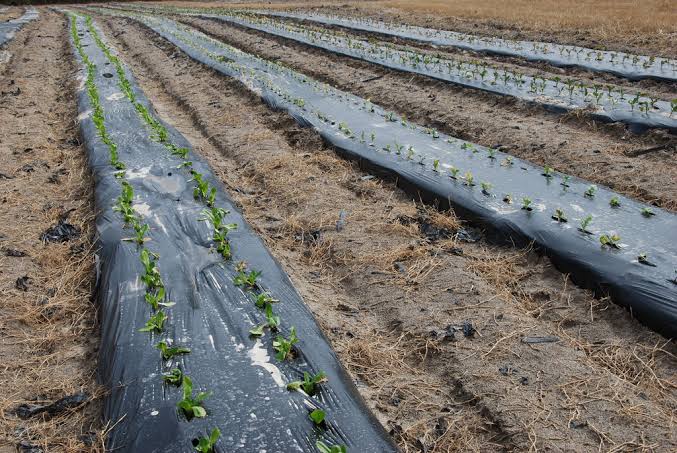
That is not because Uganda lacks an irrigation strategy on paper. The National Irrigation Policy, finalised years ago, sets a target of bringing 1.5 million hectares under irrigation by 2040. The Ministry of Agriculture, Animal Industry and Fisheries runs a Micro Scale Irrigation Programme, part of a World Bank-supported fiscal transfer initiative, that subsidises between 25 and 75 percent of irrigation equipment costs for smallholders, up to a cap of Shs7.2 million per acre, for farms of up to 2.5 acres. And the 2026/27 national budget allocates Shs2.26 trillion to the Agro-Industrialisation Programme, with what officials describe as a significant share earmarked for irrigation infrastructure.
The gap between that policy architecture and what is actually in the ground is stark. According to figures reported by Monitor's business desk, the area formally under irrigation in Uganda has been stuck at roughly 23,000 hectares since the 2020/21 financial year — effectively flat for half a decade, and a rounding error against the 1.5-million-hectare target fifteen years from now. The Micro Scale Irrigation Programme, launched in 2020, has reached a reported 6,220 farmers to date, but an analysis published by The Observer found that 42 percent of those beneficiaries were not, in fact, smallholder farmers at all — a targeting failure that echoes almost exactly the capture concerns Parliament has separately raised about the Bank of Uganda's Agricultural Credit Facility.
The cost arithmetic explains a good deal of why. A standard solar-powered irrigation system costs in the region of Shs30 million to install; even with the subsidy, a farmer must find roughly Shs7.5 million — about $2,100 — up front, a sum well beyond most rural households' reach, particularly during a drought that has already eroded what savings and harvest income they had. Suppliers have also been slow to pass on VAT exemptions Parliament wrote into law specifically to bring equipment costs down, according to the Observer analysis, meaning farmers often pay tax-inclusive prices for supposedly tax-exempt machinery. Loan repayment schedules for irrigation financing, where farmers can access it at all, are frequently structured as flat monthly instalments that take no account of the seasonal, lumpy nature of farm income — a mismatch that recurs, in slightly different form, across Uganda's agricultural finance landscape. Against that backdrop, a manual pump costing as little as Shs870,000, or a bottle that costs nothing beyond the water inside it, are not just fallback options for the poorest farmers; for many, they are the only options that were ever realistically on the table.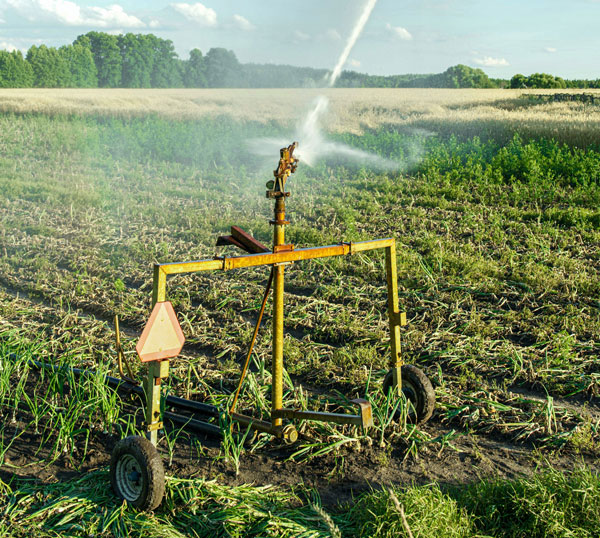
The timing makes the gap more than an academic policy failure. Uganda's Ministry of Water and Environment has already signalled that the drought currently damaging coffee and cattle is set to give way, not to relief, but to its opposite. Dr Alfred Okot Okidi, the ministry's Permanent Secretary, said in late August that the El Niño episode developing over the region "is expected to intensify during the season," projecting near-normal to above-normal rainfall — as much as 25 percent above the long-term average — across Central, Northern and Eastern Uganda between September and December 2026, with the heaviest rains in the Central region, including Kampala, expected from late October through November and into January. Government officials have already begun urging enhanced water storage, catchment management, erosion control and monitoring of water levels near residential areas, an unmistakable echo of the landslide and flash-flood damage that has recurred in Uganda's eastern and western highlands in past El Niño years.
That whiplash — drought now, flood risk within weeks — is precisely the scenario irrigation infrastructure is supposed to buffer against: capturing and storing water during the wet extreme to release it during the dry one. Uganda's stagnant 23,000 hectares of formal irrigation, concentrated in a handful of long-running government schemes, cannot perform that function at any meaningful national scale. Bottle irrigation and handheld tractors can help a household survive one bad season; they do nothing to store the surplus rainfall that may be only weeks away, and nothing to prevent it from washing away topsoil and, in the worst cases, homes and lives, in districts that have seen exactly that outcome before.
For policymakers, the near-term test is less about the 2040 target than about whether the reforms already identified — enforcing existing VAT exemptions, shifting to pay-as-you-go financing models that mobile money could plausibly support, redesigning repayment schedules around harvest cycles rather than calendar months, and genuinely restricting subsidy access to smallholders rather than the better-resourced farmers who have captured over four in ten places on the programme so far — can be implemented before the rains that are now being forecast actually arrive. Until then, the space between Uganda's irrigation ambitions and its irrigation reality will keep being filled, quite literally, by whatever a farmer can improvise out of a plastic bottle.



