Agriculture
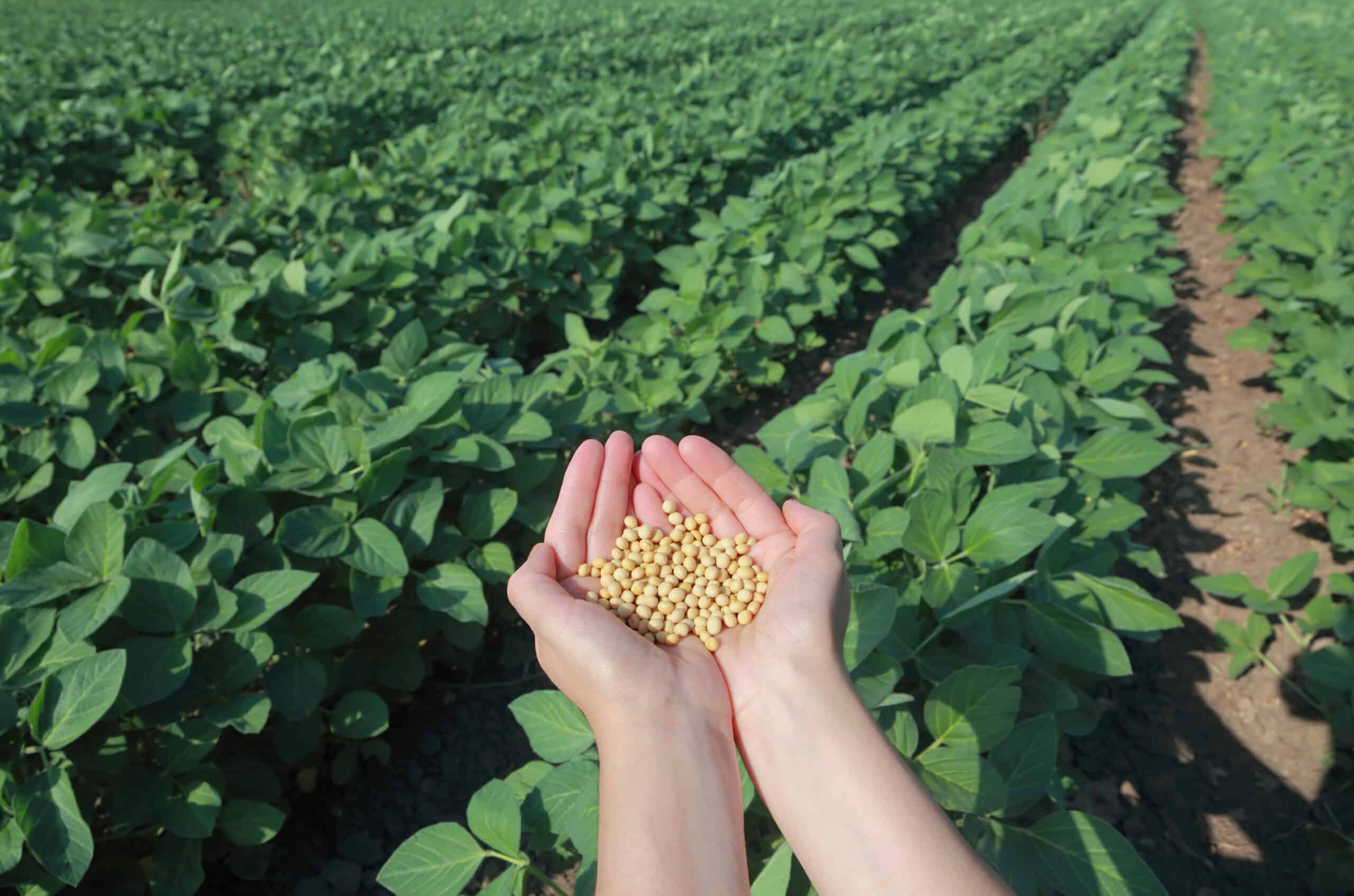
In Apac District headquarters in northern Uganda, farmers from four scattered soybean-growing groups queued this month to collect something more valuable to them than cash: certified N6 soybean seed, spray pumps, tarpaulins and gumboots. The distribution, made on July 16 under the Uganda Climate Smart Agricultural Transformation Project (UCSATP), came with an announcement that could reshape how the district's biggest cash crop reaches the market — plans to knit the beneficiary groups into a single, district-wide Apac District Soybean Farmers' Cooperative.
It is a modest, local moment. But it lands at a pivotal time for Uganda's cooperative movement, which is simultaneously in the grip of one of the worst credibility crises in its history and the target of a fresh wave of government and private-sector investment aimed at proving cooperatives can still work. Whether the Apac model succeeds or falters will say a great deal about which of those two Ugandas — the collapsing one or the rebuilding one — is closer to the truth.
A district built on soybeans, chasing a cooperative of its own
According to Maxwell Elinga, the UCSATP focal point in Apac district, the beneficiary groups — Abolokoma Elders in Apoi Sub-county, Mito Tute Group in Ibuje Town Council, Orib Can Farmers' Group in Apac Sub-county, and Laruda Fabrication Farmers' Group in Akere Division — are already organised at the grassroots level. The next step, he told farmers at the distribution, is to federate. "After this, we are going to form a higher-level organisation called the Apac District Soybean Farmers' Cooperative. At that level, we shall be able to access more equipment such as tractors, boom sprayers, trailers and even lorries to transport produce to the market," Elinga said, urging farmers to focus first on nursing the newly distributed N6 seed — a fast-maturing variety — into a strong harvest.
The economics behind the push are significant. Apac is Uganda's single largest soybean-producing district, with more than 23,000 hectares under the crop and yields typically ranging from three to five bags per acre. Betty Jokene, the district's Production and Marketing Officer, told farmers that market access, not production, was the binding constraint. "I want to assure you that everything we grow here has a market. The challenge is simply penetrating those markets and demonstrating the value of what we produce. We want farmers to think like business people who earn profits," she said. Willy Amute, the Senior Agricultural Officer for Apac District, went further, urging farmers to sell their harvest as certified seed rather than raw grain, since seed commands a premium price — advice that only makes commercial sense if farmers can bulk their produce collectively, which is precisely what a cooperative structure is designed to enable. Apac District Speaker Oscar Ogwang Edule put it in blunt, personal terms: "I used to travel to Lira to buy soybean seed at high prices. This project presents a great opportunity for us. When your produce is ready and bulked together, I will come here and buy it."
UCSATP itself is no small vehicle. It is a US$350 million, six-year initiative jointly funded by the World Bank and the Government of Uganda, run through the Ministry of Agriculture, Animal Industry and Fisheries (MAAIF), and designed to boost productivity, improve market access and build climate resilience for smallholder farmers nationally. The Apac soybean push is one of several value-chain-specific cooperative formations the project has seeded in recent months, alongside apiary and coffee farmer groups elsewhere in the country — evidence that the government sees cooperative aggregation, rather than individual smallholder marketing, as the more promising route to raising farm incomes.
The uncomfortable backdrop: a movement in crisis
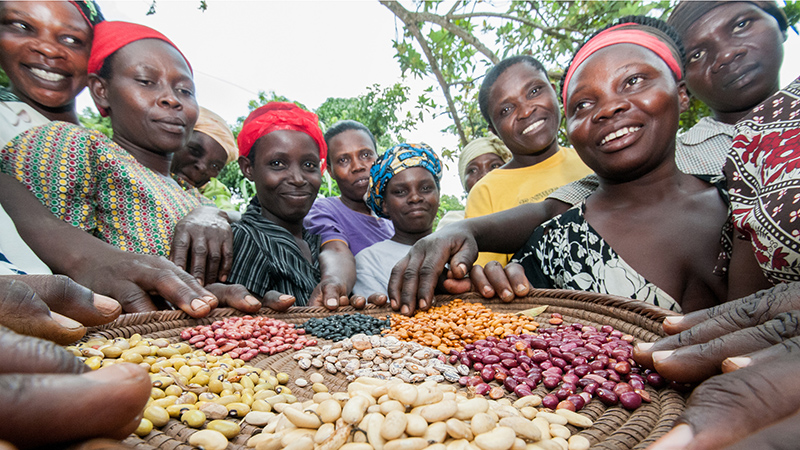
That optimism, however, is unfolding against one of the starkest institutional crises in Uganda's rural economy. Uganda's cooperative and savings and credit cooperative organisation (SACCO) sector is, by its own trade press's account, "battling one of the greatest crises in its history." Of 385 registered teachers' SACCOs nationwide, only 39 remain operational today. Under the government's flagship Emyooga programme, which was designed to formalise informal savings groups into SACCOs, 64 of 453 supported SACCOs have already collapsed outright, while a further 312 are grappling with fraud and governance failures, according to reporting compiled from cooperative-sector sources. Weak financial management, insider lending and chronic loan defaults have repeatedly wiped out the savings of teachers, civil servants, farmers and traders who trusted these institutions with their money.
The wound is an old one. Uganda once had a dedicated Uganda Co-operative Bank, established in the 1960s to serve exactly this kind of farmer-owned institution. It was shut down in 1999 by the then Bank of Uganda governor over inadequate capitalisation and insolvency estimated at roughly Shs4.8 billion, following the withdrawal of USAID support and a fraud scandal involving bank officials. More than two decades on, calls to revive a dedicated cooperative or agriculture bank resurface periodically — including proposals to convert Post Bank Uganda into that vehicle — but none has yet been implemented, leaving cooperative societies, traders and farmers to rely on commercial banks that charge some of the highest sectoral lending rates in the economy. Bank of Uganda data shows agricultural lending rates running above 20 percent in recent months, among the steepest of any sector, a reflection of how risky lenders still consider farming to be.
Government and industry have begun responding, unevenly. The Uganda Deposit Protection Fund has extended its mandate to cover SACCOs, meaning savers now have at least some formal protection if an institution collapses — a direct answer to the trust deficit created by cases like the teachers' SACCO implosion. Commercial lenders have also started experimenting with targeted rate cuts: Stanbic Bank Uganda announced in early July a reduced lending rate of 10 percent per annum for agriculture-based SACCOs, with eligible institutions able to borrow up to Shs7 billion, a facility also extended to selected microfinance institutions. The announcement came at the 28th Annual General Meeting of the Association of Microfinance Institutions of Uganda (AMFIU). Separately, Uganda's long-running Best Farmers Competition — now in its twelfth year and backed by a four-year, roughly Shs4.1 billion grant from the Embassy of the Kingdom of the Netherlands, alongside dfcu Bank, KLM Royal Dutch Airlines and De Heus/Koudijs Nutrition — has made "Farming as a Business: Growth, Commercialisation and Cooperatives" its explicit 2026 theme, formally expanding the competition to include cooperatives alongside individual commercial farmers for the first time.
Two Ugandas, one rural economy
The tension between these two pictures — a cooperative movement hollowed out by fraud on one hand, and a fresh crop of donor- and government-backed farmer cooperatives being seeded on the other — is not accidental. Uganda's Ministry of Trade, Industry and Cooperatives had registered close to 30,000 cooperative societies nationally as of the most recent published tallies, spanning SACCOs, produce marketing cooperatives and multipurpose farmer groups. That scale means the sector's problems and its promise are both structural, not isolated. A single fraud case, such as the one currently before Uganda's Inspectorate of Government involving a parliamentary SACCO, makes national headlines; a single successful bulking scheme, such as Apac's emerging soybean cooperative, rarely does — yet the latter is arguably the more representative story of where the sector's future is being decided, at the district level, crop by crop.
For a smallholder soybean farmer in Apac, the calculus is straightforward and immediate. Selling loose grain individually to middlemen who travel from Lira has historically meant accepting whatever price is offered on the day. Belonging to a cooperative that can bulk produce, certify it as seed rather than grain, and eventually own shared equipment like tractors and transport lorries changes that equation — provided the cooperative itself is honestly run and adequately capitalised, which is precisely where so many of its predecessors have failed. The World Bank-backed UCSATP's 80-20 co-financing model, in which government or donor funds cover the bulk of input costs while farmer groups contribute a smaller share, is designed to give members skin in the game from day one, a governance safeguard that fraud-hit Emyooga SACCOs largely lacked.
What's at stake for the wider economy
The stakes extend well beyond Apac's borders. Agriculture still employs roughly two-thirds of Uganda's labour force and contributes close to a quarter of GDP, yet remains the sector commercial banks are least willing to lend to affordably. If aggregation models like the Apac soybean cooperative can demonstrate that farmer-owned institutions can market produce profitably, repay input support and avoid the governance failures that gutted the teachers' SACCOs and Emyooga groups, they offer a template regulators, donors and banks are actively looking to replicate — the newly extended Deposit Protection Fund mandate and Stanbic's targeted rate cuts are both bets in that direction. If they instead succumb to the same weak oversight and insider capture that has plagued so many of their predecessors, they risk becoming one more entry in a long list of promising rural finance experiments that collapsed under the weight of poor governance.
For now, Apac's farmers have seed in the ground, equipment in hand and a district leader promising to show up personally to buy their bulked harvest. Whether that translates into a durable cooperative — one that survives beyond a single planting season and a single donor-funded input cycle — will be a test case worth watching for a movement that badly needs a genuine comeback story.
Published By | Features Editor