KAMPALA
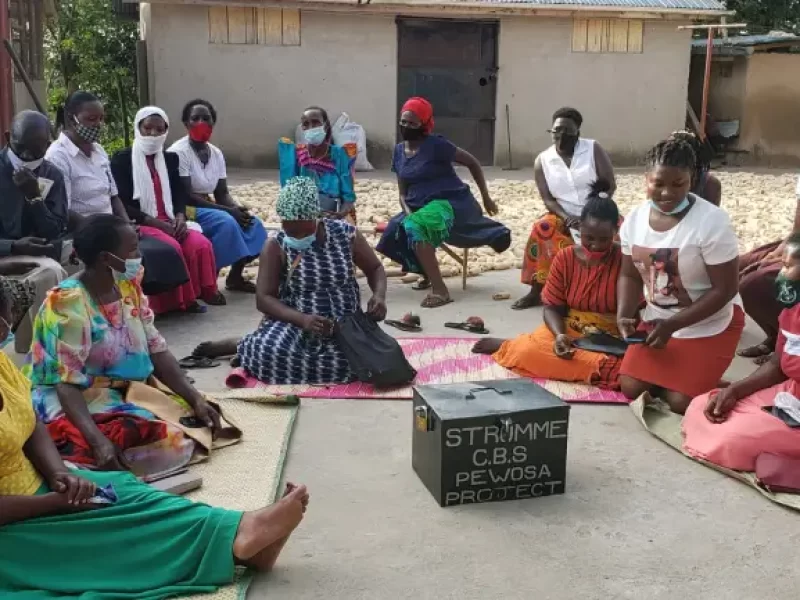
Across Uganda this week, from the cattle corridors of Karamoja to the West Nile district of Yumbe and the Bunyoro town of Hoima, thousands of farmers and small entrepreneurs have been filing into parish halls, church compounds and sub-county headquarters for an unusual second round of voting. They are not electing politicians. They are re-electing the leaders of the Savings and Credit Cooperative Organisations, or SACCOs, that decide who in their community gets access to government loans meant to lift them out of subsistence farming.
The nationwide exercise is the government's response to what officials now acknowledge is a governance crisis inside the Parish Development Model (PDM), the flagship anti-poverty programme through which President Yoweri Museveni's administration has channelled more than Shs 3.258 trillion to over 10,589 parish-level SACCOs since the scheme launched in February 2022. A circular dated March 17, 2026, from the PDM Programme's National Coordinator, Dennis Galabuzi Ssozi, ordered every Chief Administrative Officer, Town Clerk and the Kampala Capital City Authority to dissolve existing SACCO leadership structures and hold fresh elections nationwide, with the process due to conclude by June 30, 2026. Five months later, the clean-up is still rippling through districts, throwing up fresh disputes even as some areas declare victory.
Why the government pulled the plug on sitting SACCO boards
The PDM was designed with a simple architecture: each parish receives Shs 100 million a year, distributed as Shs 1 million soft loans to eligible households through a parish-based SACCO, to be invested in enterprises such as coffee, piggery, poultry, dairy, banana or fish farming. It was meant to move roughly 39 percent of Uganda's population out of subsistence farming and into the money economy.
In practice, PDM monitoring exercises carried out in 2024 and 2025 uncovered what Robert Bariyo Barigye, the Registrar of Cooperative Societies at the Ministry of Trade, Industry and Cooperatives, described as serious governance gaps. Investigators found extortion of beneficiaries, breaches of the eligibility guidelines, and cases where funds went to people who were neither SACCO members nor genuinely subsistence households. Some beneficiaries said they were coerced into paying money before they could access their own loans. Many SACCOs simply never filed annual returns or underwent the statutory audits required under the Cooperative Societies Act. According to the 2025 Police Crime Report, at least 389 cases tied to the mismanagement of PDM funds were formally registered — a number officials say almost certainly understates the true scale of the problem, since most disputes over parish-level funds never reach police stations.
Galabuzi's circular set out a two-stage process: parish-level special general meetings first elect independent vetting committees, which apply a "fit and proper" test to anyone seeking a SACCO leadership post; a second round of meetings then elects the actual SACCO boards and supervisory committees. Barigye's guidance called for vetting committees to be supported by LC1 chairpersons, Parish Intelligence Officers and Parish Chiefs, and recommended that beneficiary lists be posted publicly so communities themselves could scrutinise who was getting funded. Newly elected boards must also regularise any outstanding statutory audits before they can operate.
A patchwork rollout, district by district
Implementation has moved unevenly, and the districts furthest along are now confronting a second wave of problems: bad elections held under the new rules.
In Hoima district, 55 PDM SACCOs elected new committee leaders between May and mid-June, a process Dr Charles Kajura, the district's Senior Production Officer and PDM Focal Person, said went smoothly "in accordance with the guidelines." But members of two SACCOs — Kibanjwa PDM SACCO in Kitoba Town Council and Buraru PDM SACCO in Buraru Subcounty — subsequently complained that their newly elected chairpersons lacked transparency, and that the biodata submitted by some winning candidates did not match records held in the Parish Development Model Information System. A district investigation found the complaints genuine. "We annulled the committees and are planning to hold fresh elections for members to vote for leaders they believe will manage the SACCOs to their expectations," Kajura said. The episode will delay submission of SACCO resolutions to the Registrar of Cooperatives — a bureaucratic knock-on effect, since Hoima's 55 SACCO resolutions were due to be filed together, and the holdup could push back farmers' access to funds ahead of the second planting season. Hoima District Chairman Uthuman Mubarac Mugisha welcomed the re-run regardless, recalling that the programme's first phase had seen funds diverted to non-beneficiaries and other recipients shortchanged, with suspects later arrested and forced to refund the money. "We do not want such problems to resurface," he said.

In Kotido Municipality in Karamoja, the opposite story is playing out: elections concluded smoothly across all divisions, and authorities have now pivoted to the next phase — public vetting of individual beneficiaries. Commercial Officer and PDM Focal Person Daniel Lowot said governance structures are in place in every SACCO and the municipality is now running a schedule of public scrutiny sessions in each ward, from July 27 through August 31, under the joint oversight of commercial officers, Community Development Officers, Parish Development Committees and LC1 chairpersons, with district security and civil authorities monitoring. "We are already done with elections and governance structures are already set for all the SACCOs. We are now in the selection process," Lowot said. Kapchorwa district's Cherubei PDM SACCO followed a similar arc, electing a new board of directors after its earlier polls were cancelled.
In Yumbe district in West Nile, the emphasis has shifted from elections to enforcement of accountability once boards are seated. Huda Oleru Abason, Minister of State for Defence and Veteran Affairs in charge of Veteran Affairs, told parish chiefs, SACCO leaders and community development officers at a district meeting that the programme's credibility depends on their integrity. "This is 'kisanji no more sleep.' Take the programme seriously; it is not business as usual," she told implementers, using a Luganda-inflected phrase roughly meaning there is no more room for complacency. District figures presented at the meeting illustrate why: of roughly Shs 70 billion disbursed in Yumbe so far, Shs 21 billion is overdue for repayment, while only Shs 75 million has actually been recovered through follow-up efforts — a recovery rate of scarcely one-third of one percent of the overdue balance. Yumbe's Chief Administrative Officer, Thomson Obong, appealed directly to earlier beneficiaries to repay so new households could access the revolving fund.
What is riding on getting this right
The stakes extend well beyond parish bookkeeping. The PDM is central to Uganda's National Development Plan and to government's argument that agriculture can be commercialised from the bottom up rather than only through large agro-industrial investment. An additional Shs 1.097 billion has been earmarked for the programme in the 2025/2026 financial year on top of the trillions already disbursed, meaning the fiscal exposure — and the political stakes — only grow with each cycle.
For ordinary beneficiaries, the immediate consequence of the clean-up is delay: resolutions held up in Hoima, funds not yet reaching some households in time for planting, and a bureaucratic process that, however necessary, competes for the same narrow planting-season window that farmers depend on. For the programme's long-term credibility, though, officials and local leaders interviewed across three regions argue the disruption is the lesser risk. A programme that cannot demonstrate its Shs 1 million loans are reaching genuine subsistence households, chosen by leaders whose biodata actually checks out, cannot sustain public or donor confidence at the scale Uganda is now spending. Whether the "fit and proper" vetting standard, publicly displayed beneficiary lists and mandatory audits translate into cleaner SACCOs on the ground — rather than simply a new layer of leaders who eventually attract the same complaints — will only become clear once this second, harder round of scrutiny plays out in the months ahead.
Published By | Features Editor