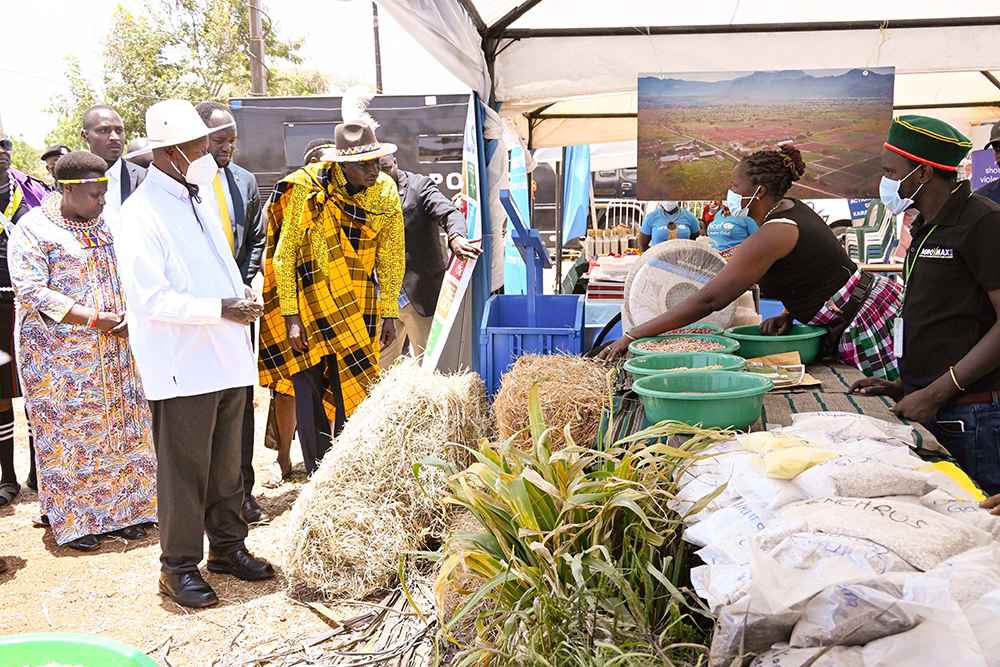
A three-phase Cabinet strategy unveiled in Moroto tries to break the sub-region's relief cycle by changing what Karamojong households plant. The agronomy is sound. The financing, the water and the timing are not yet.
Feature
A strategy written by a relief bill
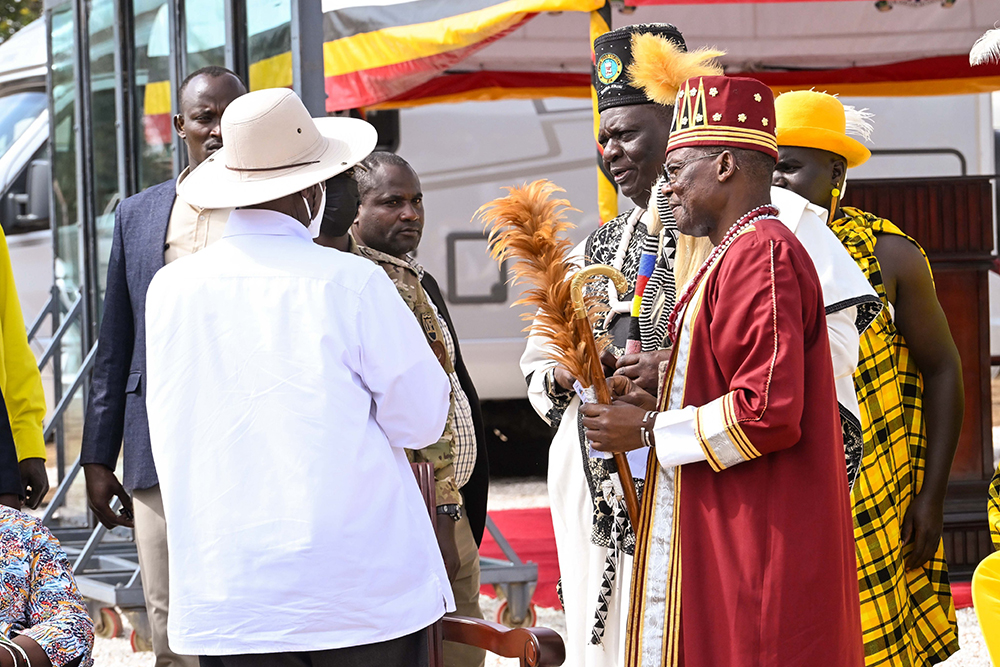
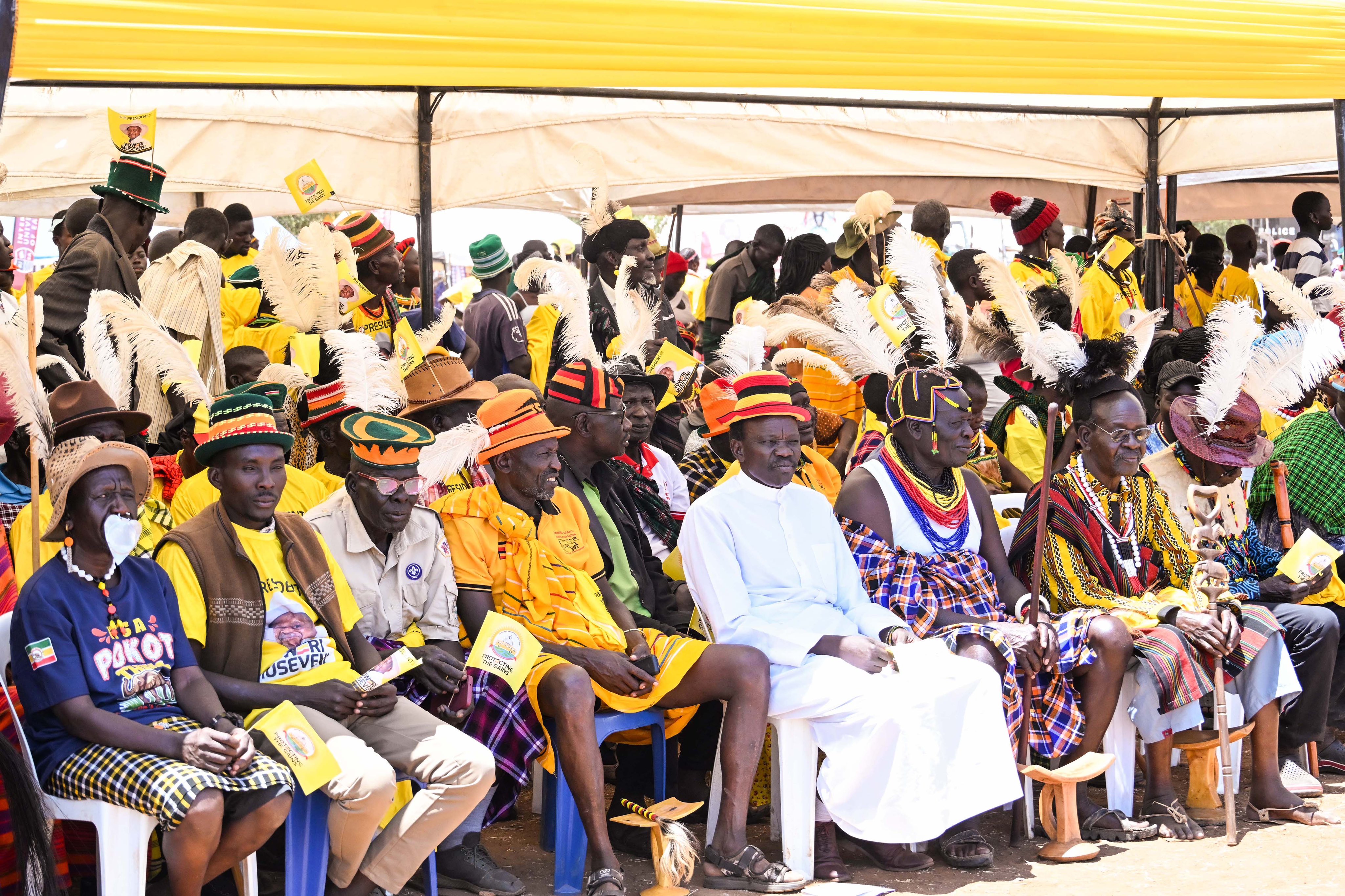
When President Yoweri Museveni stood at Naitakwae Grounds in Moroto on September 9 to open the 11th Karamoja Cultural Event, the announcement he made was less a cultural gesture than an accounting one. Government, he said, is currently distributing food relief worth about Shs45 billion to drought-affected areas — and it cannot keep doing so. In its place, Cabinet has approved a three-phase food stabilisation strategy intended to move Karamojong households from emergency rations to farming systems that can survive the sub-region's increasingly unreliable rains.
The scale of the relief operation the strategy is meant to replace explains its urgency. The Office of the Prime Minister flagged off 552 tonnes of maize flour and 238 tonnes of beans in July, procured under the Shs45 billion emergency allocation, targeting more than 313,000 households across 480 parishes in all nine Karamoja districts. An estimated 600,000 people were assessed as facing acute hunger. The distribution, originally planned for July and August, was pulled away from private contractors after Museveni directed that the Uganda People's Defence Forces and the Uganda Prisons Service handle it instead — an unusual admission that the delivery chain itself had become part of the problem.
Relief at that scale is a recurring line item, not an exception. Karamoja carries a poverty rate previously reported at around 74 per cent, the highest of any Ugandan sub-region, and the Shs15.1 trillion Karamoja Regional Development Plan due to run from 2027 is built on the premise that the sub-region's economy has to be rebuilt rather than topped up. What Museveni set out this week is the agricultural component of that rebuild.
Museveni meets Kalamoja Elders in Moroto
Phase one: short-season crops, and a warning about maize
The immediate phase, the President said, would focus on crops capable of producing food within a relatively short period. He named three: sorghum, green gram and white peas — all short-maturity crops that can complete a cycle inside the compressed, unpredictable growing window Karamoja now gets. Government will supply climate-resilient seed varieties and livestock suited to the region's conditions.
The more pointed part of the message was what he told farmers to stop doing. Museveni cautioned residents against excessive dependence on maize, which takes relatively longer to mature and is poorly suited to Karamoja's dry conditions. That is agronomically defensible and politically awkward at the same time. Maize has spread across Karamoja over two decades partly because it is what relief programmes, schools and traders buy, and because it is the crop the national extension and input system is built around. The 173,913 bags of fertiliser flagged off by the Ministry of Agriculture at Entebbe on August 31 went first to tea, with coffee and cocoa queued behind — none of them Karamoja crops. Telling households to switch to sorghum and green gram without changing what the seed system, the buyers and the aid pipeline reward is asking farmers to absorb the transition risk themselves.
There is a market angle here that the strategy has not yet answered. Sorghum has a real commercial outlet in Uganda through the brewing industry, and green gram has an export market in South Asia via Kenyan and Tanzanian aggregators. Neither is currently organised in Karamoja at any scale. If government supplies the seed but not the offtake, the likely outcome is a good harvest that collapses the local price and drives farmers back to whatever the relief lorries deliver.

Goats, bees, and the livestock question
Museveni also pushed households toward goat rearing and beekeeping as alternative sources of food and income, arguing that goats can survive on the shrubs and browse that Karamoja actually has, and that cassava and bananas could be grown in the wetter parts of the sub-region. This is the least contentious part of the strategy. Goats convert marginal browse into protein and cash far more efficiently than cattle do on the same land, they carry lower drought mortality, and they can be sold in small increments when a household needs school fees or medicine — a liquidity property that a herd of cattle does not have.
Beekeeping fits the same logic. Uganda's apiculture sector, profiled at the Africa-Apimondia symposium in Kampala in August, already counts roughly 1.2 million beekeepers and exports on the order of 80,000 tonnes of honey. Karamoja's acacia-dominated landscape produces a distinctive honey that has repeatedly been flagged as export-grade. The constraint has never been the bees; it has been hive quality, processing and a certified route to market.
But the livestock component collides with a separate problem the strategy did not address. Karamoja's herds have been under sustained pressure from raiding and theft, and the national livestock identification and traceability law that would make recovery enforceable remains largely unimplemented. Museveni used the Moroto platform to note that about 41,000 illegal guns have been recovered under the disarmament programme, and credited women and informants with exposing cattle-raiding networks. Restocking a disarmed but still-contested rangeland without a working traceability system is precisely the risk the Office of the Prime Minister's Shs80 billion cattle restocking programme in Acholi, Lango and Teso is currently discovering.
Phases two and three: everything depends on water
The medium and long-term phases are where the strategy becomes expensive. Museveni said these would move households from subsistence to modern commercial agriculture with irrigation at the centre, and called for large-scale water infrastructure including big dams. "Karamoja is a fertile area, but it's because of water body encroachment," he said. "Therefore, we are going to put up big projects to support irrigation in Karamoja, like big dams." He simultaneously warned against wetland encroachment, insisting wetlands be protected as part of the national water system rather than converted to farmland — a tension the strategy will have to resolve in practice, because in Karamoja the wetter land is the wetland.
That ambition ran into a candid assessment from his own agriculture minister the following day. Speaking to New Vision on September 9, Frank Tumwebaze described the current drought as unprecedented and said he was in discussions with Finance Minister Henry Musasizi and Permanent Secretary Ramadhan Ggoobi "to come up with a big irrigation program for the country." Tumwebaze was blunt about why one does not already exist: irrigation was not prioritised "because nature had been on their side for many years," and financing went to peace and security instead.
What exists today is the micro-scale irrigation programme, a matching-grant scheme in which the farmer and government co-finance individual equipment, capped at 2.5 acres per farmer. It is a smallholder transition tool, not a sub-regional water system, and national irrigation coverage still sits below two per cent of farmland against a National Irrigation Policy target of 1.5 million hectares by 2040. A Karamoja dam programme announced in September 2026 is, realistically, a next-decade asset. The households eating relief maize flour this month will go through several more seasons before it reaches them.
The debt overhang nobody wants to discuss
The most revealing moment in Moroto came from Karamoja Affairs Minister John Baptist Lokii, whom the President tasked with explaining how the Cabinet decision would be implemented. Lokii welcomed the strategy and said it would complement wealth-creation programmes such as the Parish Development Model and Emyooga — then asked the President to delay recovery of PDM funds from Karamoja beneficiaries. "Let us allow Karamojongs to recover properly from this strong drought," he said.
That request matters more than it sounds. PDM repayment performance is already dire nationally: the Public Accounts Committee on Local Government heard in early September that Nakaseke District had recovered Shs28.2 million against Shs25 billion disbursed, and Katakwi about Shs6 million against Shs33.8 billion. A drought-driven moratorium in Karamoja is defensible on its own terms, but it points at the structural flaw in layering a new input-distribution strategy on top of a revolving fund that is not revolving. If phase one of the food stabilisation strategy is delivered through the same parish channels, it will be delivered to households that are already in arrears on the last programme.
What to watch
Three things will show within the next two seasons whether this is a strategy or a speech. First, whether the National Agricultural Research Organisation and the seed system can actually put certified short-season sorghum, green gram and cowpea seed into Karamoja parishes in volume before the next planting window, rather than after it. Second, whether any offtake arrangement — brewer, aggregator, or the relief procurement system itself buying locally instead of trucking maize flour in — is built alongside the seed. Third, whether the dam programme appears as a costed line in the next budget framework paper or remains an aspiration attached to a national irrigation programme that is still at the discussion stage between two ministries.
The underlying diagnosis is right. Karamoja's food crisis is not fundamentally a shortage of relief; it is a mismatch between what households plant and what the climate now delivers. Sorghum, green gram, goats and bees are the correct answer to that mismatch. The question is whether Uganda's agricultural delivery machinery — the same one that has kept irrigation below two per cent for a decade and has not recovered its own revolving funds — can execute an answer it has finally identified.
Published By | Features Editor