NTUNGAMO
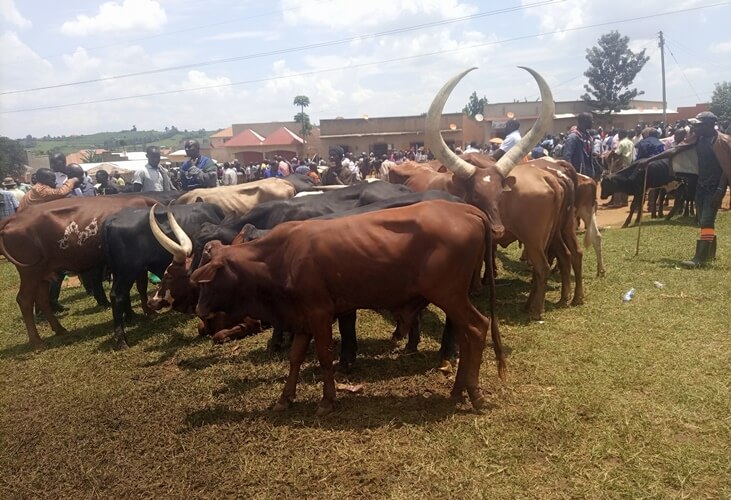
For eight months, cattle traders in Ntungamo District watched their business grind to a near halt. Movement permits were denied. Livestock markets sat empty. Butchers ran short of beef, and dairy farmers who normally trucked milk to processors in Mbarara found themselves stuck with produce they could not move freely across sub-county lines. The cause was a disease that has haunted Uganda's cattle corridor for generations: foot-and-mouth disease, or FMD.
This week, that chapter finally began to close. Ntungamo's district veterinary office announced it had lifted the FMD quarantine in most parts of the district, permitting the resumption of livestock slaughter, transportation and the movement of animal products from areas now certified disease-free. The announcement, delivered at a stakeholders' meeting between the district FMD task force and the farming community, was met with visible relief from traders, dairy dealers and butchers who had absorbed months of losses.
“We had an infection which had occurred to us as late as December last year. We were able to manage the spread of the disease and also contain it to its lowest remaining nine farms,” said Dr Yake Basulila, the Ntungamo District Veterinary Officer, explaining that authorities had traced the outbreak back to December 2025 and spent the better part of a year bringing it under control.
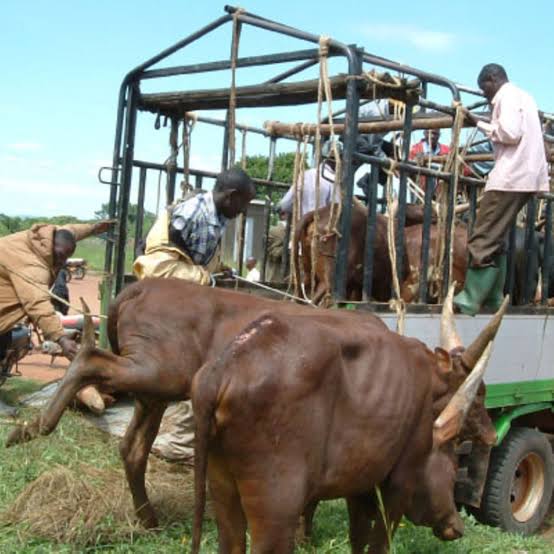
The relief, however, is only partial. Three of Ntungamo's 34 sub-counties — Ngoma and Rweikiriniro, along with Rubaare Town Council — remain under quarantine, with the virus still active on nine farms. Miriam Kagaiga, the Resident District Commissioner and chairperson of the district's FMD task force, was careful to frame the announcement as progress rather than victory. “Of the 34 sub-counties which we have in Ntungamo District, only three have remained quarantined. Vaccination is going to continue in the whole district. Let's cooperate,” she said, noting that a Shs8,000 fee applies to the continuing vaccination drive and that lower local governments must now gazette formal livestock loading points before movement can legally resume.
A disease that keeps returning
Ntungamo's experience is not an isolated event; it is the latest chapter in a long-running struggle that defines livestock farming across Uganda's cattle corridor — the belt of rangeland stretching from Karamoja and Teso in the northeast, through central Uganda, down to Ankole and the Masaka-Rakai axis in the southwest. Research tracking outbreaks between 2010 and 2025 recorded more than 22,000 confirmed FMD cases across at least 58 of Uganda's districts, with a major resurgence in 2020–2021 and another nationwide quarantine imposed across 36 districts as recently as February 2024. Just weeks ago, neighbouring Kazo District was working through its own reopening after a nearly two-month closure of livestock markets, with the outbreak there having spread from Kiruhura and Sembabule into Nkungu and Burunga sub-counties before authorities brought it under control.
The economic toll of these recurring closures is well documented. Studies of the cattle marketing chain in Uganda have found that FMD outbreaks can cut monthly income for actors at the processing level by close to a quarter, while distressed “salvage” sales of infected or exposed animals can fetch farmers 80 percent or more below normal market value — losses running into hundreds or even thousands of dollars per herd in the worst-affected areas. Multiply that across the roughly 16 million cattle that make up Uganda's national herd, a large share of them concentrated in the Ankole-Masaka corridor that accounts for an estimated 60 percent of the country's livestock, and the scale of what a single outbreak can do to rural incomes becomes clear.
Ntungamo's eight-month ordeal fits this pattern precisely. Beyond the direct losses to farmers unable to sell animals, the closure rippled outward: butchers lost supply, dairy processors saw their intake shrink, and the informal economy of livestock trading — auctioneers, transporters, loaders — lost months of income. It is a story that has played out with grim regularity in Kazo, in Sembabule, in Kiruhura and across the wider cattle belt, where drought-weakened animals, communal grazing practices and porous district boundaries make the virus difficult to contain once it takes hold.
Vaccination versus containment: an uneven race
Uganda's response to this recurring crisis has increasingly centred on prevention rather than reactive quarantine. In July, the government launched its first nationwide mass FMD vaccination campaign, targeting roughly 46.5 million susceptible animals through two rounds of vaccination a year under a new compulsory, cost-sharing arrangement. The Ministry of Agriculture, Animal Industry and Fisheries has also been working with Egypt on plans to manufacture FMD vaccines domestically at a facility at NARO's Nakyesasa research station in Wakiso, reducing Uganda's reliance on imported doses and, officials hope, shortening the lag between outbreak detection and vaccine deployment.
Dr Basulila's comments in Ntungamo underscore why this shift matters: even as the quarantine lifts, vaccination is not stopping. “Let's cooperate,” Kagaiga urged farmers, a plea that speaks to one of the control programme's persistent weaknesses — compliance. Researchers who have studied FMD control in Uganda point to a familiar list of obstacles: inadequate and inconsistent vaccine supply, the difficulty of enforcing quarantine across communally grazed land where cattle routinely cross sub-county and even district lines in search of pasture and water, uncontrolled animal movement during droughts, and weak enforcement capacity at the local government level, where a single veterinary officer may be responsible for tracking outbreaks across dozens of parishes.
The requirement that Ntungamo's lower governments now gazette formal loading points before livestock movement resumes is itself an acknowledgment of this enforcement gap — an attempt to replace informal, hard-to-monitor cattle movement with traceable checkpoints. Whether that holds will depend on resources and political will at the sub-county level, the same level at which enforcement has historically struggled.

What it means for farmers, markets and the wider economy
For individual farmers, the practical stakes of getting this right are enormous. Milk collection in the wider Ankole dairy belt has already been strained this year by a combination of drought and disease — neighbouring Mbarara has reported daily milk collection falling from around 20,000 litres to as low as 5,000-8,000 litres in recent weeks, a shortage attributed partly to anthrax and partly to dry conditions, with retail prices for milk more than doubling as a result. An FMD flare-up on top of that pressure would compound losses for a dairy economy already struggling to keep pace with demand in what has long branded itself the “City of Milk and Honey.”
At a national level, the stakes extend to trade and food security. Uganda's beef and dairy sectors are central to rural livelihoods across the cattle corridor, and recurring disease outbreaks undermine both domestic supply chains and the country's ambitions to expand livestock exports regionally. Beef prices have already risen sharply in several corridor districts this year — climbing from around Shs10,000 to Shs16,000 per kilogram in places such as Tororo, Masaka, Arua, Kasese, Masindi and Gulu — a trend that reflects not just disease but also drought-driven herd scarcity and, in some areas, cattle theft syndicates exploiting the disruption.
For now, Ntungamo's farmers and traders can begin rebuilding. Livestock markets are reopening, milk trucks can move again through most of the district, and butchers are restocking their supply chains. But the persistence of active infection in three sub-counties, and the near-annual recurrence of similar outbreaks elsewhere in the cattle corridor, is a reminder that Uganda's fight against foot-and-mouth disease is less a series of discrete crises than a continuous, low-grade drain on one of the country's most important rural economies — one that better vaccine coverage, faster local response and stronger enforcement of movement controls will need to address if farmers are to be spared the next eight-month wait.
Published By | Features Editor