Written By | Staff Writer
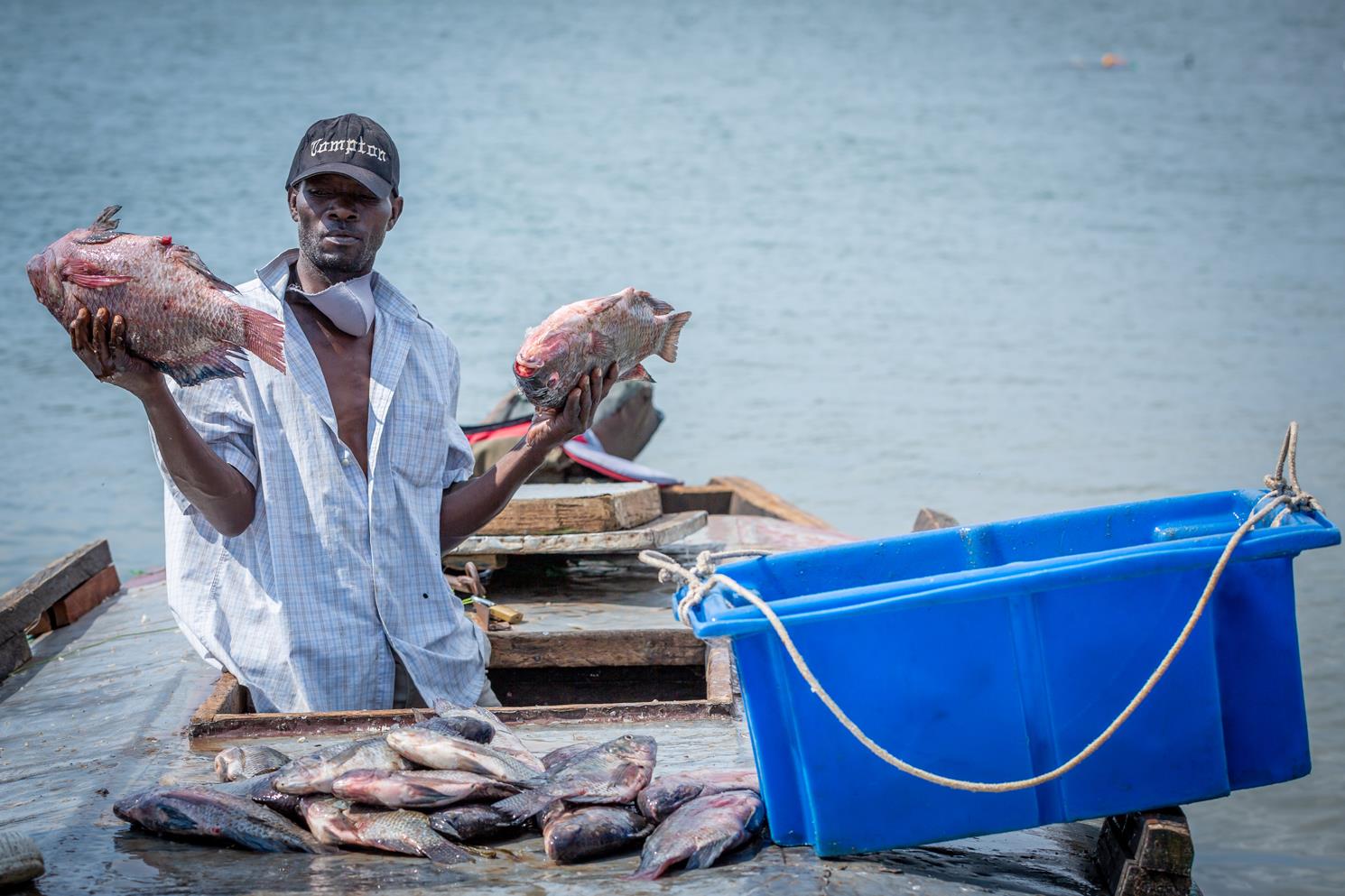
The Fish (Fishing Capacity Management) Regulations, 2026 cap the number of boats and fishers permitted on each water body and set the size and type of gear allowed for particular species
Agriculture
A deadline that did not move
For most of the last decade, deadlines issued to Uganda's fishing communities have been elastic. They are announced at the Uganda Media Centre, they are protested at the landing sites, and they are extended. This one was different in one important respect: the ministry had already built the legal machinery behind it.
On 20 August 2026, the Minister of State for Fisheries, Robert Migadde Ndugwa, told journalists in Kampala that every person engaged in fishing or aquaculture had until 15 September to register and obtain an operating licence. Registration, he stressed repeatedly, was free of charge. The exercise had originally been scheduled for January to March 2026 but slipped. "I call upon all the fishers to apply for licences before the 15th of September 2026 because after that date, enforcement to reduce fishing capacity, including removal of boats that are not licensed, will start," he said.
That date has now passed. On 18 September, the Ministry of Agriculture, Animal Industry and Fisheries launched and handed over new quality assurance and enforcement equipment — including engines — to the fisheries teams that patrol Uganda's water bodies. Migadde said the government remained committed to protecting the resource while working with fishing communities and other lake users. The sequencing is the story: a licensing window, then a hardware delivery, then, by the ministry's own stated plan, removals.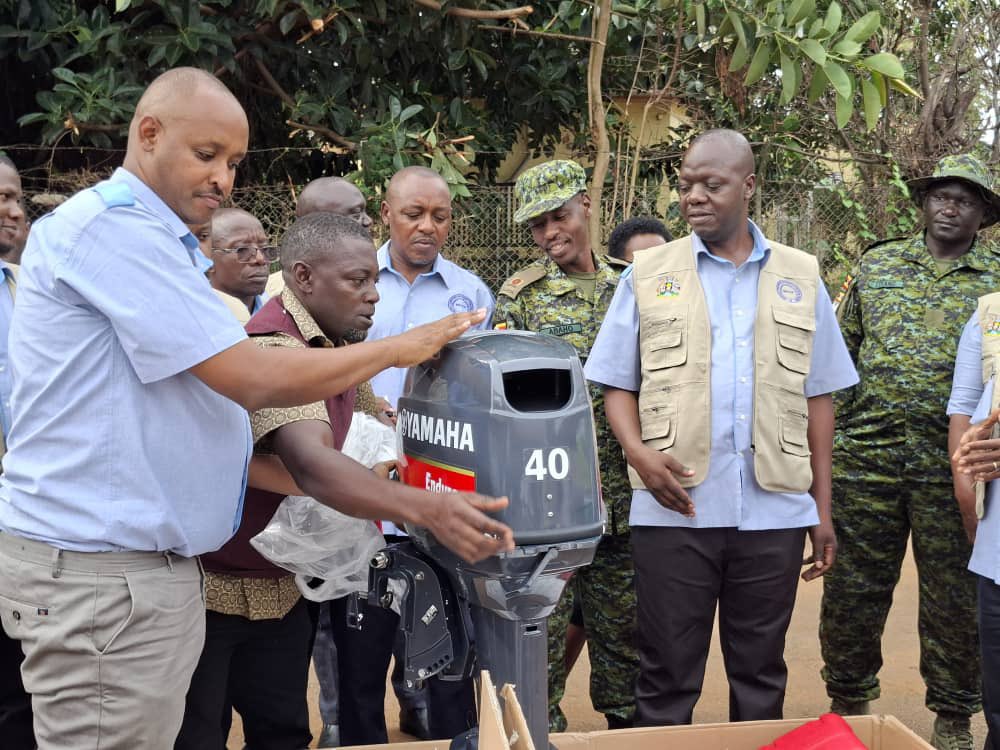
What the new rulebook actually changes
The deadline is the visible edge of a much larger legal reconstruction. Following President Museveni's assent to the Fisheries and Aquaculture Act, 2023, the ministry has completed a suite of subsidiary regulations that, taken together, rewrite how a Ugandan fisher may work.
The Fish (Fishing Capacity Management) Regulations, 2026 cap the number of boats and fishers permitted on each water body and set the size and type of gear allowed for particular species. For mukene (silver fish), the regime is unusually prescriptive: fishing is restricted to scoop nets and lift nets, only during the dark phase of the moon, at least two kilometres from the shoreline, and only at designated landing sites. Licences themselves are now species-specific — a Nile perch licence is not a tilapia licence — and they are non-transferable and cannot be shared between fishers.
Alongside these sit the Closed Fishing Regulations, 2026, which allow temporary or permanent closure of defined areas and periods on the basis of scientific evidence; a separate instrument to demarcate and protect breeding and nursery grounds; Quality Assurance Regulations, 2026 aimed at consumer safety and export compliance; Aquaculture Regulations, 2026; Fish Maw Regulations, 2026 governing the lucrative swim-bladder trade; and Fish (Co-management) Regulations, 2026 that restructure beach management and landing-site committees so that only qualified members sit on them. A further regulation governs stocking and restocking of natural water bodies.
Institutionally, the ministry has created a Monitoring, Control and Surveillance Unit to drive enforcement, and licensing has moved onto a digital Fisheries Licence Portal that links registration to Uganda Revenue Authority verification and clearance — a quiet but consequential change, because it ties a fisher's or trader's operating permission to their tax identity.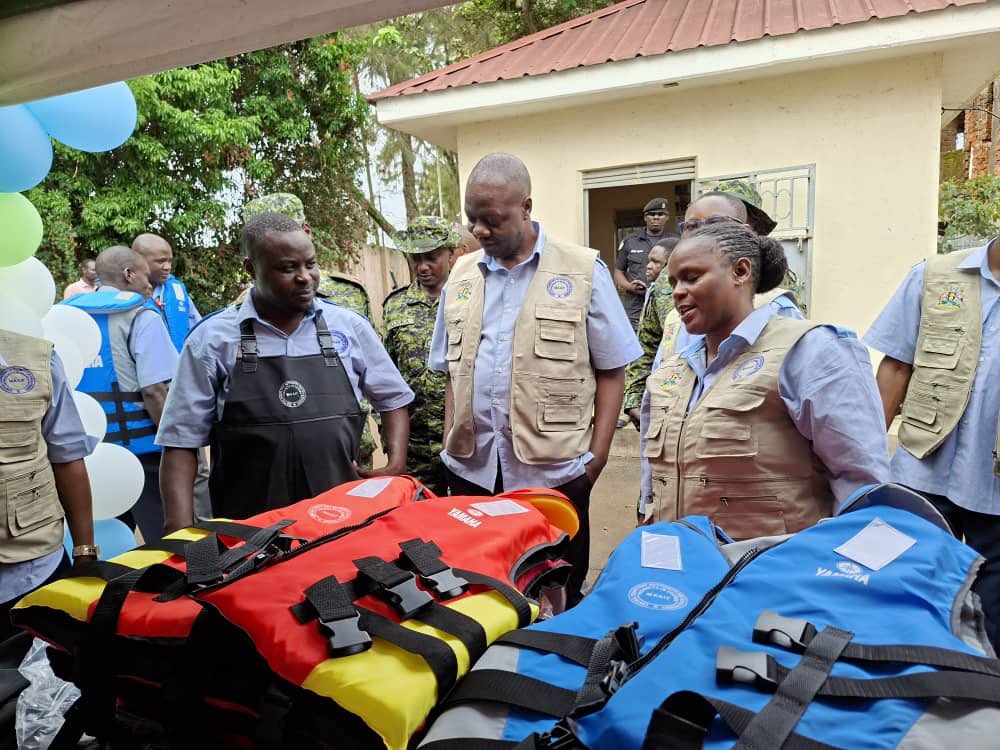
Why Kampala is in a hurry
Uganda is landlocked but water-rich: open fresh water and swamps cover roughly 43,479 square kilometres, about 18 percent of the country's surface area. Nile perch (mputa), Nile tilapia (ngege), African catfish (male), lungfish (mamba), tiger fish (ngassa), mukene and nkejje have historically made fish one of the country's top foreign exchange earners, second only to coffee for much of the 1990s and 2000s.
That position has been eroding. Migadde has been blunt about the causes: overfishing, uncontrolled fishing capacity, destruction of breeding and nursery grounds, monofilament and locally fabricated illegal nets, excessive use of lights in mukene fishing, and the harvesting of immature fish. National output currently sits at an estimated 750,000 metric tonnes a year against a government target of 1.7 million tonnes — a gap the ministry expects roughly one million tonnes of aquaculture to fill.
There is a market argument running underneath the conservation one. Migadde has pointed specifically to the European market, where Ugandan consignments have at times been rejected over poor handling and quality. Uganda's export profile remains heavily weighted toward Nile perch fillet destined for Europe, and a traceable, licensed, quality-assured chain is increasingly the price of entry rather than a premium. The Quality Assurance Regulations and the new laboratory and enforcement equipment are, in that sense, trade policy as much as fisheries policy.
The enforcement problem nobody wants to name
Uganda has run lake enforcement before, and the memory is not benign. The deployment of the Fisheries Protection Unit from 2017 rebuilt stocks in parts of Lake Victoria but generated persistent allegations of beatings, confiscations and extortion at landing sites. Any programme that ends in "removal of boats" has to answer, in advance, how removals will be decided, documented and appealed.
Three design choices in the current package suggest the ministry has at least registered the problem. Registration was free, which removes the most common pretext for informal charges. Licensing runs through a portal rather than a desk, which creates a record. And the co-management regulations are meant to professionalise landing-site committees rather than dissolve them. Whether those safeguards survive contact with the water is the open question of the next quarter.
The capacity side is genuine, though. A fisheries officer without a working outboard engine cannot enforce a two-kilometre offshore rule on mukene boats, cannot reach a demarcated breeding ground, and cannot verify a landing site at night. The 18 September handover of engines and quality assurance equipment is the ministry conceding that the 2023 Act has, until now, been largely unenforceable in practice.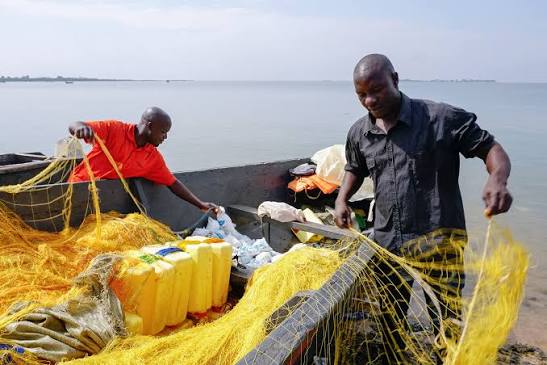
Who actually pays
Capacity reduction is a euphemism. If the number of licensed boats on a lake falls, some crews stop fishing. Crew members — typically the poorest link in the chain, paid per trip and rarely the boat's owner — carry the immediate loss. Landing-site economies built around them, from ice vendors and net repairers to boda riders and market traders, absorb it second.
The species-specific, non-transferable licence sharpens this. A fisher who previously switched between tilapia and mukene depending on season, moon phase and price is now committed to one fishery, or must pay for two permissions. That reduces effort, which is the point, but it also strips out a risk-management strategy that poor households used to smooth income. Nothing in the announced package replaces it with credit, insurance or a transition payment.
For the processing industry the calculation is different. Factories have been operating far below installed capacity for years because raw material is scarce and inconsistent. A credible cap on effort, if it rebuilds stocks over three to five seasons, is the only path back to full utilisation — and factory managers have generally supported tighter rules, provided enforcement is even-handed and does not simply push fish into informal cross-border channels.
Aquaculture as the escape valve
The arithmetic of the 1.7 million tonne target is really an aquaculture target. Cage culture on Lake Victoria has expanded quickly since its introduction around 2006, and pond and cage tilapia now account for the bulk of farmed output. The Aquaculture Regulations, 2026 are therefore not a footnote: they determine whether that expansion is bankable.
The constraints are well documented in recent research on the Lake Victoria basin — feed costs, seed quality, fish health and biosecurity, and thin profitability at small scale. Registration of aquaculture operators, which the September deadline also covered, is a precondition for the sector to be regulated, insured and financed rather than merely encouraged. It is also a precondition for keeping cage densities from becoming the next stock collapse.
What to watch
Three indicators will tell farmers, traders and lenders whether this is reform or theatre. First, whether the ministry publishes registration numbers by water body — how many boats applied, how many were licensed, and how many are therefore now illegal. Without that denominator, "enforcement" cannot be audited. Second, whether removals are accompanied by a documented appeals route. Third, whether the Mukene and closed-season rules are applied to industrial and artisanal operators alike.
Uganda's lakes have been governed for two decades by rules that existed on paper and evaporated at the shoreline. The 2023 Act, the 2026 regulations, a licence portal wired to URA, a surveillance unit and a consignment of engines are the most complete attempt yet to close that gap. The deadline has passed. The test starts now.



