Agriculture
For most of the last quarter-century, the West Nile Cooperative Union existed mainly on paper. Once a pillar of the sub-region's tobacco, cotton and coffee economy, the union spent 23 years without a functioning board, its warehouses and processing assets idle while individual farmers were left to negotiate alone with buyers who held all the pricing power. Its slow, uneven revival — and the crop now being asked to carry it — became fresh news again on August 12, when West Nile leaders renewed calls for the union's full restoration, framing the problem in blunt terms: farmers across the sub-region are producing in large quantities but still cannot find profitable markets.
That gap between output and income is precisely what cooperative structures are meant to close, and it is why the union's push for revival matters well beyond West Nile's borders. It is also why cocoa — a crop that barely registered in the sub-region's farming calendar a decade ago — has emerged as the union's most closely watched bet for turning that revival into something durable.
From tobacco heartland to cocoa frontier
West Nile has for decades been defined by tobacco, cotton and coffee, the three cash crops that shaped the sub-region's colonial-era and post-independence economy. But fluctuating global prices, unstable demand and stiff competition — from cheaper producing regions elsewhere in the country and beyond — have steadily eroded returns from all three. Tobacco farmers in the sub-region have at various points gone unpaid for months, with one long-running dispute over Shs8.7 billion in arrears still remembered by growers in the region. Against that backdrop of disappointment, cocoa has offered something the traditional crops increasingly could not: rising global prices and a market that rewards quality rather than punishing smallholders with volatile, buyer-dictated terms.
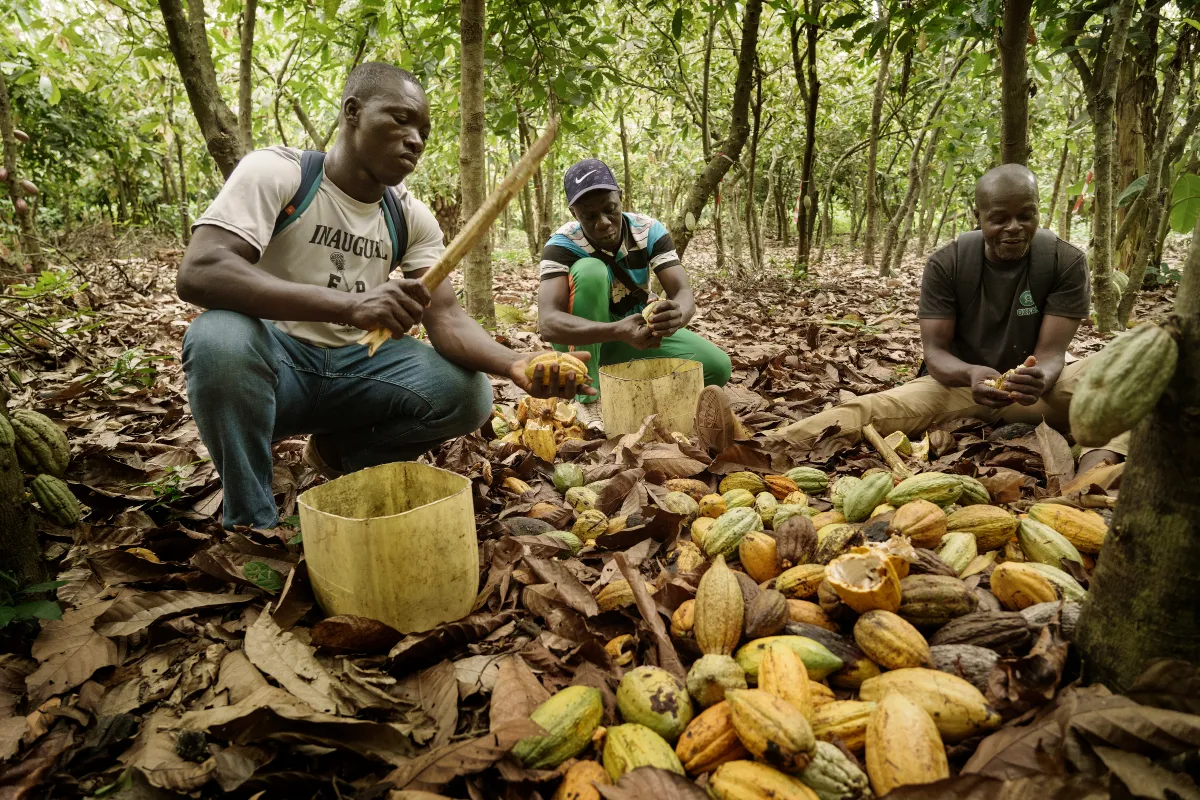
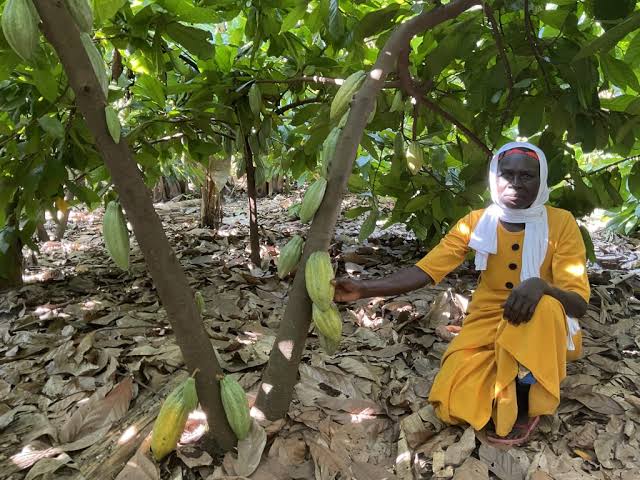
The shift is being organised through a cooperative formed in 2024, which now trains farmers in nursery establishment, farm management, harvesting, fermentation and marketing — the full chain of skills needed to move from raw beans to an export-ready product. According to the union's administrator, roughly 350 farmers have registered with the cooperative, part of a wider cocoa-growing population estimated at around 360 farmers spread across Koboko, Yumbe, Moyo, Adjumani, Maracha, Pakwach and Madi Okollo districts. The cooperative distributes seedlings to members every year, with plans described by union leadership to scale up to half a million quality seedlings by March, an ambition that would represent a significant leap in the sub-region's cocoa acreage within a single planting cycle.
The economics, at least for early adopters, are already visible. Farmgate prices for raw dried cocoa beans in Uganda have climbed sharply as global chocolate demand has outpaced supply from West Africa's traditional producing belt, with prices that were once quoted around $2 a kilogramme now running well above that in many districts. One Koboko farmer who started growing cocoa six years ago reported earning roughly Shs2 million from her harvest in 2025 alone — a meaningful sum in a region where cash income from farming has often been thin and unpredictable. Cocoa's twin annual harvesting seasons, farmers say, also offer something tobacco and cotton rarely did: two separate windows of income each year rather than a single make-or-break harvest.
Why the union needed reviving in the first place
The current cocoa push cannot be separated from the union's troubled recent history. In the 2021/2022 financial year, government extended a Shs2 billion donation intended to jump-start the union's revival after decades of dormancy. According to the union's own leadership, close to 80 percent of that money went toward capital accumulation — roughly Shs1.3 billion spent on capital equipment, including Shs100 million for a vehicle and Shs100 million to establish the West Nile Agriculture and Cooperative College, with a further Shs500 million used to clear outstanding creditors and the remainder absorbed by office refurbishment and utilities. It was only after this injection, and years of advocacy, that the union secured a new board — ending 23 years of institutional inactivity that had left farmers to fend for themselves in a marketplace typically dominated by middlemen.
That history of institutional neglect has fed into a parallel, unresolved grievance: the union has separately pressed government for compensation running into the billions of shillings for losses sustained during the West Nile insurgency years, a claim that has moved slowly through official channels even as leaders argue it represents money owed for war-era destruction of cooperative infrastructure. The compensation fight and the cocoa pivot are, in leaders' telling, two sides of the same argument — that West Nile's farmers have been repeatedly asked to rebuild with minimal state support, and that a properly resourced union is the only vehicle capable of giving smallholders real bargaining power against buyers.
The market access problem that won't go away on its own
The August 12 renewal of calls for full revival makes clear that registering farmers and training them in fermentation techniques solves only part of the problem. The deeper structural issue — echoed by leaders across the sub-region — is that West Nile farmers, whether growing cocoa, cassava, sesame or other crops, routinely produce more than local demand can absorb but lack the aggregation, storage and market-linkage infrastructure to convert that surplus into stable income. A cooperative union, in theory, exists to solve exactly this: pooling produce to secure better wholesale prices, negotiating directly with exporters and processors, and eventually capturing more value locally by processing raw beans into finished goods rather than shipping them out unprocessed.
On the cocoa front specifically, that ambition already has an early foothold. Nature Harvest, a private buyer, is purchasing beans from West Nile farmers for resale, giving growers at least one reliable off-take channel. More significantly, farmers have handed over land and infrastructure earmarked for a future processing factory intended to turn raw cocoa into chocolate and cocoa powder for export to European and Indian markets — a step that would let the sub-region capture manufacturing margins currently lost to buyers and processors elsewhere. Whether that factory materialises on any near-term timeline remains an open question, but its inclusion in union leaders' pitch signals an explicit ambition to move up the value chain rather than remain a raw-bean exporter indefinitely.

What revival would mean for farmers
If the union's revival succeeds where the tobacco and cotton eras ultimately disappointed, the payoff for West Nile smallholders could be significant: a functioning cooperative capable of guaranteeing minimum prices, providing input credit, running shared fermentation and drying facilities, and eventually anchoring local processing that keeps more of cocoa's rising global value inside the sub-region rather than exporting it as an undifferentiated raw commodity. That would mark a genuine break from a farming economy long defined by boom-bust cash crops and buyer-driven pricing.
But the union's own history is also a caution against overpromising. A previous cash injection produced a vehicle, a training college and settled debts rather than the kind of production infrastructure that directly lifts farmer incomes. For the current cocoa push to avoid repeating that pattern, leaders and members alike will need the union to function less as an administrative body and more as the market-access engine farmers say they still lack — the very gap that brought leaders back to the podium on August 12 to demand its full revival.
Published By | Features Editor