Written By | Staff Writer
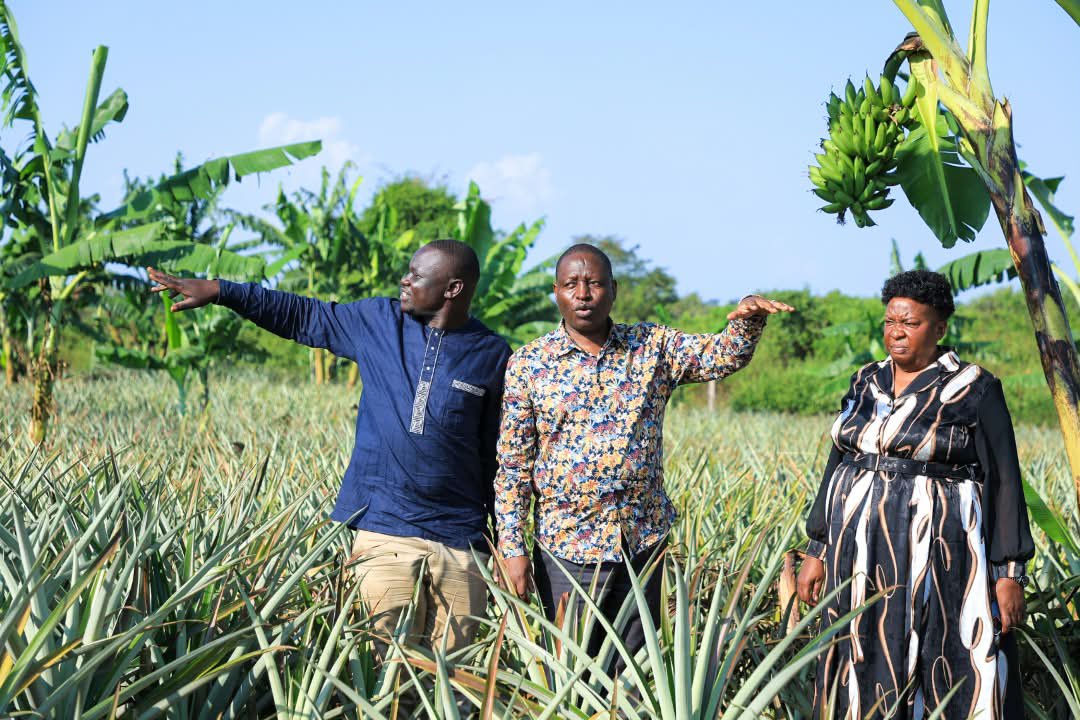
A cooperative of pineapple farmers in Kawundwe has 640 acres, 2,000 workers and an 18-month crop cycle. What it does not have is cold storage, a processing line or a road.
A cooperative of pineapple farmers in Kawundwe has 640 acres, 2,000 workers and an 18-month crop cycle. What it does not have is cold storage, a processing line or a road. Two ministers arrived on Monday with pledges. The gap between those pledges and a functioning fruit chain is the whole story of Ugandan horticulture.
Agriculture
The visit
On Monday, 7 September, the Minister of State for Industry, David Bahati, and the Minister of State for General Duties in the Ministry of Finance, Cissy Mulondo, walked into Kawundwe Village in Nakasongola District to meet the Kikyusa Pineapple Farmers Cooperative Society Ltd.
The numbers the farmers presented are not small. Members cultivate more than 640 acres of pineapples and provide employment to roughly 2,000 Ugandans. In a district better known for cattle, rangeland and recurring water stress, that is a substantial horticultural cluster built almost entirely by smallholders organising themselves.
The list of constraints they presented is equally specific: the high cost of financing, land disputes, poor roads, inadequate transport, limited cold-storage facilities and insufficient processing capacity. Every item on that list is an infrastructure or institutional failure. None of them is about farming ability.
Bahati responded with pledges — that government would pursue practical solutions to support the establishment of a pineapple processing plant, provide value-addition machinery and cold-storage facilities, improve transport and expand market access. He urged the cooperative to take advantage of affordable financing through the Agricultural Credit Facility and the Uganda Development Bank, and said the land concerns would be formally referred to the Ministry of Lands.
“We must move beyond simply producing agricultural commodities,” Bahati said. “Our focus must be on value addition, processing, better markets and creating more income for our farmers.”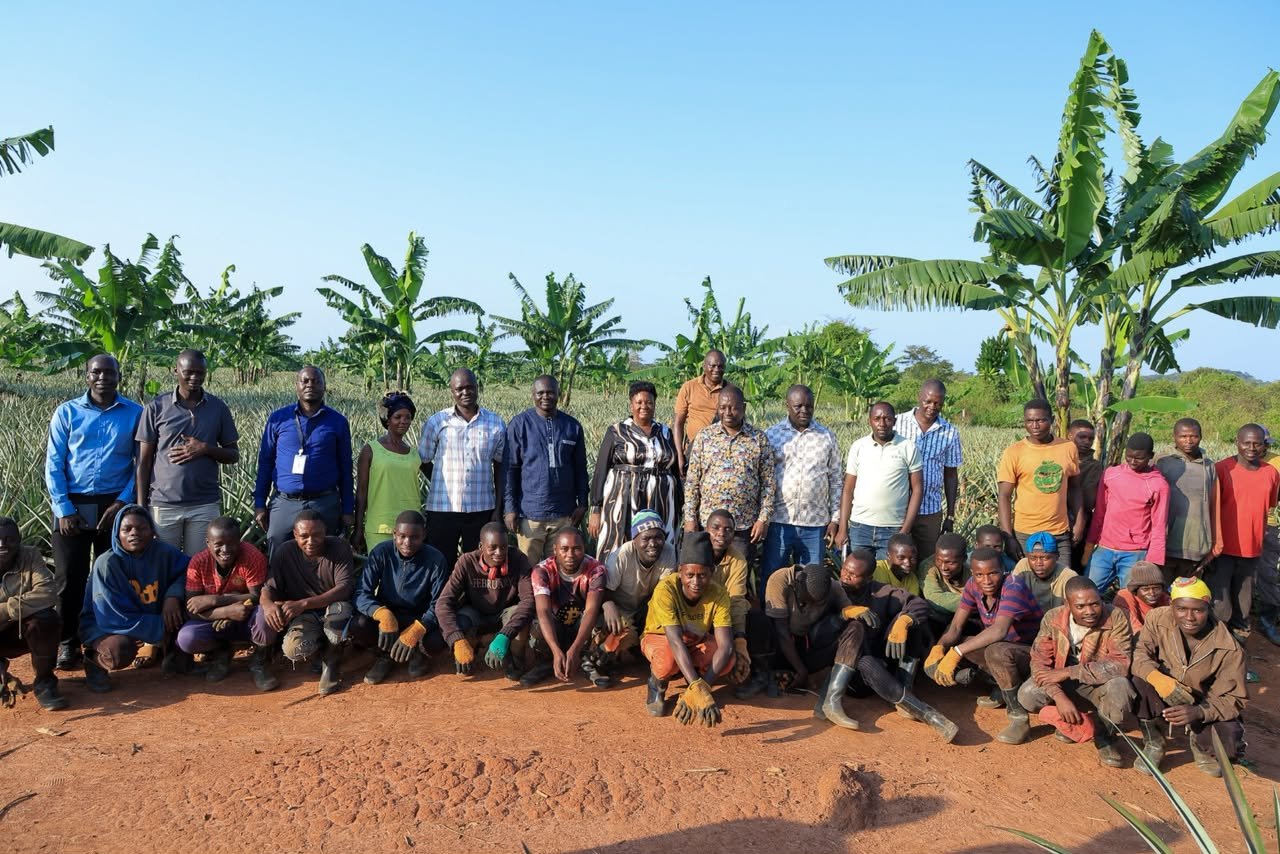
Why eighteen months changes everything
The detail that makes pineapple different from maize or beans is buried in one line of the farmers' presentation: pineapples take about 18 months to mature.
That single agronomic fact drives the entire financing problem. A maize grower is exposed for four months. A pineapple grower is exposed for a year and a half — paying for suckers, land preparation, weeding and labour across three ordinary cropping seasons before the first fruit is sold. With the Bank of Uganda's central bank rate at 9.75 per cent and commercial agricultural lending priced well above that, an 18-month working-capital gap on an unsecured smallholder loan is close to unbankable.
It also makes glut inevitable. Because everyone plants when prices are high and harvests eighteen months later, the crop arrives in synchronised waves. Without cold storage or processing, a wave of ripe pineapple is a wave of collapsing farm-gate prices followed by fruit rotting at the roadside. The World Bank has repeatedly estimated Uganda's post-harvest losses at 22 to 30 per cent across commodities; for a perishable, sugar-rich tropical fruit with no cold chain, the real figure at glut is far worse.
This is why the farmers listed cold storage and processing capacity alongside financing. They are not three separate asks. They are one system, and it is missing.
The factory that already exists
The uncomfortable context for Monday's pledges is that a large pineapple processing facility already operates a short distance from Nakasongola, and its out-grower network already reaches the district.
On 14 May 2026, Uganda flagged off its first commercial shipment of canned pineapple to China: 140 metric tonnes in four containers, processed by Deshiburg Fruits International Co. Ltd within the China-Uganda Agriculture Cooperation Industrial Park in the Luwero pineapple belt. The park is run by Kehong Group, which signed a memorandum of understanding with the Ministry of Agriculture in 2015 committing US$220 million to commercial agriculture, value addition, job creation and export development.
Deshiburg is described as the first dedicated canned-pineapple factory in the country, using the Smooth Cayenne variety and processing without artificial preservatives, with capacity to take up to 500 tonnes of locally sourced pineapple a day. Its out-grower model draws on more than 1,500 farmers across Luweero, Nakasongola, Nakaseke and Kayunga districts.
Flagging off the consignment, Agriculture Minister Frank Tumwebaze framed the moment as the end of an old excuse. The factory, he said, increases demand for pineapple as a raw material and ends the perennial problem of no market for perishable produce. His message to farmers was blunt: “Produce, produce and produce more!”
So the question the Kikyusa cooperative's appeal really raises is not whether Uganda can process pineapple. It is why a 640-acre cooperative in a district inside that out-grower catchment is still asking government for a processing plant, machinery and cold storage of its own.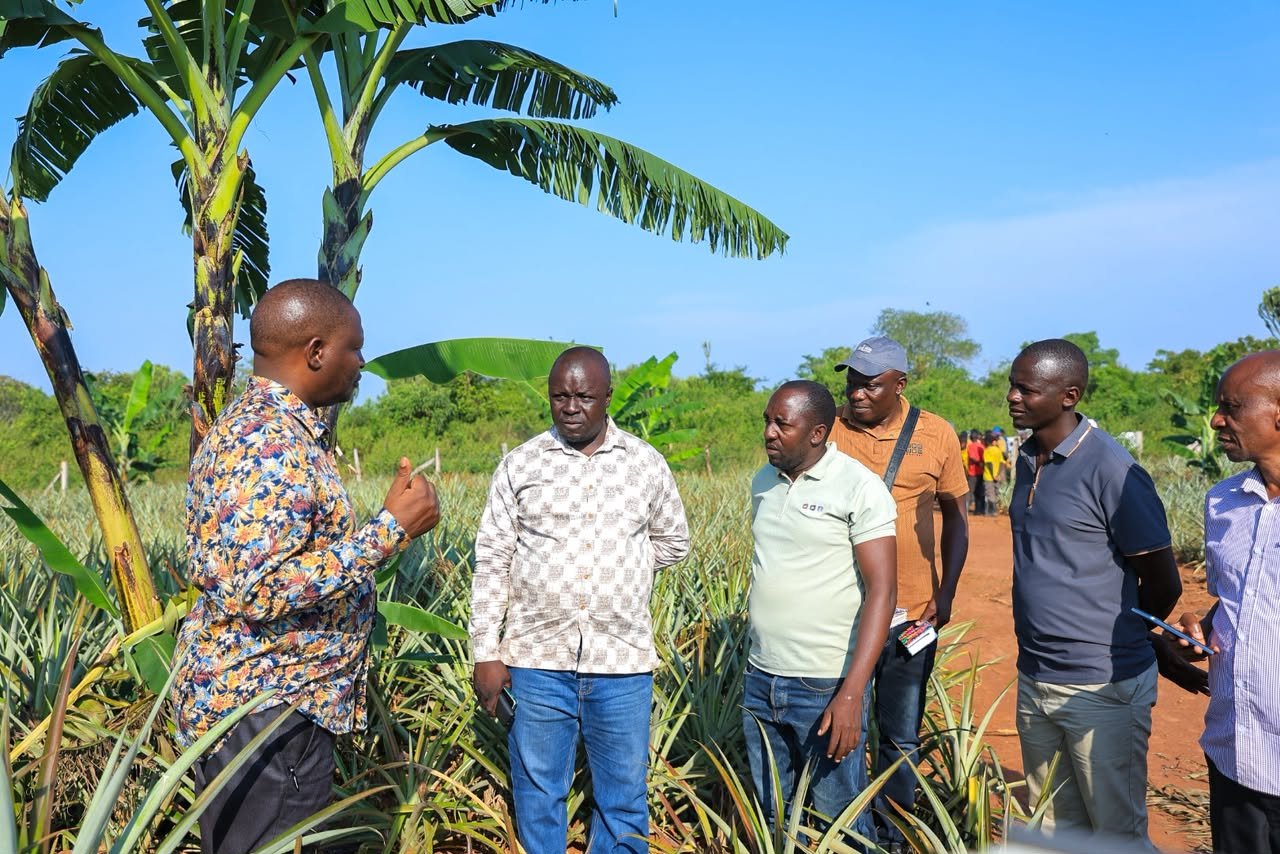
Volume without value
The answer is visible in the national numbers. Uganda exports roughly 5.8 million tonnes of fresh fruit and vegetables a year — second in sub-Saharan Africa only to Nigeria — and earns something in the order of US$35 million from it. Government's stated ambition is to lift horticultural export earnings toward US$1 billion, and a push announced earlier this year targets Shs7 trillion in horticulture exports by 2030.
Put those two figures side by side and the structural problem is obvious. Uganda is a volume producer capturing almost none of the value. Roughly US$6 a tonne of export earnings is what you get when you sell raw, unsorted, uncooled produce into regional markets that set the price.
Where value has been captured, it has come from processing and certification rather than from planting more acres. In Kayunga District — which alone accounts for close to 31 per cent of national pineapple output — cooperatives such as the Kangulumira Area Cooperative Enterprise and the Kangulumira Horticulture and Vanilla Cooperative have built solar-drying operations that ship organic dried pineapple into European markets at multiples of the fresh farm-gate price. Deshiburg's canned line does the same thing at industrial scale for China.
Both models share a feature the Kikyusa growers currently lack: a buyer contracted before the fruit ripens.
The contract that does not exist
That gap is a policy gap, not an accident. The Contract Farming Bill 2023, which would have given legal shape to out-grower agreements — price terms, quality specifications, dispute resolution, protection against unilateral rejection — was introduced, reviewed and withdrawn in March 2026. Opposition legislators have since listed its revival among their priorities for the coming parliamentary term.
Without it, an out-grower relationship is whatever the processor says it is on delivery day. Uganda has watched what that produces: maize suppliers in Luweero protesting an Shs2.5 billion payment dispute with a processor in August; barley growers in the Rwenzori selling at Shs1,700 a kilogramme against seed costing Shs5,000; tea out-growers watching green-leaf prices collapse from Shs360 to Shs150 a kilogramme with no floor. In each case the farmer carried the biological risk for months and had no enforceable claim at the gate.
For an 18-month crop, that asymmetry is not a nuisance. It is the difference between a cooperative that reinvests and one that quietly disbands.
Land, roads and the collateral trap
The land disputes the farmers raised deserve more attention than a referral letter to the Ministry of Lands. Nakasongola sits in the cattle corridor, where rangeland, ranching schemes and crop farming have contested boundaries for decades. Insecure tenure does two things at once: it deters the multi-year investment a perennial crop requires, and it removes the one asset a smallholder could pledge for a loan.
This is precisely the constraint that Ugandan agri-fintech is now trying to route around. SANDI AI Technologies won a US$50,000 grand prize at the Africa Food Systems Forum in Kigali earlier this month for alternative credit scoring that assesses farmers without conventional collateral — an approach built on the observation that the African Development Bank puts smallholder credit access at around 6 per cent and agriculture at under 5 per cent of African bank loan books.
Bahati's advice to use the Agricultural Credit Facility and Uganda Development Bank is not wrong. UDB has disbursed some Shs502.2 billion to 112,392 borrowers, with about 65 per cent of its loan book in agro-industrialisation, and reported this week that supported enterprises created or sustained 69,202 jobs. But a development bank lends against a bankable proposition. A cooperative with contested land, no cold room and no signed off-take agreement does not have one — which is the circular trap the Kikyusa farmers are actually describing.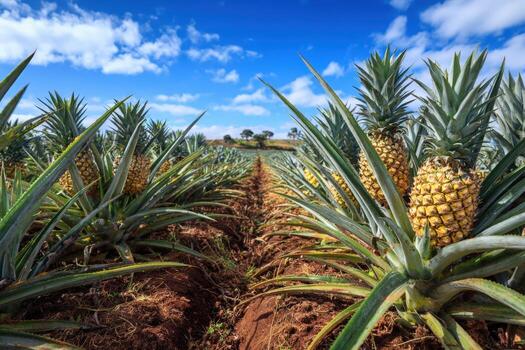
What would actually move
Three things would change the economics in Kawundwe faster than a processing plant.
The first is a cold room and a graded collection point, which cost a fraction of a factory and immediately extend the sales window past the glut. The second is a written off-take agreement with an existing processor — Deshiburg's 500-tonne-a-day line is the obvious counterparty — with a floor price and a rejection protocol. The third is the feeder road, because none of the above works if a loaded truck cannot leave the village in the rains.
Cissy Mulondo made the case for organisation itself: “Organised farmers are better positioned to access financing, invest in value addition and build sustainable enterprises that can improve household incomes.” The Kikyusa growers have already done the hard part. They organised. They planted 640 acres. They employ 2,000 people.
What they are waiting for is the part of the chain that only capital and contract law can build. Whether Monday's pledges become a cold room by the next harvest — or another line in a district file — is the test of whether Uganda's agro-industrialisation strategy reaches the farmers it is written about.



