As government trains farmers and agrochemical dealers in Mukono, national hospital data reveal how heavily spray chemicals weigh on rural health, and why counterfeit and mislabelled products make the problem harder to fix.
Feature
Chemicals are part of modern farming in Uganda. Farmers spray to protect tomatoes from blight, coffee from pests, maize from armyworm and cabbages from moths. But on 30 September 2026, government officials in Greater Mukono put the cost of that dependence in blunt terms. According to Nilepost, the Ministry of Gender, Labour and Social Development, through its Department of Occupational Safety and Health, began training farmers, extension workers, agrochemical dealers, district agriculture and labour officers, and sprayers on safe chemical handling.
The numbers cited at the training are sobering. A national evaluation recorded 37,883 cases of organophosphate poisoning between 2017 and 2022, with 1,599 deaths. That works out at an average of roughly 6,300 admissions and 270 deaths a year. Behind those statistics is a set of everyday behaviours that the officials described in detail, and a market for farm chemicals that is, in the words of a local government representative, difficult even to read.
What the data show
The figures come from a study of organophosphate poisoning trends published by the Uganda National Institute of Public Health (UNIPH), which analysed admissions between 2017 and 2022. Organophosphates are a widely used class of insecticides. The study found an overall case-fatality rate of 4.2 percent, and a striking geographic pattern. The Ankole region recorded the highest incidence, 26 cases per 100,000 people, while Lango recorded the lowest at 7. Kiruhura and Bukwo districts stayed above 50 per 100,000 throughout the period.
Men were more affected than women (18 versus 13 per 100,000), which the authors link to men's greater involvement in spraying. Children under five had a higher rate than older age groups (20 versus 14 per 100,000), which the authors attribute to poorly stored household pesticides that young children can reach.
There is some encouraging news. Incidence fell more than threefold over the study period, with the biggest drop between 2019 and 2020. But the case-fatality rate did not change significantly, suggesting that while fewer people were being poisoned, those who were still faced the same risk of dying. The study also found that fatality rose with the level of the health facility, from 2.3 percent at Health Centre III to 9.7 percent at the national referral hospital, which likely reflects the most severe cases being referred upward, and points to the importance of treating patients early at lower-level facilities.
One important caveat: the study's primary analysis did not distinguish between intentional self-poisoning and occupational or accidental exposure. The 37,883 cases therefore cannot be read as all farm-work injuries. The figures nonetheless describe a serious public health burden closely tied to the availability of pesticides in rural households.
How farmers handle chemicals
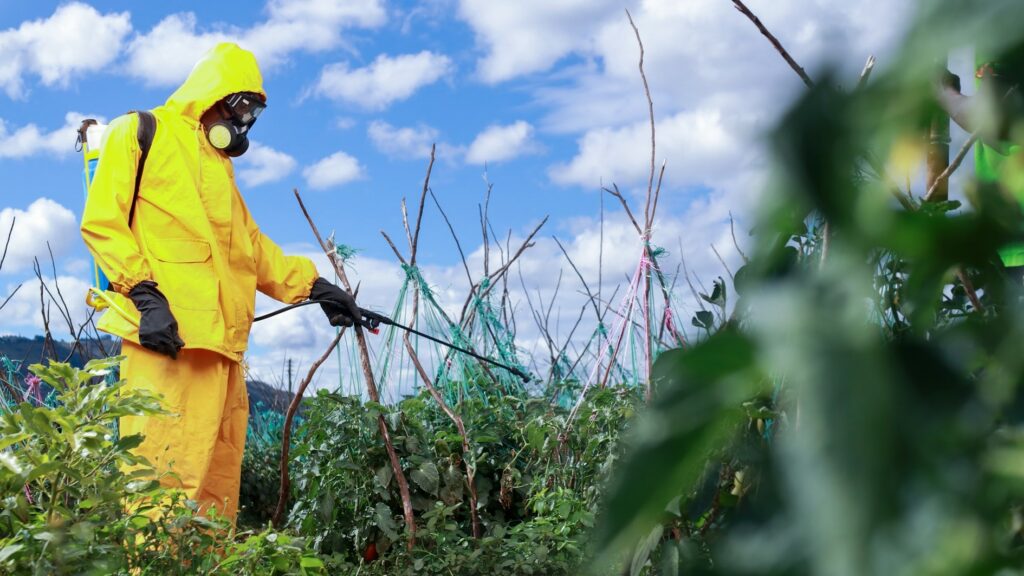
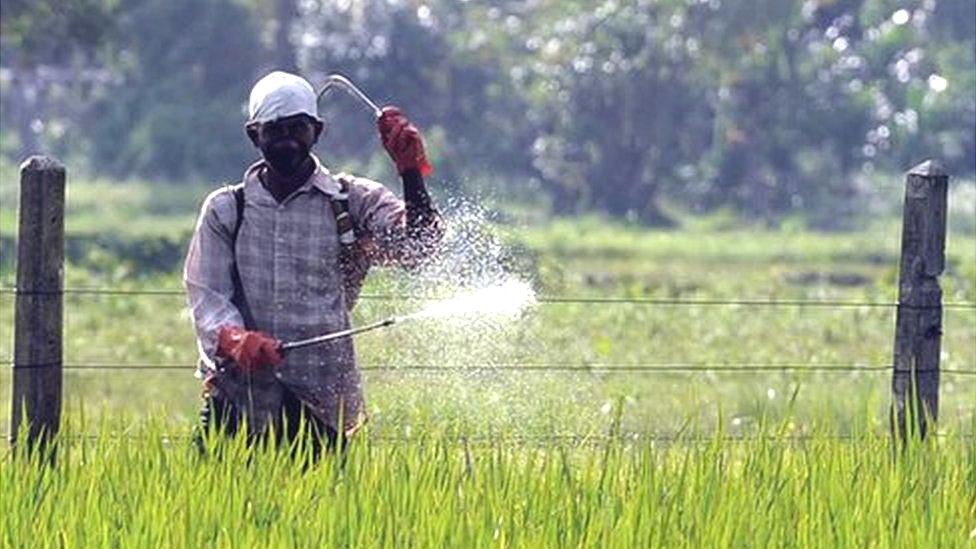
The training highlighted research on day-to-day practice. Studies in Mbale found that between 43 and 81 percent of smallholder farmers had experienced acute health effects from chemical handling, including skin irritation, headaches, dizziness and nausea. The same research found that 73 percent of farmers wore ordinary clothing rather than protective equipment when spraying, and 61 percent used their mouths to unblock sprayer nozzles.
Those habits reflect economics as much as ignorance. Protective gear costs money that a farmer with an acre or two may prefer to spend on inputs. Knapsack sprayers are often old and leaky. Instructions are rarely read, and often cannot be. Grace Adongo Choda, an Under Secretary at the ministry, was quoted saying chemicals are essential to agriculture and the economy but can pose serious risks to workers, consumers and the environment when improperly handled.
Labels, counterfeits and slow enforcement
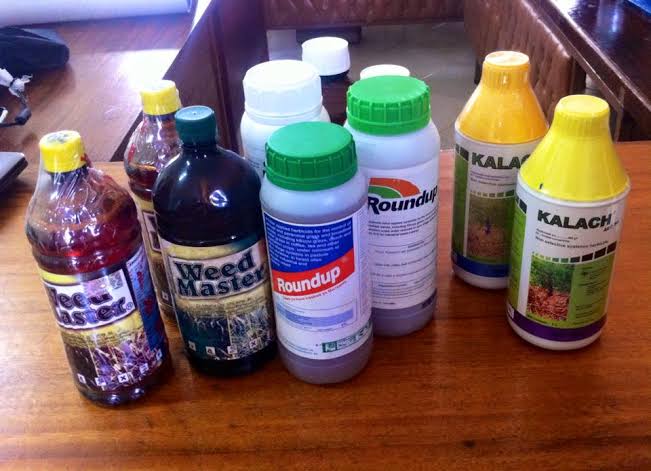
The Mukono Resident District Commissioner, Hajjat Fatuma Ndisaba, raised a practical problem: some product labels carry information in foreign languages, including Chinese, making it difficult for users to understand the instructions. She and other speakers also pointed to counterfeit agrochemicals in the market, slow enforcement processes when counterfeits are suspected, and limited training and oversight of dealers.
Counterfeiting is a long-running issue. A report by AgriBusiness Global, written in the wake of the 2017 fall armyworm outbreak, said only about half of Uganda's estimated 2,600 agro-dealers were registered, and that mislabelling, label reuse and label imitation were the main forms of counterfeiting. Fred Muwema of the Anti-Counterfeit Network was quoted saying penalties under the Penal Code Act 1950 were not severe enough. That reporting is now several years old, and the current numbers may differ, but the structural problem it described, an input market that farmers cannot easily trust, is what officials were still describing this week.
The issue has recent precedent. On 18 September, agriculture officials sealed agro-input shops in Luweero over expired and unlicensed products, as reported by Nilepost. The Mukono training is a different intervention, aimed at the safety of the people who buy and use the products rather than at the sellers, but the two are parts of the same problem. A counterfeit or expired chemical is both less effective against pests and more unpredictable for the person applying it.
The policy response
The government said it is implementing the Chemical Safety and Security programme, known as CHESASE, nationwide, with a focus on workplace inspections, training, capacity building and advocacy. The ministry's programme also links to international efforts on chemical safety, and earlier this year Uganda hosted a regional training on preventing illicit chemical transfers, according to PML Daily.
CHESASE is a health and labour programme rather than an agricultural one, and that division of responsibility may itself be part of the challenge. Registration and control of pesticides sits with the agriculture ministry, occupational safety with the labour ministry, hospital surveillance with the health ministry, and counterfeits with trade and standards bodies. A farmer sees all of it as one problem: the product on the shelf and what it does to the body.
Why this matters economically
The economic argument for tackling pesticide misuse is broader than health. Poisoning takes workers out of the field. Households that pay for emergency treatment face costs that can push them further into debt. And, as the export figures show, chemical residues on produce are one of the factors that cause shipments to be intercepted at European borders. Uganda's fresh-produce exports have grown to about US$81 million, according to the Monitor, and the country's export credibility depends partly on how well its farmers use inputs at home.
There is a climate dimension as well. Warmer, wetter conditions can increase pest pressure. The Ministry of Water and Environment has forecast above-average rainfall for parts of Uganda from September to December under El Nino conditions, which could prompt more spraying. If so, the safety gaps identified this week will matter more, not less.
What would help
Several practical steps follow from the evidence. Labels in English and local languages, with pictograms, would help address the literacy and language problem. Affordable protective equipment, sold alongside the products and bundled through cooperatives or input dealers, would help with the practical barriers. Dealer licensing tied to training would raise standards at the point of sale. Stronger surveillance in high-incidence districts such as Kiruhura and Bukwo would target resources where the burden is heaviest. Safe storage advice, particularly for households with young children, addresses the under-five pattern the UNIPH authors flagged. And integrated pest management, promoted in vegetable-growing areas such as Jinja, could reduce the volume of chemicals in use in the first place.
None of these is a quick fix, and each needs funding and enforcement capacity. But the Mukono training offers a starting point: it puts the numbers in front of the people who actually sell and spray the chemicals.
The bottom line
Uganda's pesticide problem is often framed as an input-quality issue for farmers and regulators. The figures presented this week make clear it is also a health issue, and a large one. Roughly 6,300 admissions and 270 deaths a year, concentrated in identifiable districts, are numbers that call for a coordinated response across ministries. The question is whether CHESASE and related efforts can shift practice at the level of the sprayer and the shop counter, where the risk actually arises.
Published By | Features Editor