Written By | Staff Writer

Government's free fertiliser programme aims to lift soil fertility from some of the lowest application rates in Africa
Agriculture
Uganda farmers apply two to three kilograms of fertiliser per hectare a year. The continental average is about 22 kilograms; the Abuja Declaration target is 50. That gap, cited by the Ministry of Agriculture, Animal Industry and Fisheries (MAAIF), sits behind one of the government's biggest input interventions in years: the free distribution of 173,913 bags of fertiliser to smallholders in strategic crops.
The rollout is barely a month old, and it has just met its first test of fairness. On 2 October, the Ssese Palm Oil Growers Cooperative Society in Kalangala District asked government to extend free fertiliser to palm oil, a crop currently outside the programme. Their appeal exposes the questions every input subsidy eventually faces: how to choose, how to target, and how to make the benefits last.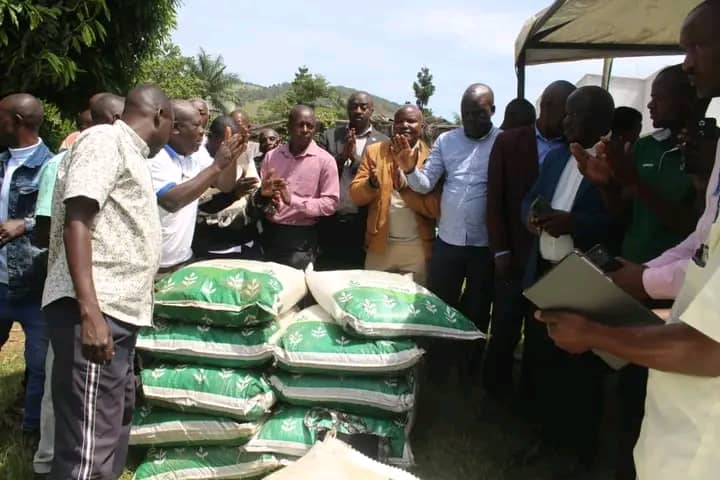
How the programme was announced
Cabinet approved the procurement, supply and distribution of fertilisers to farmers, and ICT and National Guidance Minister Justine Kasule Lumumba announced it on 25 August 2026, saying MAAIF would distribute fertilisers in different parts of the country, including to beneficiaries of the Parish Development Model. Early reports gave no quantities. On 31 August the Monitor reported the first number: 173,913 bags, distributed at zero cost to smallholders in strategic value chains.
NTV reported on 1 September that distribution would begin with tea and then move to coffee and cocoa, with ITRACOM Fertilisers Uganda named as the supplier. Different outlets describe the crops slightly differently, which is itself a sign that implementation details were still being settled when the programme was launched.
What officials have promised
At the launch, Agriculture Minister Frank Tumwebaze said farmers need to apply "the right input, in the right quantity and at the right time". MAAIF Permanent Secretary Maj. Gen. David Kasura-Kyomukama was blunt about integrity: "There will be no fees, no charges and no diversion." State Minister for Agriculture Desire Muhooza urged enterprise groups to work with district extension officers, and Jean-Luc Bigirimana of ITRACOM committed to provide technical guidance alongside distribution. The ministry says distribution will be monitored through parish and district reporting, with field impact assessments planned after the rollout.
These are reasonable safeguards. Free inputs are vulnerable to diversion, because a bag handed out at no cost can be sold for cash. The promise of no diversion is the right one to make, and the planned impact assessment is the right way to check it.
Why the numbers matter
The scale of the problem explains the policy. Low fertiliser use is a major reason why yields stay flat on many smallholdings. Reports differ on the recommended rate: the Monitor frames the comparison against the continental average and the Abuja target, while NTV cites a recommended 80 to 100 kilograms per hectare. Under any of these benchmarks, Ugandan use is far too low.
The commodities involved are significant. A Pulse Uganda report on the announcement, citing 2024/25 figures, put agriculture's contribution at 26.2 percent of GDP, with sector growth of 6.6 percent. Coffee exports were 7.75 million 60-kilogram bags worth US$2.21 billion, and cocoa exports were 72,545 tonnes worth US$620.76 million. Tea adds to that picture. These are crops where better nutrition can raise both yield and quality, and where export earnings give government a clear return on the money.
There is also a sequencing point. Many coffee and cocoa trees are old or stressed after a hard dry season, and fertiliser applied to a stressed tree may not pay back unless rainfall returns. The announcement was timed to coincide with recent rainfall, according to Pulse, a sensible choice, but one that makes timely delivery essential.
The Kalangala appeal
The Ssese cooperative's request, reported by The Cooperator on 2 October, shows that the programme's boundaries matter. The society says the free fertiliser is limited to coffee and cocoa producers, and wants palm oil farmers included. It supports its case with research from Makerere University's Department of Soil Science, in which researcher Deogratius Luyima found potassium deficiency in Kalangala's soils and warned that generic commercial fertilisers do not meet specific soil needs.
The sector is not small. Palm oil covers more than 11,000 hectares in Kalangala, mostly on Bugala Island, with about 5,000 out-growers, and a further 5,000-hectare project is expanding across Buvuma, Mayuge, Masaka and Sango Bay. Farmers earn roughly US$390 a month per hectare from mature plantations, according to the report, with bunches weighing up to 70 kilograms. The cooperative sells more than 14,000 tonnes a year at a minimum of Shs1,100 per kilogram.
The cooperative's leader, Ssalongo Balilonda Mukasa, did not ask for everything free. He proposed that government fund half the fertiliser cost with the cooperative paying the rest for its members. That is a notable offer: it points to a co-payment model that could stretch public money further and give farmers a stake in the outcome.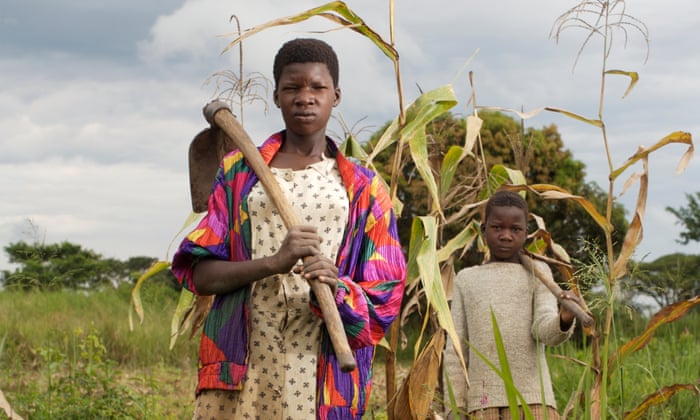
A fairness question without an easy answer
The appeal poses a dilemma for policymakers. Palm oil is a strategic crop, central to Uganda's edible oil import substitution drive, and its out-growers are smallholders. But government has finite money. Extending free fertiliser to a new crop would require either more bags or a thinner spread across existing beneficiaries.
There are three broad ways to handle this. One is to treat the current allocation as a pilot and extend it based on evidence. Another is a co-financed model, as the cooperative proposes, which can broaden coverage at lower public cost. A third is a voucher or e-wallet system, which lets farmers buy the right fertiliser for their own soil. Each carries trade-offs. Vouchers need working digital systems; earlier coverage of a climate-smart agriculture project showed that e-wallet activation has lagged in some districts. Co-payment can exclude the poorest.
The soil-specific point should not be lost. A programme that distributes one product widely may deliver less than a smaller programme that matches nutrients to soil. Kalangala's potassium deficiency is a reminder that fertiliser is not a single commodity, and that soil testing should come before large-scale distribution wherever possible.
Implications for farmers and the economy
For tea, coffee and cocoa farmers, a free bag is valuable, but only if it comes with advice on rates, timing and placement, and if it arrives in time for the rains. For farmers excluded from the programme, including growers of crops outside the list, the signal is mixed: government has shown it is willing to spend on inputs, but eligibility looks narrow.
For the wider economy, the programme is a bet that raising input use will raise export volumes and rural incomes. If application rises meaningfully above two to three kilograms per hectare, yields should follow. But the benefit could be limited if the programme is a one-off. Sustainable change would need a pathway to commercial fertiliser markets, including dealer networks, credit and soil-testing services, so that farmers can keep buying after the free bags run out.
What to watch next
Four things will show whether the programme delivers. First, the district and parish distribution lists, to show who has actually received bags. Second, whether government answers the Kalangala appeal or sets criteria for adding crops. Third, the post-rollout impact assessment MAAIF has promised, including any yield data. Fourth, whether fertiliser reaches farmers before or after the rains peak.
Uganda has made a visible start on a long-standing gap. The next few months will show whether 173,913 bags are the beginning of a durable input system or a one-time giveaway that leaves the underlying problem unchanged.



