Written By | Staff Writer
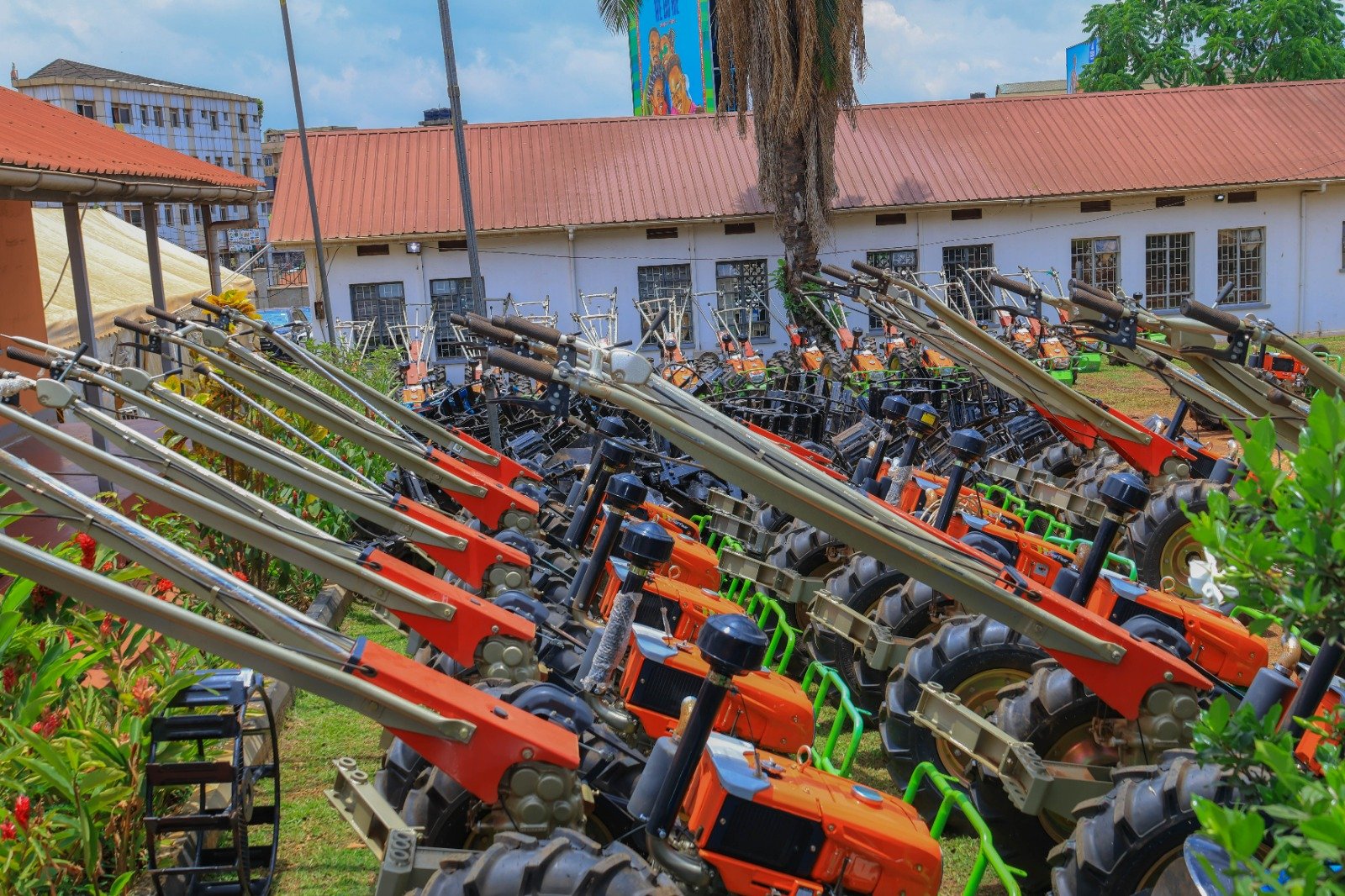
Government's latest mechanisation handover puts 14-horsepower power tillers in the hands of farmer groups
Agriculture
What happened
On Saturday, 19 September 2026, the Ministry of Agriculture, Animal Industry and Fisheries (MAAIF) handed over 150 single-axle tractors, the small diesel "walk-behind" machines also known as power tillers, to representatives of farmer groups and institutions from districts across the country. Minister of State for Agriculture Desire Muhooza presided, joined by members of Parliament's agriculture committee led by its chairperson, Amelia Kyambadde.
The machines are rated at 14 horsepower. According to the ministry, each one can work up to four acres on one litre of diesel. They come with implements for ploughing, and with the right attachments they can also slash, haul a trailer, grind produce and spray. "What a man can do in one acre, you need 10 men to finish. These can do five acres a day," said Boniface Okanya, MAAIF's Commissioner for Agricultural Infrastructure, Mechanisation and Water for Agricultural Production, as reported by New Vision.
The handover is the first tranche of a larger batch. PML Daily and The Informer report that MAAIF has commissioned more than 200 single-axle tractors bought in the 2025/26 financial year. Operator training starts on 28 September 2026.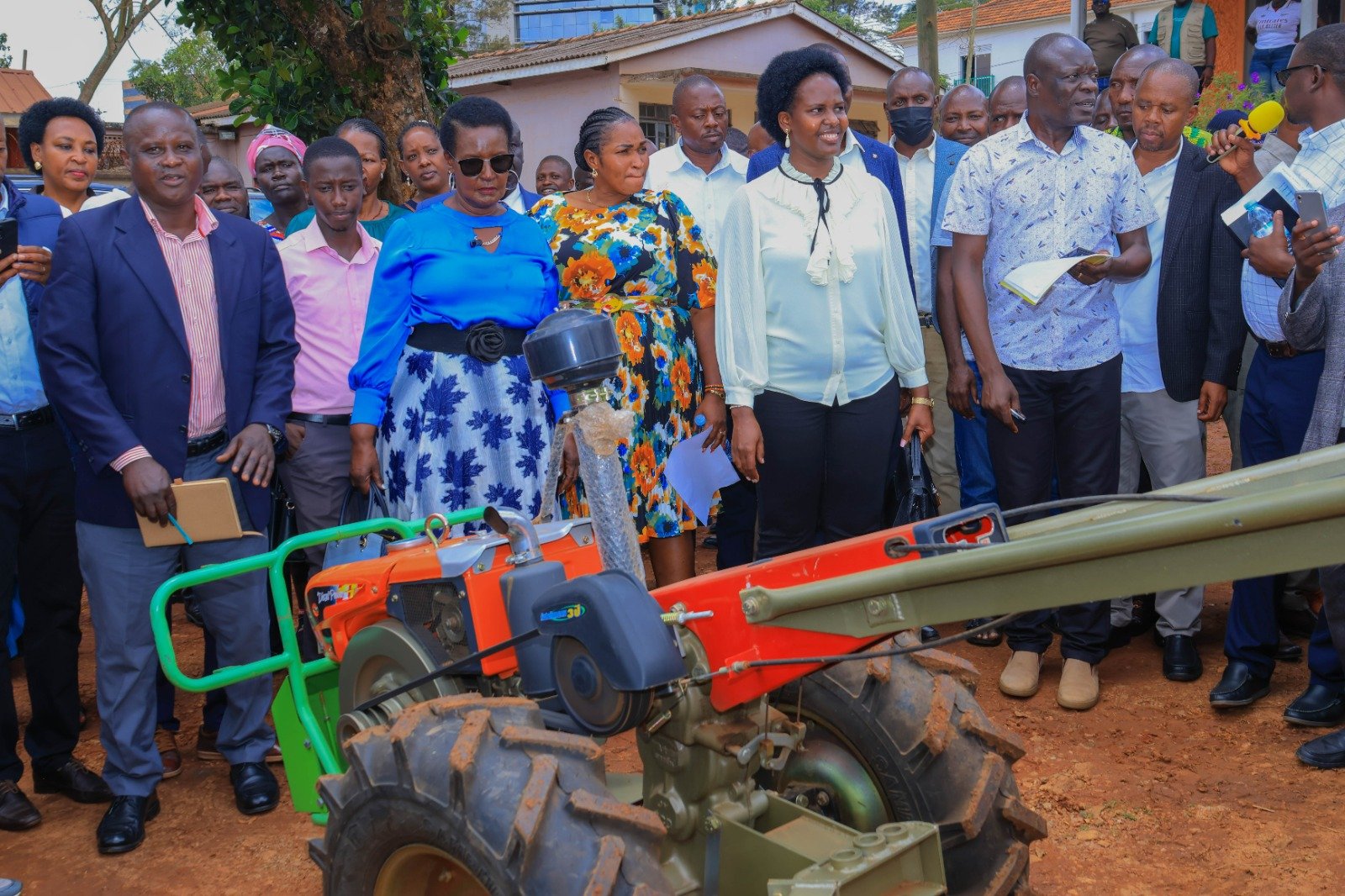
Why it matters: the 4% problem
The case for small machines is easy to state and hard to deliver. Ministry figures quoted at the handover show that about 38% of Uganda's 6.9 million hectares of agricultural land could be mechanised, but only about 4% currently is. Muhooza said roughly 68% of Ugandans depend on smallholder farming. Most of that farming is still done with the hand hoe.
That gap limits output more than any single input. A household that can only dig what its members can hoe in the few weeks after the rains start has a fixed ceiling on how much it can plant, however good its seed or fertiliser. Opening land late also shortens the growing season, and this matters more than usual this year. After a drought that ran from about May into September, the Ministry of Water and Environment has forecast near-normal to above-normal rains for September to December. Farmers who can prepare land quickly when the rains come will be able to use that moisture. Farmers who can't will plant late.
Kyambadde said the walk-behind format suits Ugandan farms. "We are tired of the hoe," she said. "This walk-behind tractor is best suited for the fragmented land arrangements which make up most of our farmers' farms." That fits the evidence. Most Ugandan holdings are a few acres or less, often split into scattered plots on slopes or in wetland fringes. A four-wheel 75-horsepower tractor is wasted on them and often can't reach them. A power tiller can.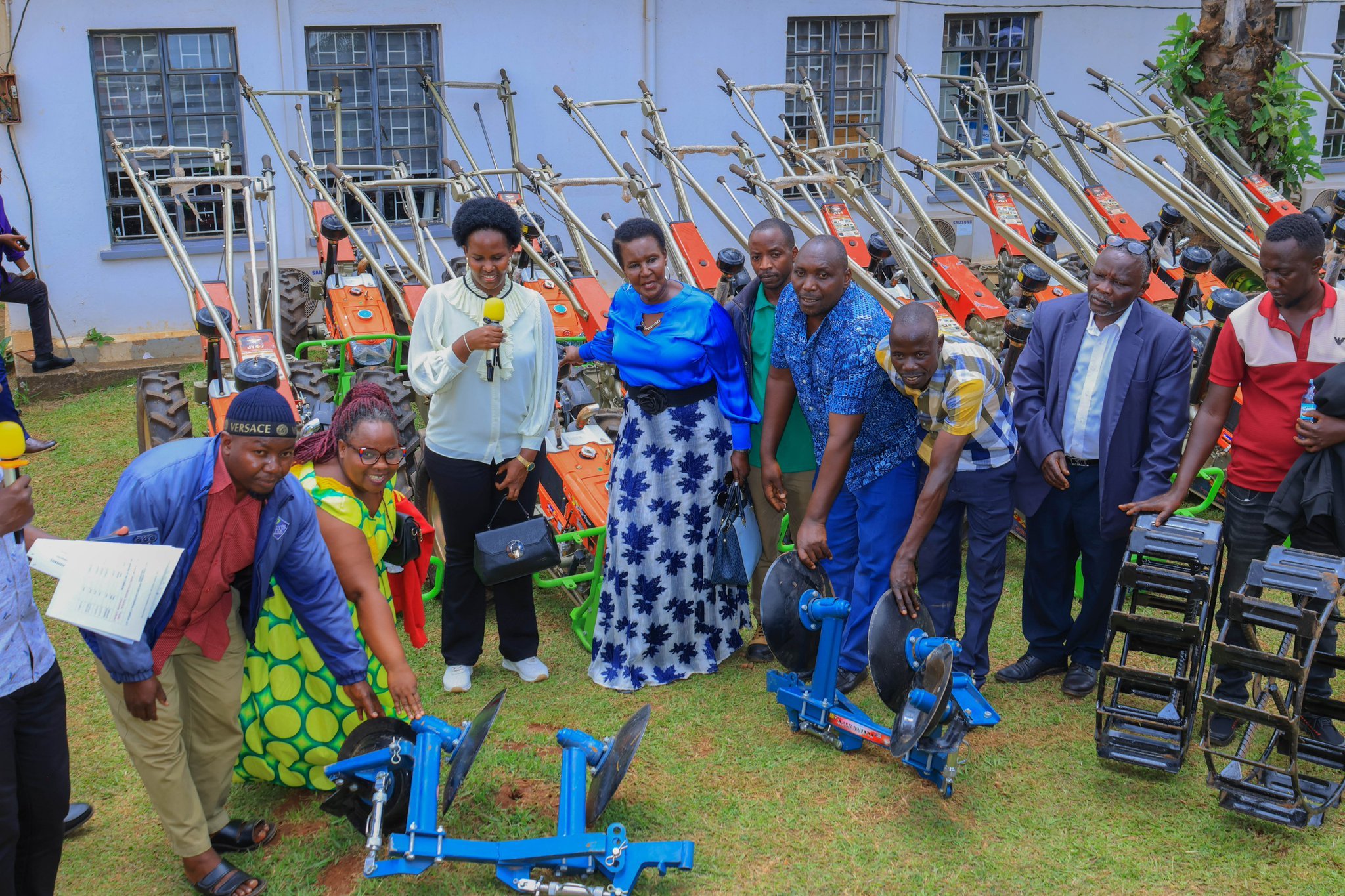
A tiered mechanisation system is taking shape
The 150 tillers are the smallest part of a tiered plan MAAIF has described. According to The Informer's account of the ministry's briefing, 135-horsepower tractors go to the ministry's Zonal Agricultural Mechanisation Centres, 90-horsepower tractors to large-scale farmers, 75-horsepower tractors to medium-scale farmers, and single-axle tractors to small-scale farmers under the Parish Development Model (PDM).
Behind the machines is a plan to build service capacity. MAAIF says it will build 20 zonal mechanisation centres, starting with Mbale, Dokolo, Iganga, Nabilatuk, Soroti, Mpigi, Kiryandongo and Kiruhura. It is also rehabilitating the Namalere National Agricultural Mechanisation Referral Centre as a centre of excellence. Namalere would train and accredit operators, mechanics and technicians, and test and certify new equipment models before they are imported and sold. That second job could help keep substandard machinery off the market.
Beneficiary groups sign a renewable three-year memorandum of understanding. The ministry says it will support routine maintenance for up to 1,000 hours of use and has a servicing contract with the supplier. Okanya told farmers not to attempt their own repairs.
History: 650 tractors, 1,000 tillers, and a burned machine
None of this is new, and officials were frank about why earlier rounds disappointed. Government has already distributed 650 high-capacity tractors and 1,000 single-axle tractors to all 146 district local governments, according to Muhooza. She acknowledged that "there had been challenges with the model used to distribute them," New Vision reported. The new approach of routing machines through organised farmer groups is meant to improve access, management and accountability.
Okanya gave examples of what can go wrong. "They chase away the operator and the equipment breaks down in a week," he said. "If you maintain them, the minimum is 20 years." He also described a case in Agago where a group member burned a government tractor after a dispute. The man was arrested, and Okanya warned that misused machines would be recalled and given to another district. Muhooza told beneficiaries: "If you disagree, please don't burn the tractor. Instead, take it to the chief administrative officer who can take good custody."
These comments point to the main risk. A tractor is only useful as part of a system: a trained operator, fuel, spare parts, a mechanic within reach, and clear rules on who gets to use the machine and when. Group ownership spreads access, but it also spreads responsibility. A group can end up with a machine everyone wants in the same two weeks of the season and nobody pays to maintain.
The numbers deserve scrutiny
One figure in the coverage needs explaining. Several reports say MAAIF allocated Shs57.2 billion in 2025/26 "to procure 200 additional walk-behind tractors with accessories." If that sum really bought only 200 tillers, each machine would cost about Shs286 million. That is far above what a 14-horsepower power tiller normally costs on the regional market. The more likely explanation is that the allocation covers a wider package, such as larger tractors, implements, the zonal centres or the Namalere refurbishment. The public reports don't say. Parliament's agriculture committee has promised to seek more money for the programme, so it has good reason to ask for an itemised breakdown first. Taxpayers and farmers should be able to see what each machine cost and what came with it.
Muhooza called this round "a trial test" to assess the machines before the programme is expanded, and asked beneficiary groups to "be ambassadors" who report back on performance. That is a sensible approach, but only if the feedback is actually collected and published. Useful measures would include acres ploughed per machine per season, hours of downtime, repair turnaround and how many non-member farmers each group served. Data like that would show whether expansion is justified. Without it, the next handover will be judged on the same anecdotes as this one.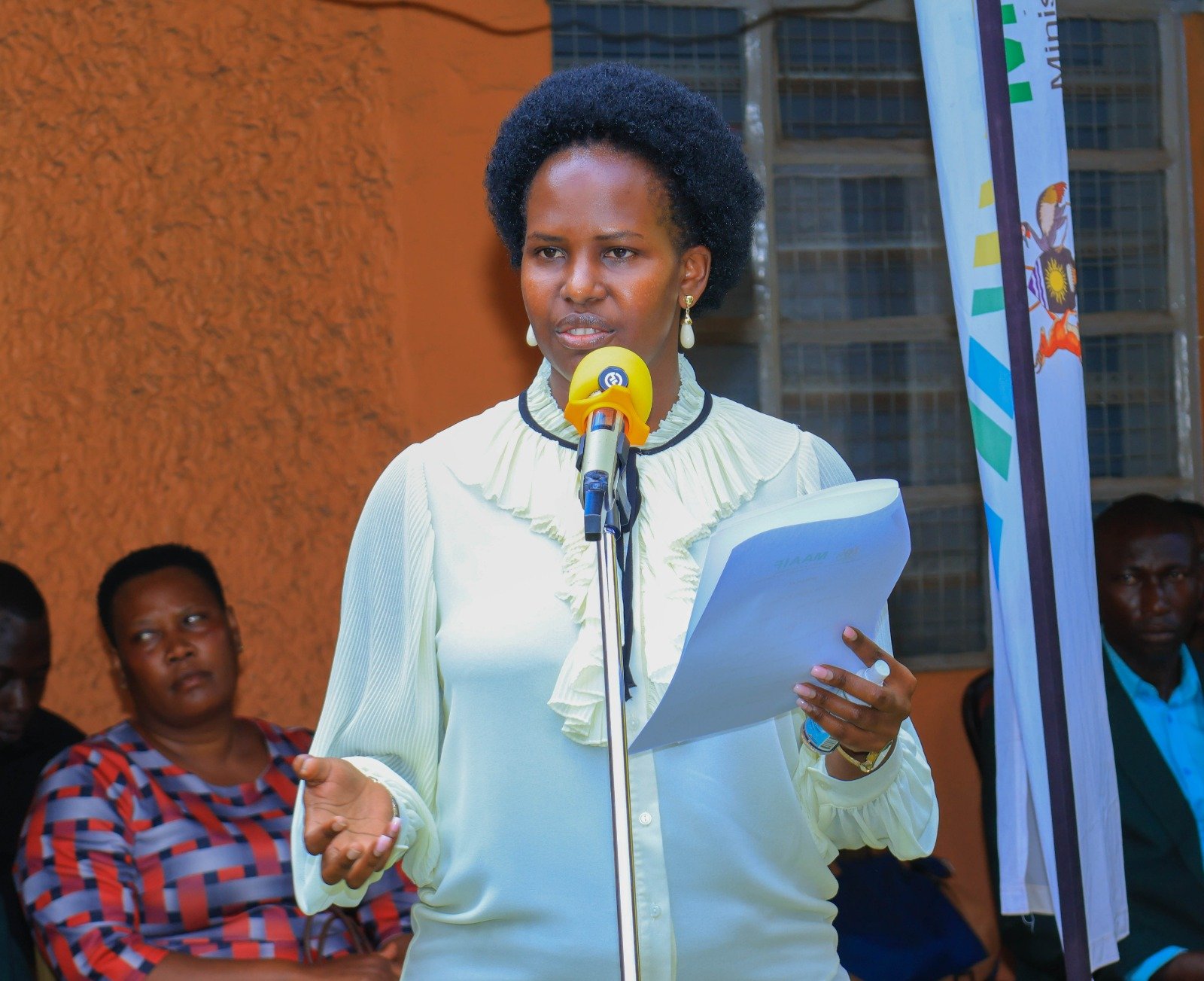
What it means for farmers, markets and the economy
For the farmer groups that received machines, the immediate gain is time and labour. Five acres a day, compared with a fraction of an acre by hand, frees family labour, especially women's and children's, for weeding, marketing or off-farm work. It also lets groups plant closer to the start of the rains. Groups that rent out ploughing to neighbours could earn a steady side income, as tractor-hire businesses already do in parts of eastern and northern Uganda.
Mechanising land opening alone won't raise yields if it isn't matched by better seed, soil fertility and post-harvest handling. It can also create new bottlenecks. A farmer who ploughs twice the acreage may not be able to weed or harvest it without more labour or more machines. Okanya's point that the same tiller can grind, spray and haul matters here, because the value of these machines depends on keeping them in use across the season, not just at planting.
For the wider economy, the goal is the one set out in government's commercialisation agenda: move households from subsistence to surplus. Mechanisation is one of the few interventions that directly raises output per worker. That matters most for a country whose agricultural workforce is large and whose farms are small. Uganda's fertiliser use and irrigation coverage are both very low, and with mechanisation at 4%, productivity has room to grow on several fronts at once.
What to watch
Watch whether operator training, due to begin on 28 September, reaches the groups before the season's planting window closes. Watch whether the remaining 50-plus machines from the 200-unit batch are allocated openly. Watch whether the first zonal centres move beyond announcements. And watch whether MAAIF publishes the performance data it has asked beneficiaries to provide. If it does, the 150 tractors handed over in Kampala could become a template for a broader programme. If it doesn't, they risk repeating what happened to earlier machines.



