Written By | BK Mugizi
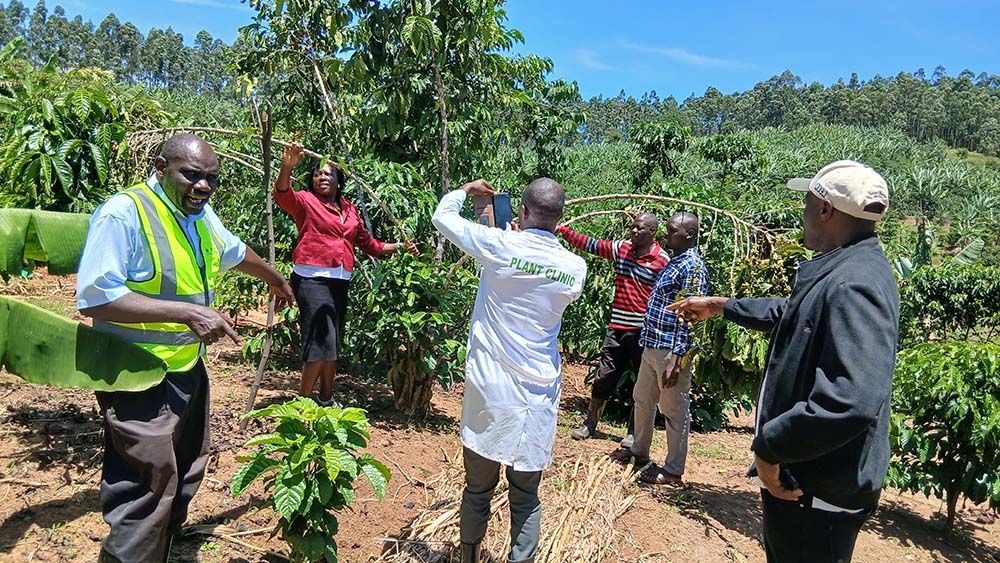
Dick Nuwamanya (in a refrector) cautioned coffee farmers against topping their coffee plants
By Bruno Mugizi
As the coffee harvesting season approaches, farmers in Greater Bushenyi have been cautioned against using the topping method, which can compromise the health and productivity of coffee plants.
Topping is the practice of cutting off the upper branches of a coffee plant to control its height and encourage the growth of new shoots.
While some farmers believe it increases sunlight exposure and boosts yields, agricultural experts warn that it depletes vital nutrients, weakening the plant over time.
“Some farmers think topping boosts production, but it causes the coffee plant to lose essential nutrients needed for its health and sustained yield,” said Dick Nuwamanya, Regional Coffee Extension Officer covering Rubirizi, Mitooma, and Bushenyi.
Despite these warnings, some farmers continue to use the method. Alex Ainomugisha, a prominent coffee farmer in Kanyabwanga Sub-county, Mitooma District, said topping allows plants to receive more sunlight and may encourage higher yields.
However, he noted that access to irrigation equipment and fertilizers remains a major challenge.
“If the government can provide us with irrigation and fertilizer support, we can improve both our yields and the quality of our coffee,” he said.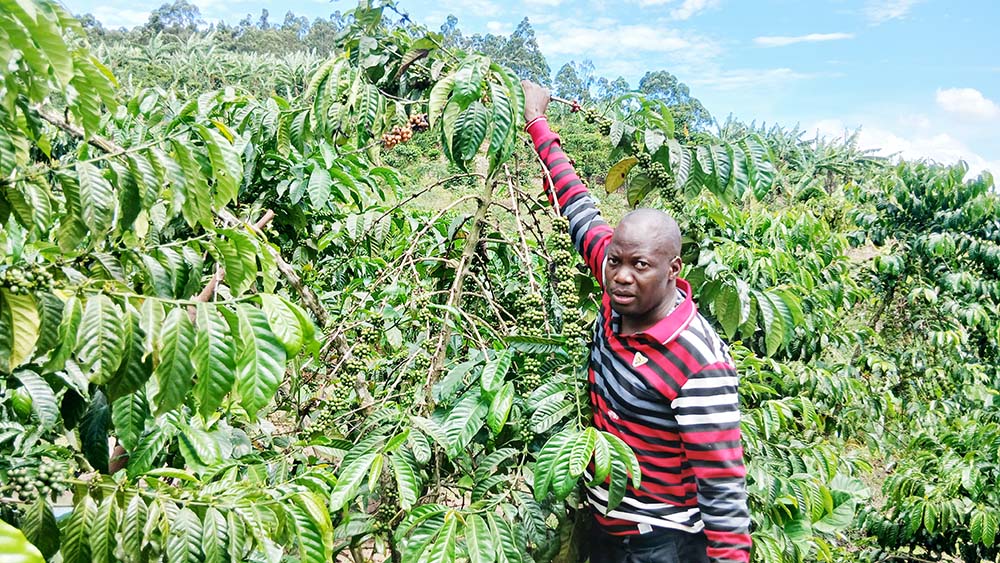
Alex Ainomugisa shows a topped coffee plant in his garden
Agricultural officers are urging farmers to adopt sustainable practices that focus on quality and long-term productivity. Keminyeeto Naume, the Kanyabwanga Sub-county Agricultural Officer, advised farmers to combine artificial and organic fertilizers to restore soil health and improve productivity.
Nuwamanya emphasized that quality is critical to earning more from coffee.
“Buyers care about quality, weight, and scent. If we do not practice good farming methods, we cannot fully benefit from coffee,” he said.
Farmers are also turning to intercropping. Ainomugisha has planted gonja (plantain) alongside his coffee—a crop that requires minimal manure and provides an additional source of income.
Uganda’s coffee sector has recorded strong performance in recent years. In 2025, the country exported approximately 8.4 million 60-kg bags of coffee valued at about US$2.4 billion (UGX 8.2 trillion).
Robusta remains the dominant export, but global demand for high-grade Arabica beans is rising, especially in Europe.
Experts stress that proper pruning, nutrient management, intercropping, and sustainable farming practices are essential for boosting yields while preserving soil health, ensuring coffee remains a profitable crop for farmers across the country.
Torch Media Africa



