Written By | Staff Writer
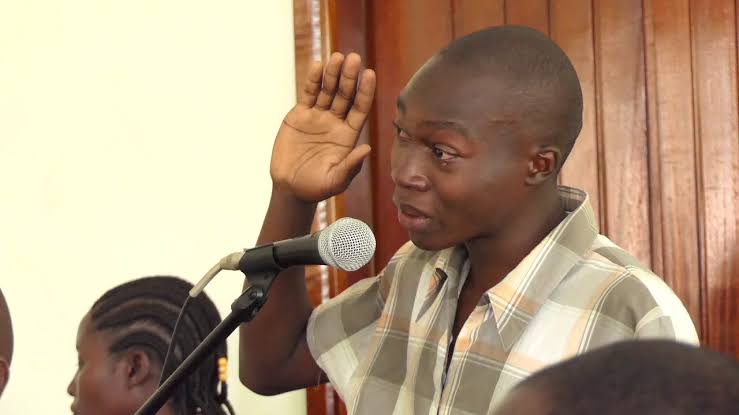
Elson Tumwine, a 23-year-old final-year Makerere University student, was sentenced to two months in prison over a TikTok video criticizing President Yoweri Museveni and Speaker of Parliament Anita Among
On August 5, a magistrate's court in Uganda sentenced Elson Tumwine, a 23-year-old final-year Makerere University student, to two months in prison over a TikTok video criticizing President Yoweri Museveni and Speaker of Parliament Anita Among. The conviction, secured under the country's Computer Misuse Act, would be unremarkable in a nation that has jailed a string of TikTok users for similar content over the past two years. What makes Tumwine's case a genuinely new political story is timing: he was sentenced nearly five months after Uganda's Constitutional Court struck down the very provisions his prosecution likely relied on, and more than four months after the Attorney General formally ordered prosecutors to halt cases brought under the nullified sections of the law.
Tumwine's ordeal began well before his court date. According to Ugandan media reports, he went missing from Hoima in western Uganda on June 8 under circumstances his family and rights advocates have described as consistent with enforced disappearance — a pattern rights groups say has become disturbingly familiar for government critics. He resurfaced more than five weeks later, in mid-July, at a police station in Entebbe, roughly 230 kilometers from where he vanished, with no public account from authorities explaining where he had been held or why. He was a student pursuing a Bachelor of Agriculture and Rural Innovation. Local outlets, including The Observer and NTV Uganda, reported that he became at least the sixth TikTok user sentenced in recent months for content authorities deemed offensive to the president or his family.
The Computer Misuse Act, and specifically its 2022 amendment, has been the primary legal tool for these prosecutions. The law criminalizes sharing content online that could "ridicule, degrade, or demean" individuals, alongside broadly worded provisions against spreading "malicious information." Rights organizations, the US State Department, and press freedom groups have for years accused Ugandan authorities of using the law to intimidate government critics rather than to address genuine cybercrime.
That enforcement architecture was thrown into doubt on March 17, when Uganda's Constitutional Court, sitting in Kampala, nullified key provisions of the law in a ruling that stunned both the government and civil society petitioners who had pushed for it for years. The court did not rule on free-speech grounds directly; instead, it found a procedural defect — that Parliament had passed the 2022 amendment on September 8, 2022, without verifying it had a quorum present, in violation of Rule 24(3) of Parliament's own rules of procedure. That technical failure, the court held, rendered the entire legislative process unconstitutional. The judgment struck down the whole Computer Misuse (Amendment) Act of 2022, along with several sections of the underlying 2023 edition of the law, including Section 26, the "ridicule, degrade, or demean" clause most commonly used against social media critics, as well as sections covering the sharing of information about children without consent and the spread of "malicious information." The court also struck down criminal defamation under Section 162 of the Penal Code in the same ruling.
The petition behind the ruling was brought by a coalition of civil society and media organizations, including Unwanted Witness Uganda, the African Centre for Media Excellence, and the Editors' Guild of Uganda, alongside individual journalists and activists such as Agather Atuhaire and former opposition figure Winnie Kiiza. It was widely celebrated by press freedom advocates as one of the more significant legal victories for civic space in Uganda in years. The government's own Attorney General appeared to accept the outcome: rather than appeal, the Attorney General advised that Parliament instead revisit the underlying policy issues through proper constitutional process. On March 26, the Attorney General went further, formally directing that prosecutions under the nullified provisions be halted.
Tumwine's August 5 sentencing sits uneasily against that record. If his conviction rested on Section 26 or the other nullified provisions, it should not have proceeded at all under the Attorney General's own directive. Ugandan legal commentators and rights groups have not yet offered a definitive public explanation for how the prosecution moved forward — whether through a different, still-valid section of the Act, a case that predated the halt order but was only concluded in August, prosecutorial discretion exercised in defiance of the directive, or simple inconsistency in how the halt order has been communicated down to magistrate courts around the country. What is clear is that, five months after Uganda's courts and its own top law officer signaled a retreat from using cybercrime law to police online criticism of the president, a student was still convicted and jailed for exactly that.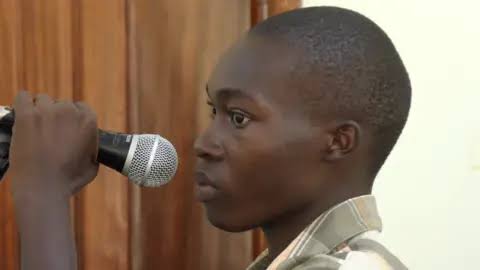
The case lands in a politically charged moment. It comes during what Human Rights Watch's 2026 World Report describes as a broader pattern of clampdowns on free expression and peaceful assembly in Uganda, with authorities continuing to arrest and charge political opponents, activists, and critics of government officials well into the post-election period. Museveni, in power since 1986, is contending with rising discontent over succession planning within the ruling party, economic pressures, and a youth population increasingly organizing and venting frustration online — precisely the audience TikTok prosecutions appear designed to chill. Researchers who track Uganda's civic space have noted that even after a law is struck down, the chilling effect of years of prosecutions, arrests, and high-profile disappearances like Tumwine's can persist independent of what the statute books say.
For Tumwine, the immediate stakes are personal: a two-month sentence, on top of five weeks in undisclosed custody before he was located. But the case is now likely to become a test of whether Uganda's institutions can enforce their own rulings. Civil society groups that won the March Constitutional Court victory are expected to scrutinize the legal basis for his conviction closely, and there is a real possibility his case becomes the basis for a fresh legal challenge or appeal specifically testing whether the Attorney General's halt directive has any binding force on magistrate courts. Parliament, for its part, has yet to take up the Attorney General's suggestion that it revisit the Computer Misuse framework through a constitutionally sound process, leaving the legal landscape governing online speech in Uganda in an unsettled state — struck down on paper, but evidently still enforceable in practice.
What to watch next: whether Tumwine's legal team or rights organizations file an appeal or a fresh constitutional challenge specifically citing the Attorney General's March 26 halt order; whether Parliament moves to redraft the Computer Misuse Act with proper procedural compliance, potentially reintroducing some of the nullified provisions in a new bill; and whether other pending or recent TikTok-related prosecutions face similar scrutiny over their legal basis in light of the March ruling.



