Written By | Staff Writer
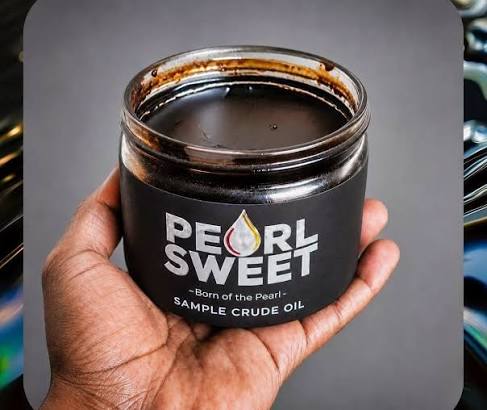
Twenty years after oil was found under Lake Albert, Uganda has given its export blend a name — and expects the first barrels to flow before the month is out
BUSINESS
On Wednesday 2 September, standing at the Kingfisher Development Area in Kikuube District, President Yoweri Museveni gave Uganda's crude oil a name. It will be sold on world markets as Pearl Sweet.
The choice is not accidental. "Pearl" borrows from the country's long-standing self-description as the Pearl of Africa. "Sweet" is a technical term: it signals crude with relatively low sulphur content, the kind refiners generally prefer and pay more for than sour, high-sulphur alternatives. In one two-word brand, Uganda is making both a national and a commercial claim.
Naming a crude blend is the last piece of housekeeping before it can be traded. Buyers need a grade name and an assay to price a cargo. That Uganda has now done this is the clearest signal yet that first oil — the moment commercial production actually begins — is weeks rather than years away. Officials expect it by the end of September 2026.
What is actually being built
Pearl Sweet is a blend of crude from two upstream developments in the Albertine Graben. Tilenga, operated by TotalEnergies EP Uganda, is the larger, designed for roughly 190,000 barrels per day at peak. Kingfisher, operated by CNOOC Uganda Limited, is designed for about 40,000 barrels per day. Together they are expected to plateau at around 230,000 barrels per day.
The two streams will be comingled at the Kabaale Shared Facilities in Hoima District before entering the export system. From Kabaale, the crude travels the East African Crude Oil Pipeline — 1,443 kilometres running south-east to the Chongoleani Peninsula near Tanzania's port of Tanga, where it is loaded onto tankers. EACOP is heated along its length because Ugandan crude is waxy and would otherwise congeal; it is the longest such pipeline of its kind anywhere.
The combined upstream-and-pipeline programme is generally valued at around $15 billion. As of 1 September, the pipeline company reported EACOP at 92.7 per cent overall completion. Kingfisher was assessed at roughly 80 per cent complete overall but 98 per cent ready for first oil, with commissioning tests under way. In other words, the last few percentage points of the pipeline are the pacing item for exports, not the wells.
Kingfisher area, courtesy photo
Why the timing matters to the economy
Uganda's macroeconomic story for the next two years is, to an unusual degree, a single-project story.
The economy grew by an estimated 6.4 per cent in the 2025/26 financial year, driven by private-sector credit growth, household consumption and government capital spending. Growth is projected at around 6.2 to 7.5 per cent for 2026 depending on the forecaster, and roughly 8 per cent in 2027. Some projections — including those cited by the Ministry of Finance — put growth into double digits in the 2026/27 fiscal year once oil revenue lands. Finance Minister Henry Musasizi's Shs84.4 trillion national budget framework for 2026/27 assumes growth of 10.2 per cent.
That is a large step up, and almost all of the increment is petroleum. It is worth being precise about what "oil-driven growth" means in the first years: the initial effect is a jump in export value and in GDP measured in output terms, not an immediate windfall in government cash. Under most production-sharing arrangements, cost recovery comes first — the operators recoup a portion of the capital they have sunk before the state's profit share rises meaningfully. Uganda's fiscal take will build over years rather than arrive at once.
The Bank of Uganda has been positioning for this. At its August meeting, announced on 13 August by Governor Michael Atingi-Ego, the Monetary Policy Committee held the central bank rate at 9.75 per cent, citing rising energy and food prices as a reason for caution despite an improving outlook. The bank projects core inflation of 4.0 to 4.5 per cent over the coming year and headline inflation of 5.5 to 6.0 per cent, while warning that risks are tilted to the upside — geopolitical disruption, adverse weather hitting crop yields, and higher rates in advanced economies that could pull capital out and pressure the shilling.
That last risk gets more interesting once oil dollars arrive. Large foreign-currency inflows into a small economy tend to strengthen the local currency, which is comfortable for importers and uncomfortable for everyone who exports something else. Uganda's traditional export earners — coffee, tea, fish, horticulture — and its manufacturers compete on price. A structurally stronger shilling would squeeze them. This is the well-documented mechanism behind what economists call Dutch disease, and it is the single most predictable macroeconomic hazard of the next five years.
Who the players are
TotalEnergies holds the operatorship of Tilenga and the largest single stake in EACOP. CNOOC operates Kingfisher. The Uganda National Oil Company holds the state's commercial interest, and the Petroleum Authority of Uganda regulates. The Tanzania Petroleum Development Corporation is a partner on the pipeline, which crosses Tanzanian territory for most of its length.
The project has taken far longer than originally planned. Commercial quantities were confirmed in 2006; a final investment decision came only in February 2022. The intervening years were consumed by disputes over infrastructure, tax and transit terms, and by an extended fight over financing. EACOP has been the target of a sustained international campaign on climate and displacement grounds, and a series of Western banks and insurers declined to participate. The financing gap was ultimately closed largely through Chinese, Gulf and African lenders — a shift in who funds African hydrocarbon infrastructure that will outlast this project.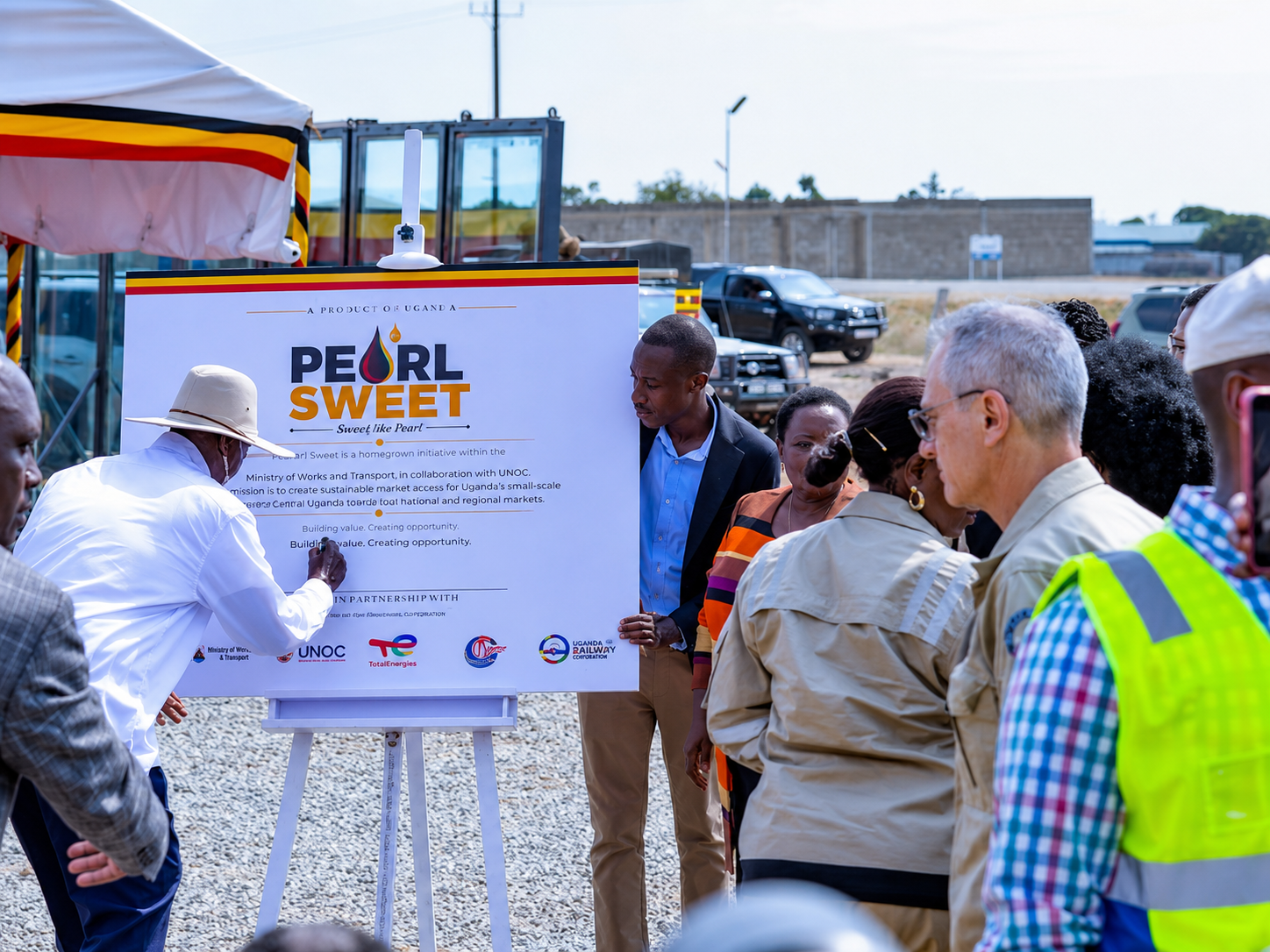
What to watch next
First, whether first oil actually lands in September. Commissioning schedules slip routinely, and a few weeks either way is normal; a slip of quarters would be a different signal.
Second, the first cargo out of Tanga and the price Pearl Sweet fetches. The assay determines the discount or premium against a benchmark such as Brent or Murban, and that spread — applied across roughly 230,000 barrels a day at plateau — is worth billions over the life of the fields. Early trades will establish where the grade sits.
Third, the revenue architecture. Uganda has a Petroleum Fund and legislation governing how proceeds move into the budget. Whether transfers stay disciplined under pre-election-cycle spending pressure is the test that determines whether this becomes Botswana's diamond story or something less happy.
Fourth, the local content and displacement record. Thousands of households along the Tilenga footprint and the pipeline route were resettled. Compensation disputes have run for years and will not disappear the moment oil flows.
And fifth, the shilling. If the currency starts appreciating sharply once export receipts arrive, watch what the central bank does — and whether coffee and manufacturing exporters start complaining loudly. That will be the first hard evidence of whether Uganda has a plan for the awkward part of being an oil producer, or only for the celebratory part.
For now, the country has a named crude, a nearly finished pipeline and a deadline it has set for itself. After twenty years, that is a genuine milestone. What it is worth depends on decisions that have not been made yet.



