NEWS
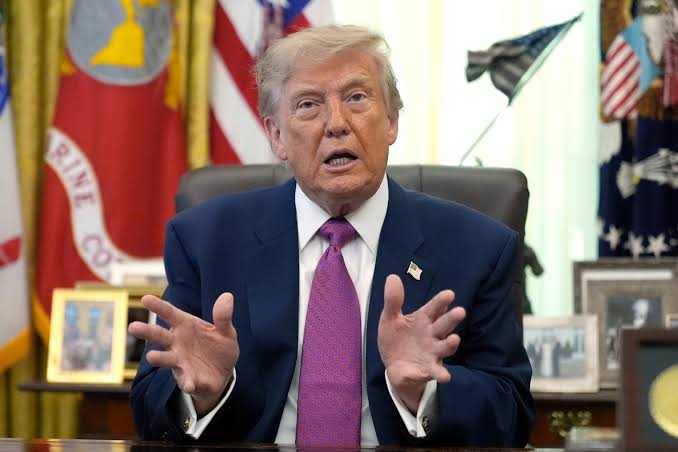
President Donald Trump announced late on August 28 that the United States has entered into what he called "the biggest oil deal in world history" with Venezuela, securing majority control over more than 65 billion barrels of the South American country's proven oil reserves. The agreement, negotiated over months by Secretary of State Marco Rubio and Defense Secretary Pete Hegseth with Venezuela's interim government, marks the most dramatic turn yet in a relationship that eight months ago was defined by a US military operation that removed longtime strongman Nicolás Maduro from power. Trump said the deal comes "at no cost to" American taxpayers and framed it as a mechanism to lower US gasoline prices and refill the country's strategic reserves at a moment when war in the Middle East has scrambled global energy markets.
Background
Venezuela sits atop the largest proven crude oil reserves in the world, concentrated largely in the Orinoco Belt, yet decades of mismanagement under Hugo Chávez and then Maduro, compounded by US sanctions imposed after Venezuela's disputed 2018 and 2024 elections, gutted the country's output. Production that once exceeded two million barrels a day collapsed to a small fraction of that figure, and state oil company PDVSA became, in the words of Venezuelan opposition leader María Corina Machado, "a criminal organization" rather than a functioning enterprise.
The current chapter began in January 2026, when US special forces captured Maduro in Caracas and flew him to New York to face a long-standing federal indictment on narco-trafficking charges first filed in 2020. Within days, Vice President Delcy Rodríguez — a 56-year-old labor lawyer and lifelong Chavista whose brother, Jorge Rodríguez, leads Venezuela's National Assembly — was sworn in as interim president with the backing of the military. Rodríguez has since walked a careful line, publicly insisting Venezuela "remains independent" even as she moved steadily to normalize relations with Washington. Over the following months, the Trump administration lifted individual sanctions on Rodríguez herself, eased broader banking restrictions on the Venezuelan financial system, and Rodríguez signed expanded drilling agreements with Chevron, praising the company's "more than a century of presence in Venezuela."
Meanwhile, Machado — long recognized internationally as the face of Venezuela's pro-democracy opposition — pursued a parallel track, pitching investors at the CERAWeek energy conference in Houston in March on a plan to fully privatize Venezuela's oil sector and attract more than $150 billion in foreign investment over a decade, paired with new legal protections and transparency requirements. Her position, that Maduro-era license cancellations were necessary to starve an authoritarian government of funds, sits in some tension with the deal now struck by the Trump administration with the very interim government she has criticized for perpetuating Chavista rule without free elections.
The deal also arrives against the backdrop of the war between the United States and Iran, now in its sixth month, which has periodically closed or restricted the Strait of Hormuz and sent oil prices swinging sharply. With roughly a fifth of global crude supply normally passing through that chokepoint disrupted, the Trump administration has had a strategic incentive to lock in alternative Western Hemisphere supply, and Venezuela — geographically close, sanctioned into idleness for years, and now led by a government eager for American investment — presented an opening.
Key Developments
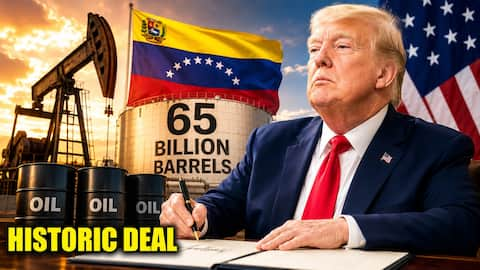
According to details released by the White House and confirmed by multiple outlets, the new agreement covers seventeen oil fields holding a combined proven potential of roughly 65 billion barrels — more than double the size of the US Strategic Petroleum Reserve's historical holdings, in Trump's telling. Rather than a direct government-to-government transfer, the structure creates a new private joint venture between an as-yet-unnamed private operator and Venezuelan state interests, with the United States securing what a White House official described to CNN as "55% effective output" of the venture, plus an ownership stake and rights to buy oil at cost. That would make the new entity the second-largest private oil company in the world by reserves, according to the administration's own characterization.
Rodríguez, for her part, granted the new venture a 100-year concession to develop the fields, an extraordinarily long time horizon that underscores how significant a stake Caracas is ceding in exchange for capital, technology, and rehabilitated relations with Washington. Administration officials project the deal could draw as much as $100 billion in fresh private investment into Venezuela's moribund oil industry and generate more than $209 billion in tax revenue for the Venezuelan government over the life of the concession, though independent verification of those projections is not yet available. Crude purchased through the arrangement is intended to flow toward refilling the US Strategic Petroleum Reserve and toward military fuel needs, according to officials briefed on the agreement.
The August 28 announcement builds on a string of smaller steps taken earlier in the year. In January, shortly after Maduro's capture, the two governments struck a narrower arrangement under which Venezuela agreed to hand over between 30 and 50 million barrels of previously sanctioned oil, with proceeds to be held in US-controlled accounts and disbursed, per a Department of Energy statement, "for the benefit of the American people and the Venezuelan people at the discretion of the US government." That earlier deal drew criticism for its vague accountability mechanisms, a concern that has resurfaced now that the scale of US control has expanded by more than an order of magnitude.
Reactions
Rubio has publicly framed the agreement as an unambiguous win, arguing it will usher in billions of dollars of private investment into Venezuela while lowering costs for American consumers at the pump. Rodríguez's government has struck a similarly positive tone, describing earlier rounds of sanctions relief as "a step toward normalizing and strengthening relations between our countries," and officials close to her are likely to present the oil concession in similar terms: as economic opening rather than surrender.
The reaction in Washington has been sharply split along party lines. Most congressional Republicans have backed the administration's approach, while Democrats have raised pointed questions about cost, oversight, and the deal's implications for Venezuelan democracy. Senator Elizabeth Warren, after an earlier classified briefing on US operations in Venezuela, said the details were "worse" than she had anticipated, and Senators Catherine Cortez Masto and Adam Schiff have formally demanded that Rubio's State Department produce a detailed accounting of potential human rights violations committed under Rodríguez's interim presidency. A widely circulated analysis from the Center for American Progress, titled "Marco Rubio's Deal: Trading Venezuelan Democracy for Oil," argues the administration's approach has effectively sidelined Venezuela's democratic opposition and preserved an authoritarian power structure in exchange for energy access, rather than using American leverage to press for elections.
Machado and the broader opposition movement have not yet issued a detailed public response specifically to the August 28 announcement, though her long-standing position — that reform of Venezuela's oil sector must come bundled with transparency, competitive bidding, and legal guarantees for investors, rather than opaque concessions negotiated directly with an unelected interim government — suggests she is unlikely to embrace the deal uncritically even as she has previously argued that foreign investment is essential to Venezuela's recovery. Energy analysts, for their part, are watching to see whether the prospect of a major new non-OPEC, non-Gulf supply source helps ease the elevated crude prices that have persisted since the Strait of Hormuz crisis began.
Oil markets themselves are likely to render the most immediate verdict. Crude prices have swung sharply over the past six months as the Strait of Hormuz has intermittently closed and reopened amid the US-Iran war, and traders will be parsing how quickly, if at all, Venezuelan barrels can realistically reach global markets given years of underinvestment in pipelines, ports, and refining capacity. Some energy analysts caution that even with fresh capital, ramping Venezuelan output back toward its historic peak of more than two million barrels a day could take years, meaning the deal's near-term effect on US gasoline prices may be more modest than the administration's rhetoric suggests, even as its longer-term strategic significance — locking in Western Hemisphere reserves as a hedge against Middle Eastern volatility — is harder to dispute.
What's Next
Several important details remain unresolved. The identity of the private operator partnering with Venezuela's state interests has not been disclosed, and lawmakers from both parties are likely to press for that information along with a fuller accounting of how the 55 percent "effective output" figure translates into actual barrels, revenue, and control. Congressional committees overseeing foreign relations and energy policy are expected to schedule hearings given both the deal's unprecedented scale and the unresolved human-rights questions surrounding Rodríguez's government.
The fate of Maduro's federal prosecution in New York will continue to unfold in parallel, and any testimony or disclosures from that case could complicate the political optics of deepening US-Venezuela economic ties. Analysts will also be watching whether the promised investment and tax windfall materializes in a Venezuelan economy still recovering from years of hyperinflation and mass emigration, and whether Rodríguez's government moves toward any credible electoral process or continues to govern by military-backed interim authority. Finally, the deal's effect on US gasoline prices and the pace at which oil begins flowing toward the Strategic Petroleum Reserve will offer an early, concrete test of whether the administration's economic promises match reality.
Published By | News Editor