MONZA, ITALY
There is a particular sound the Monza grandstands make when a Ferrari goes fastest. It is not really cheering. It is closer to a weather event — a low, rolling detonation that starts at the Parabolica and arrives at the pit straight a half-second later.
On Friday, that sound happened twice. Charles Leclerc topped opening practice at the 2026 Italian Grand Prix, with Lewis Hamilton second, giving Ferrari a home one-two in FP1 for the second consecutive year — and the tifosi the first genuinely encouraging Friday of their season.
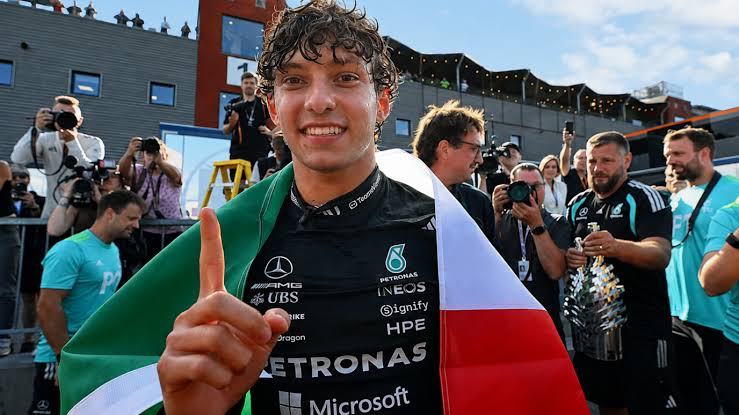
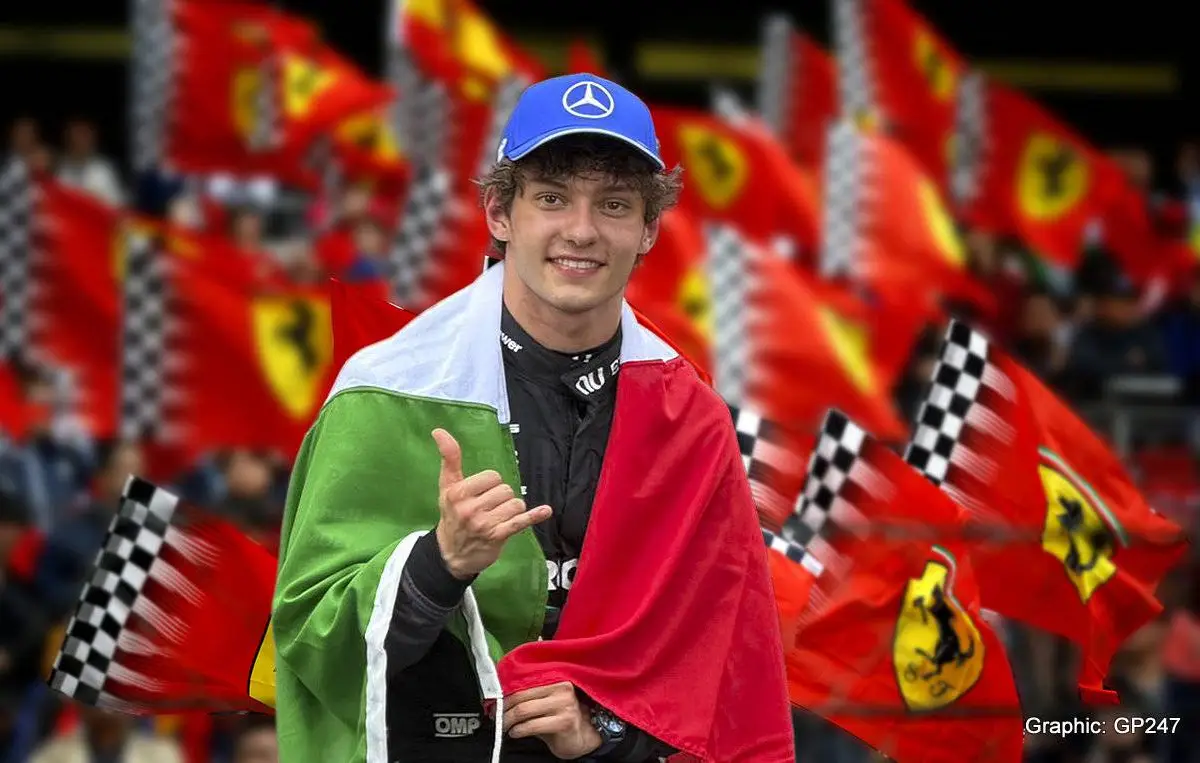
But the loudest story of the weekend belongs to a driver who will not be near the front on Sunday. Andrea Kimi Antonelli — 20 years old, raised an hour down the road in Bologna, and currently the leader of the Formula 1 World Championship — will start the Italian Grand Prix from the back of the grid. Not because of a crash. Not because of a stewards' inquiry. Because a spreadsheet said so.
The math that broke Italian hearts
Antonelli is taking his fifth Mercedes power unit of the season. Under Formula 1's engine-allocation rules that triggers an automatic back-of-grid penalty, and Mercedes chose to take the whole hit at once rather than drip-feed component changes across the remaining rounds.
The logic is brutal and, in the arithmetic of a title fight, defensible. Monza is the fastest circuit on the calendar and one of the easiest places to overtake. Antonelli has also suffered a string of reliability problems this year, including a retirement in Barcelona. Mercedes calculated that the risk of a mid-race failure in October outweighed the cost of a bad Sunday in September.
Team principal Toto Wolff did not pretend otherwise. "With Kimi we are taking the full thing," he said. "In theory, our calculations say that that's the best track to take it. Obviously, our algorithms don't take nationality into consideration. But we are here to fight for a championship and not get the most PR." It is the sort of quote that will be printed on Italian sports pages for a week. It is also, almost certainly, correct.

How a teenager rewrote the record book
To understand why Monza cares so much, rewind to March. At Suzuka, Antonelli converted pole into a commanding victory, recovering from a scrappy start with help from a well-timed safety car and finishing more than thirteen seconds clear. It was his second career win — the first had come a fortnight earlier — and it made him, at 19, the youngest championship leader in the sport's history, breaking the previous record by nearly three years.
"Still early days to think about the championship," he said afterward, in the flat, faintly embarrassed register that has become his signature. Five months on, it is no longer early days. Antonelli goes into Monza on 242 points, 59 clear of team-mate George Russell; Mercedes leads the Constructors' Championship on 425 points from Ferrari and McLaren. That is not a lucky streak. That is a title campaign.
The chasing pack smells an opening
Which is why the rest of the grid has spent this weekend doing arithmetic of its own. A back-of-grid start when you lead the standings is an invitation.
Lando Norris arrives in the best form of anyone. Back-to-back victories in Hungary and the Netherlands have hauled the reigning champion back into relevance, though at 83 points adrift he needs a run of results, not one good Sunday. Russell, 59 points back, is the more immediate threat — and the more awkward one, given that he and Antonelli share a garage, a pit wall and a set of strategists. Antonelli has been asked repeatedly this week whether he would help Russell if the two ended up racing on Sunday. He has been careful not to answer directly, which is itself an answer.
Friday's second session showed how tight this could be. Russell went fastest with a 1m22.559s, beating Leclerc by 0.120s. Antonelli was third; Norris fourth. Four drivers, three teams, less than half a second — and one of them starts last.
"It's going to be full attack"
Antonelli's own framing of the weekend has been characteristically unbothered. "Given that I'm starting last, it's going to be full attack," he said.
There is something almost liberating in that position, and drivers know it. With nothing to defend, a recovery drive becomes pure offence. Monza's 53 laps of the 5.793-kilometre Autodromo Nazionale reward exactly that aggression — the Rettifilo, the Roggia, the Ascari chicane are places where a brave car can make three moves in a lap. The counterargument is that Monza is also where a brave car gets collected in a first-lap accordion crash at 340 km/h, and where a championship lead can evaporate in eight seconds.
What this means for the rest of the season
For the casual viewer, Sunday offers the rarest thing in modern Formula 1: unpredictability at the front and a compelling story in the pack simultaneously. For the championship, the stakes are specific. If Antonelli recovers to the points — sixth or seventh, say — Mercedes will have paid a modest price for a reliability insurance policy that could decide the title in November. If he finishes outside the top ten while Russell or Norris wins, the 59-point cushion becomes a nervous margin, and every remaining race becomes a referendum on a decision made in Brackley.
And for the Italians who bought tickets to watch the first home championship leader in a generation race at Monza, Sunday will be an exercise in a particular kind of hope: not of a win, but of a comeback.
The long game
Qualifying runs this afternoon at four o'clock local time, and it is, in a strict sense, meaningless for the man everyone came to watch. He will set a time. He will start last regardless.
That is the part that stings, and it reveals how much has changed in a year. Twelve months ago Antonelli was a rookie whose name Italians were still learning to spell in full. Today his engine allocation is a national news story, his team principal has to publicly explain that algorithms don't do sentiment, and his home crowd will spend Sunday watching the timing screens for a number climbing from twentieth. Formula 1 does not often give a country a hero and then hand him a handicap. Monza, of all places, will find out what he does with it.
Published By | Sports Editor