Written By | Fashion and Design Desk
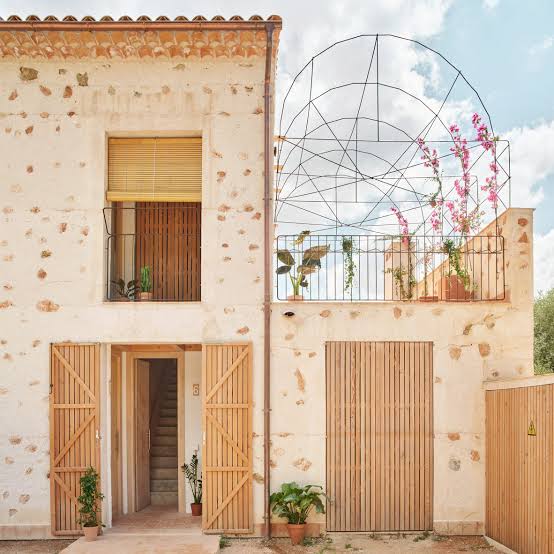
The 2026 Obel Award has gone not to a building, an architect or a studio — but to the way one Spanish island administration rewrote its own paperwork. Then the winners gave the money back.
MALLORCA, SPAIN
Architecture prizes have a well-worn grammar. A photogenic building is chosen. A named architect walks to a podium. A jury praises a bold formal gesture, and the winning image circulates for a fortnight.
The 2026 Obel Award, announced on September 1, broke every part of that pattern. There is no single winning building and no signature architect in the conventional sense. The recipient is a model — a way of commissioning, procuring, designing, building and inhabiting public housing, developed inside a regional government department in Spain's Balearic Islands between 2019 and 2023. And then, in a gesture almost unheard of in an industry that runs on recognition, the winners partly declined the prize.
What actually won
The award goes to the Balearic Social Housing Model, carried out by IBAVI, the Balearic Social Housing Institute, and led by economist Cris Ballester Parets, the regional government's former managing director of IBAVI, and architect Carles Oliver Barceló, head of its technical department.
Between 2019 and 2023, IBAVI built roughly 1,500 homes across Mallorca, Menorca and the other Balearic Islands. The volume matters, but the method matters more. Rather than defaulting to the standard public-housing playbook — speed, cost-efficiency and industrially produced materials — IBAVI rewrote its procurement rules to prioritise local materials, circular construction principles and climate-responsive design.
In practice that meant tenders rewarding low-carbon local supply chains rather than lowest headline price, buildings designed for the Mediterranean climate that reduce running costs for the people who live in them, and treating the tender document itself as a piece of design.
"A genuine engine for change"
The jury, chaired by MVRDV founding partner Nathalie de Vries, was explicit about why a process beat a building.
"What makes the Balearic social housing model remarkable is how innovative architecture can be found not just in design and material choice but also in procurement, policy and process," de Vries said.
She went further, arguing the case for exportability. "Public housing shortages are not unique to the Balearic Islands; the same structural pressure is playing out in cities and regions across the world. What this model offers is a framework wherein public institutions can adapt to their own context along with proof that public administration itself can become a genuine engine for change."
It is a striking argument for a prize that has previously celebrated a coastal defence system in New York and a European citizens' initiative on sustainable construction. The Obel Award, which carries a purse of €100,000, has spent several cycles quietly redefining what counts as an architectural contribution.
The money they wouldn't take
Here is where the story turns genuinely unusual. Ballester Parets and Oliver Barceló will use part of the fund to expand the international reach of the model — to help other administrations copy it. But Oliver Barceló renounced his personal share of the prize outright, directing it instead towards emergency housing initiatives in the Balearic Islands. IBAVI, as an institution, also renounced the award and the prize.
It is a decision that sits awkwardly with almost every incentive structure in professional architecture, where prizes convert directly into commissions and fees. It also makes a point no acceptance speech could: if the argument is that public housing is a public good delivered by public servants doing their jobs well, then pocketing a personal windfall for it would undercut the thesis.
The Obel Award simultaneously announced a second cycle under the same 'Systems' Hack' theme, awarding another prize in spring 2027.
Beauty is not a luxury
In an interview accompanying the announcement, the recipients returned to a claim that sounds obvious and is routinely ignored: that quality in social housing is not decoration but infrastructure. The interview's headline quote — "If you build ugly social housing, you will create social problems" — is the argument in nine words.
It runs against decades of received wisdom in which public housing budgets treat design quality as the first line to cut. The Balearic counter-argument is that a badly designed, expensive-to-heat, poorly ventilated building generates costs that simply arrive later and elsewhere: in energy poverty, in health outcomes, in maintenance, in the social decay that follows when residents understand they have been given something no one cared about.
The approach also has straightforward economic logic. Buying local stone, timber and traditional materials keeps money circulating in the islands' own economy, and climate-responsive design lowers the energy bills of tenants least able to absorb them.
What this means for you
You probably do not live in the Balearic Islands, and this award will not lower your rent. But there are three transferable takeaways.
The first is a question worth asking of your own local authority: what does it actually reward in its housing tenders? If the answer is lowest price and fastest delivery, that is a policy choice, not a law of nature, and the Balearics have now demonstrated the alternative at scale.
The second is about what 'sustainable' means in practice. Not solar panels bolted onto a badly oriented block, but buildings shaped to their own climate using materials from nearby — an older idea than modernism, rediscovered as a carbon strategy.
The third is the least glamorous: the people who change how cities get built are frequently not the celebrated architects but the civil servants who rewrite a procurement template. That work is invisible, unfashionable, and — as of September 1 — holder of one of architecture's most significant international prizes.
A framework, not a monument
The photographs accompanying the award show handsome, restrained, unmistakably Mediterranean buildings — Ses Veles, Salvador Espriu 39, Lope de Vega 3, Pere Matutes 72. They are good architecture by any conventional measure.
But the jury was clear that the buildings are the output, not the achievement. What is being honoured is the machinery behind them, and that machinery is copyable in a way a single masterpiece never is. You cannot rebuild someone else's landmark. You can absolutely rewrite your own tender documents. The question the 2026 award poses to every housing authority in the world is not whether they can afford to build well. It is whether they can any longer justify not doing so.



