Abuja, Nigeria
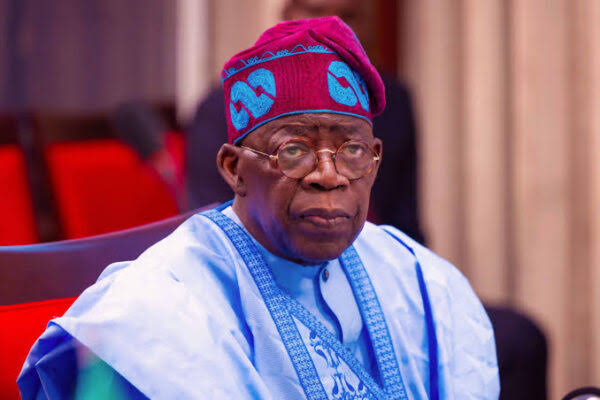
Nigeria's campaign season for the 2027 general election officially opened on Wednesday, Aug. 19, setting up a rematch between President Bola Tinubu and a fractured but energized opposition just as new World Bank data confirm what most Nigerians already feel in their wallets: the country is poorer, on average, than it was a decade ago. The starting gun matters less for its ceremony than for what it exposes — an incumbent seeking a second term on a platform of painful but necessary reform, and challengers betting that four years of austerity have finally caught up with him.
President Tinubu, running again on the platform of the ruling All Progressives Congress (APC), will face former Vice President Atiku Abubakar, now standing under the African Democratic Congress (ADC), and Peter Obi, the 2023 breakout candidate who has moved to the Nigeria Democratic Congress (NDC) after his Labour Party insurgency splintered. Businessman Dumebi Kachikwu and activist Omoyele Sowore are also in the field. The presidential vote is set for Jan. 16, 2027, with governorship and state assembly elections to follow on Feb. 6.
Ahead of the formal launch, Tinubu, Obi, Kachikwu, Sowore and other candidates signed Nigeria's first National Peace Accord of the cycle, publicly committing to peaceful campaigning and rejecting hate speech and violence in the run-up to the vote. The accord is a ritual of Nigerian election seasons dating back more than a decade, but its early signing this year — five months before voting — reflects organizers' anxiety about a campaign expected to be fought as much over economic grievance as over the usual fault lines of religion and region.
A Governing Record Built on Pain
Tinubu, 74, took office in May 2023 promising to break with the subsidized, state-managed economy of his predecessors. He moved almost immediately to scrap Nigeria's decades-old fuel subsidy and to let the naira float, ending a multi-tier exchange rate system that economists had long criticized as a source of arbitrage and corruption. Those two decisions, more than any others, now define his first term — and the argument his opponents intend to run against him.
The near-term costs have been severe. Fuel prices have roughly quadrupled over four years since subsidy removal began under the transition from the Buhari administration and accelerated under Tinubu, and the naira has been devalued twice, driving up the cost of imported goods in a country still reliant on foreign inputs for food, medicine and fuel. Nigeria's headline inflation rate eased to 15.43% in July, the lowest reading since March and down from 15.91% in June — a data point the presidency has pointed to as evidence its reforms are working. But food inflation, the line item that matters most to households, moved in the opposite direction, accelerating to 20.31% in July from 17.52% in June, according to official figures.
The World Bank's most recent assessment is blunter still. Nigeria's GDP per capita has fallen 53% over the past decade, from $2,586 in 2015 to roughly $1,224 today, the bank's data show — a decline that spans multiple administrations but has continued, and by some measures worsened, on Tinubu's watch. The bank estimates that about 60% of Nigerians now live in poverty, some four percentage points higher than when Tinubu took office in 2023, and that an additional 10 million Nigerians fell into extreme poverty in 2025 alone, pushing the share of the population below the international poverty line to 50.9% from 47.7% the year before.
Public sentiment tracks the numbers. Nearly 80% of Nigerians say the country is headed in the wrong direction, according to polling cited in regional coverage of the campaign launch, with 45% naming economic hardship and insecurity as their top concern — well ahead of any other issue. The nickname critics have attached to the president, "T-Pain," a play on his initials and the cost-of-living squeeze, has become shorthand in Nigerian social media commentary for the gap between the government's reform narrative and everyday experience at the market.
The Opposition's Opening Argument
Peter Obi, whose 2023 run under the Labour Party drew an unprecedented wave of youth and urban support and finished third in the official count, has built his early campaign messaging around insecurity and hunger. He has argued that Tinubu "lacks the capacity" to lead the country and has pointed the president toward his own aides' promises, saying at one recent event: "President Tinubu needs to speak directly to Nigerians. It was not Bayo Onanuga who promised us, 'If I don't give you power, don't vote for me,'" a reference to a Tinubu spokesman. Obi has also cited figures suggesting food insecurity has climbed sharply since 2023, from roughly 17 million Nigerians to close to 35 million, and has warned that extreme poverty is trending toward 140 million people nationwide — framing the election as a referendum on whether Tinubu's reforms have any near-term payoff for ordinary households rather than a longer-run bet that may not mature before votes are cast.
Atiku Abubakar, 79, is making his sixth bid for the presidency, now under the ADC banner after a long history with the PDP, and is positioning himself as the candidate best placed to consolidate an otherwise divided opposition vote. That division is itself a central subplot of the race: Obi and Atiku split the anti-Tinubu vote in 2023, and neither has yet resolved whether they will attempt a formal coalition or run separately again, a decision that could determine whether the APC's structural advantages — incumbency, state resources and a fractured opposition — prove decisive a second time.
The APC's own three-year record beyond the economy has also drawn scrutiny. Insecurity — banditry in the northwest, a lingering insurgency in the northeast, and kidnappings that touch nearly every region — remains unresolved despite repeated military reshuffles, and opposition figures have accused the government of prioritizing macroeconomic optics over the physical safety of citizens outside the major cities.
What the Timeline Signals
The near-five-month gap between Wednesday's campaign launch and the Jan. 16 vote is unusually long by Nigerian standards and gives all camps time to test messaging, raise funds and, campaign officials hope, resolve internal party disputes before the ballot. The APC will be watching its performance in off-cycle contests as an early signal: Ademola Adeleke of the PDP was declared winner of the Aug. 15 Osun State governorship election and received his certificate of return from the Independent National Electoral Commission (INEC) days before the presidential campaign formally opened — a result that, while a single state race, opposition strategists have cited as evidence the APC's dominance is not unshakeable heading into 2027.
For Tinubu, the political task over the next five months is to convert a genuine, if incomplete, macroeconomic stabilization — slowing headline inflation, a strengthening naira that firmed further against the dollar this week on improved dollar liquidity, and renewed foreign investor interest — into a narrative Nigerians can feel rather than merely read about in official statistics. For the opposition, the task is converting widespread discontent into a single credible alternative, a feat that eluded it in 2023 and that remains unresolved as the campaign begins.
What to Watch
Three dynamics will shape the race in the coming months. First, whether Obi and Atiku can reach any coalition arrangement, given that a divided opposition vote has historically favored the APC's better-funded, incumbency-backed machine. Second, whether food inflation — running at more than 20% even as headline inflation eases — continues to diverge from the government's preferred growth-and-stability narrative, a gap that could prove more politically potent than any single campaign message. Third, whether INEC, still working to rebuild credibility after disputed past cycles, can conduct a January vote that both major camps accept as free and fair, given that unresolved questions about the 2023 result continue to shadow Nigerian politics. With food prices still rising for most households even as the naira and headline inflation figures improve, the election is shaping up as a test of whether reform credentials can outrun lived economic pain in Africa's largest democracy.
Published By | News Editor