Written By |
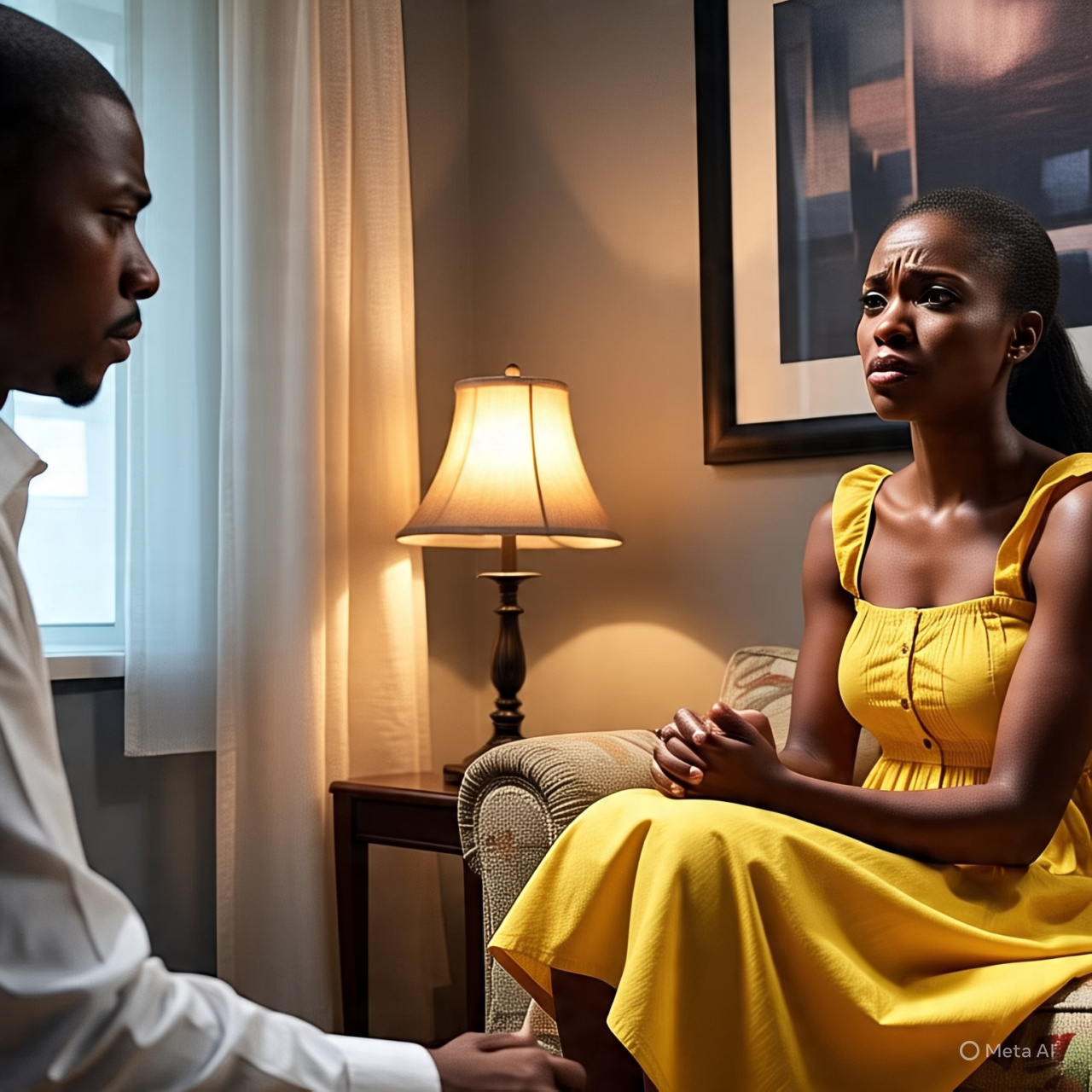
Many women are taught from a young age that the success of a marriage rests squarely on their shoulders. (Picture imagined by Meta AI)
By Winter Lawyers
Last week, a painful revelation unfolded across Kenyan media, involving a once-admired couple. Details of violence and emotional trauma emerged, painting a haunting picture of a woman fighting to save a marriage that had already slipped from her hands.
In her words: “I remember last year when you tried to leave the first time and I tried to work on it, and you said I wanted the marriage too much.”
It’s a powerful admission—“I wanted the marriage too much.”
Too much that she fasted, prayed, cried, pleaded—just to save something she couldn’t save alone.
And that, right there, is the tragedy many women face in silence.
A one-sided battle
In reality, many women are taught from a young age that the success of a marriage rests squarely on their shoulders. So when things fall apart, they turn inward: “What did I do wrong?” “How can I fix this?”
They blame themselves, overcompensate, attend overnight prayers, cook more, forgive more—while their partners have already emotionally exited the union.
"I have a theory," says Comfort, "that when one is ready to move on, nothing can change their mind. The more you try to save the sinking ship, the more the other party loses interest."
And it’s true. Marriage, in its truest sense, requires two willing hearts. Without mutual commitment, love becomes labor, and effort becomes emptiness.
Many women no longer want the man—they want the marriage. The title. The respect. The illusion
Marriage as a burden on women
Melvin adds, "Women need to realize that marriage—at least the way society frames it—is rarely about partnership. It’s more about power, giving control to men. And when men decide they’re done, not even the Pope can save the marriage."
Many men exit marriages long before they physically leave. Some never leave—but stay in body only, living double lives, smiling at family events while building emotional connections elsewhere.
Meanwhile, the woman is told to "pray harder," "fast more," and "submit more."
She’s made to believe that her suffering is sacred, her silence heroic.
Romanticizing suffering isn’t noble
“A friend of mine,” shares Winter, “used to go for three nights of overnight prayers every month—to thank God for her marriage and pray for it to last. She left her husband with the kids while she fasted for the same marriage he had already checked out of emotionally.”
It’s painful how normalized this has become. Many women no longer want the man—they want the marriage. The title. The respect. The illusion. So they endure. Sleep in separate bedrooms. Smile for family photos. Cry in prayer rooms. Because society has taught them that a broken marriage is a personal failure—not a mutual one.
It’s time to let go of dead things
The Bible says there is a time for everything: A time to tear down and a time to build.
But somehow, women are taught to keep building—even when there’s nothing left but ruins.
When someone chooses to walk away, it’s not about you. It’s not about your worth. It’s about them.
Let them go. Release them with grace. That’s how healing begins.
“The day you drag a dead horse,” Winter concludes, “you only end up exhausted and ashamed. You’ll give too much, breathe too hard, and still, it won’t be enough.”
Try intentional self-preservation
It’s time for women to learn a new kind of selfishness. Not reckless selfishness—but protective, intentional, empowered selfishness. Ask yourself: Does this marriage still serve my peace?, Does it nourish my growth?, Do I feel emotionally safe? If the answer is no—you have the right to leave. You were not born to be anyone’s emotional shock absorber.
Start choosing you, the way men have always chosen themselves. You are not disobedient. You are not a failure. You are just done—and that’s okay.
Torch Media Africa



