Mogadishu
Somalia's federal government has signalled that it remains willing to negotiate with the opposition over the constitutional dispute and the elections now expected in 2027, an offer that arrives after a year in which the same argument has repeatedly been settled with gunfire rather than words.
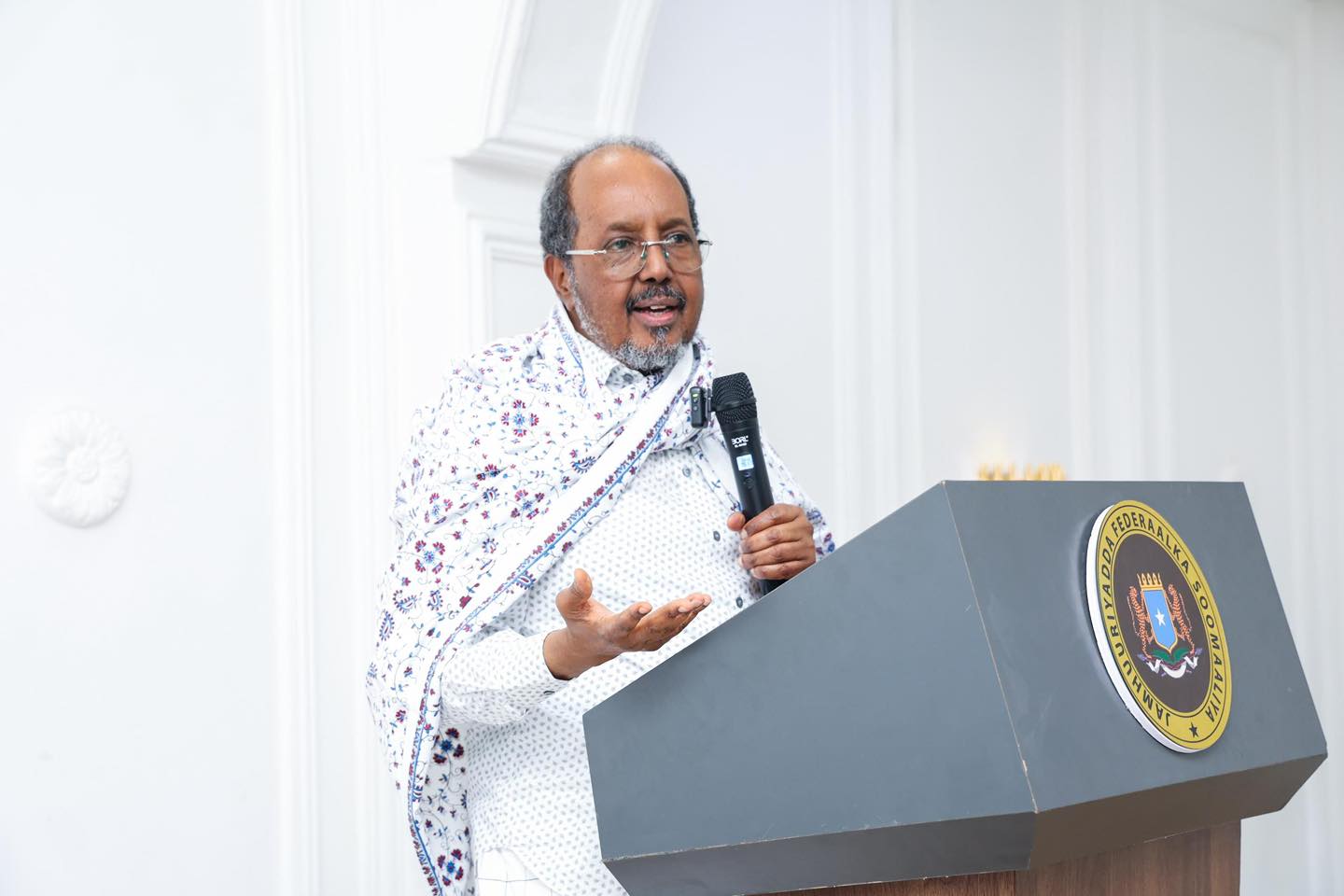
Information Minister Abdifatah Qasim, speaking in an interview with an Arab media outlet reported this week by Shabelle Media Network, said the government had no objection to returning to the negotiating table and noted that the two sides had already held several rounds of discussions. Some issues had been agreed, he said; others remained open and would require further talks.
"The Somali government has been and will always remain open to dialogue on fundamental issues, including constitutional matters and the upcoming federal elections," Qasim said. He added that the government opposed armed confrontation, unrest and any action that could undermine stability, and accused opposition groups of taking steps that risked escalating tensions.
The statement is conciliatory in tone and conspicuously silent on the question that has made dialogue impossible for the past four months: whether President Hassan Sheikh Mohamud is still the president.
A constitutional argument with no referee
Somalia has had no direct national election since the late 1960s. Since the state was reconstituted in 2012, after its collapse in 1991, presidents and parliamentarians have been chosen under a clan-based formula known as 4.5, in which elders select members of parliament and parliament elects the president. The system has been widely criticised as unrepresentative and corrupt. Mohamed Ibrahim Moalimuu, a lower-house member who backed the government's reform package, told Al Jazeera that parliamentary seats had changed hands for sums ranging from $100,000 to as much as $1.3 million. "This system is too dirty and keeps people out," he said.
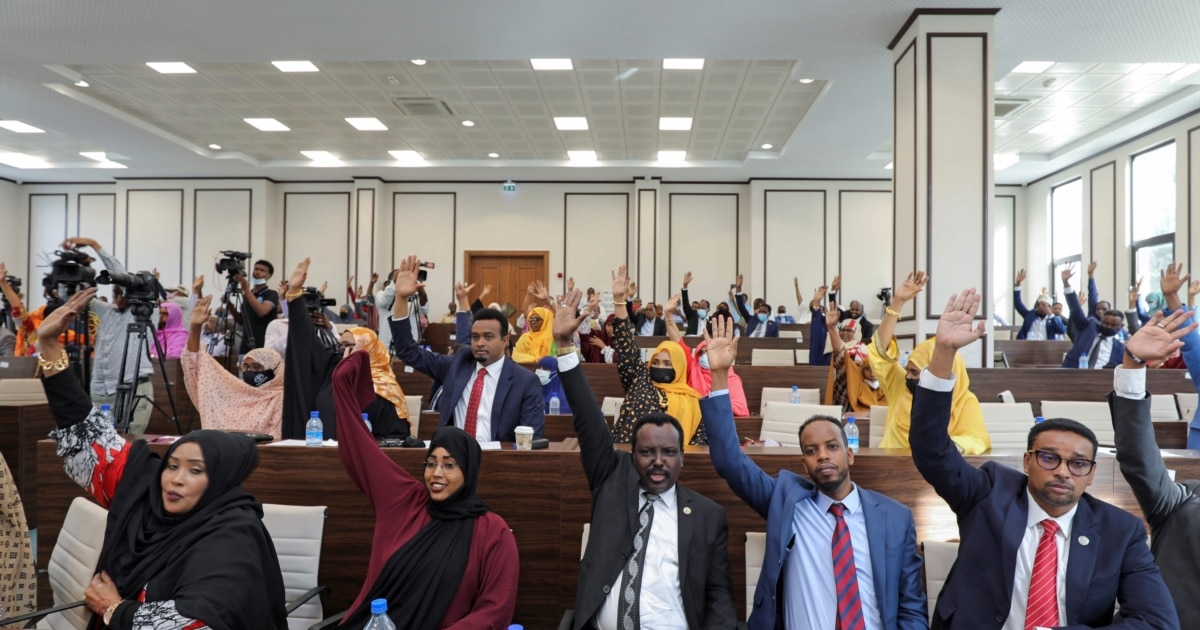
Mohamud's answer has been to push Somalia toward a one-person, one-vote system. Parliament approved constitutional amendments in March 2026 that, among other changes, extended parliamentary and presidential terms from four to five years and pushed elections back to 2027. The president says those amendments extended his own mandate by a year from May 15. His opponents say they did no such thing, and have begun referring to him as a "former president."
There is no institution capable of resolving the argument. Somalia has no constitutional court. After parliament approved the changes, Mohamud declared that the "provisional constitution, and the provisional era, was a sun which set yesterday" — a statement his critics read as a decision to proceed regardless of who objected.
Those objections are not marginal. Puntland and Jubaland, two of Somalia's six federal member states, have withdrawn from the federal system over the new constitution, and more than 100 members of parliament and senators from the two states boycotted the final vote. The opposition has organised itself as the Somali Future Council, a coalition that includes two serving federal-state presidents, former prime ministers and a former president. Among its leading figures are former Prime Minister Hassan Ali Khaire, now a presidential candidate, and former President Sharif Sheikh Ahmed.
The council's core demand is procedural rather than ideological: that electoral rules and boundaries be settled by negotiation involving the federal states, parties and civil society, rather than imposed by Mogadishu. It also rejects the government's insistence on a single national electoral commission, arguing that federal control over appointments compromises the body's independence, and proposes parallel federal and state commissions instead.
When the argument turned to shooting
Electoral talks collapsed on May 15. Within three weeks the dispute had become a battle in the capital.
Fighting erupted on June 3 around the residences of Khaire and, later, Sharif Sheikh Ahmed, as opposition leaders prepared protests against what they called an illegal term extension. Heavy gunfire spread through central districts including Hawl Wadaag. Security forces sealed Maka al-Mukarama Road, one of Mogadishu's main arteries, and Bakara market, the city's largest commercial hub, effectively closed. The UN refugee agency reported at least 13 people killed and 189 wounded, with some 12,500 households displaced as the fighting spread. Ali Wardheere, the deputy central bank governor, estimated the direct cost to businesses and services at $3.8 million, while stressing that the figure was a model-based projection rather than an official tally.
Each side blamed the other. Khaire accused Mohamud of directing a "sustained and indiscriminate military assault" lasting more than 20 hours. Defence Minister Ahmed Moalim Fiqi accused the opposition of militarising the standoff, likening it to Sudan's Rapid Support Forces and alleging that opposition figures had "distributed mortars and artillery across the capital." Force and militias, he said, would no longer be permitted to "seize power or block the state."
Sharif had warned in late May where the deadlock was heading. "Where do things stand?" he asked at a press conference. "[We say] Leave, and [you say] I won't leave. What comes next? Bullets."
The pattern repeated outside the capital. In South-West State, former regional president Abdiaziz Hassan Mohamed, known as Lafta-Gareen, organised a disputed election in March 2026 that the federal government rejected as unconstitutional. Tensions escalated into armed confrontation in Baidoa; federal forces took control of the city and Lafta-Gareen resigned. On Aug. 17, Reuters reported renewed heavy fighting in Baidoa between federal troops and forces loyal to Lafta-Gareen, and the Associated Press reported dozens of combatant deaths, at least four civilian deaths and scores of wounded.
The elections that are going ahead anyway
While the constitutional argument remains unresolved, the government has continued to hold votes. A poll was held in Galmudug in August. Local reporting collected by African Arguments describes concerns about irregularities, limited civic education and unclear voting procedures — and about representation. Politician Khalid Ahmed Yusuf, seeking restoration of a parliamentary seat for the Sixawle Karanle, said his community would not accept its removal. "This is something that we cannot accept, and we call upon them to reconsider the consequence this will have," he said. "We, as Sixawle, are seeking the restoration of our position, as this violation of denial is committed by the electoral commission that has no right to do so." In Galmudug, the Justice and Solidarity Party, associated with Mohamud's camp, emerged as the dominant force.
Supporters of the reform point to a genuine milestone: Mogadishu's municipal elections in December 2025 were the first direct local elections in the city in more than five decades, though they too faced opposition boycotts. Omar Mahmood of the International Crisis Group has noted that many Somalis regard direct elections as a real departure from the past, but that "the track record of state elections thus far has left much to be desired," citing evidence of fixed outcomes and a lack of competition.
Khaire has framed the risk in terms Somalia's donors will recognise. "The trust and confidence of our international partners, built over many years, cannot be taken for granted," he has argued.
The problems nobody is negotiating about
The standoff is consuming attention that Somalia can ill afford to spend. Al-Shabaab still controls large rural areas and has a long record of targeting officials, candidates and voters, making polling impossible in entire regions and turning participation into a physical risk. A 2025 offensive reversed earlier government territorial gains. Said Omar, a security and governance expert who spoke to African Arguments, said leaders must weigh the pursuit of political legitimacy against the need to protect public safety, while in many areas the group can disrupt genuine political competition.
Somaliland, which declared independence in 1991, has stayed out of the constitutional review entirely and was recognised by Israel late last year. Sudan's war and disease outbreaks elsewhere on the continent have pushed Somalia down the list of international priorities, leaving outside engagement fragmented. Aid cuts and a deepening humanitarian crisis have prompted famine monitors to warn of heightened hunger risk in parts of the country.
Analysis: an offer that avoids the only question that matters
Qasim's statement is worth taking seriously as a signal and worth discounting as a solution. It is the clearest indication in weeks that the presidency would prefer not to fight its way to 2027, and it follows earlier contacts, including talks between the parliament speaker and opposition lawmakers in late August. But it restates the government's framing — dialogue about "constitutional matters and the upcoming federal elections" — without conceding the premise the opposition insists on, which is that Mohamud's mandate expired in May and that any new electoral framework must be negotiated by someone whose authority both sides accept.
That is the structural trap. The government cannot concede the mandate question without surrendering the presidency; the opposition cannot drop it without legitimising the extension. Ahmed Abdi Koshin, a federal MP who boycotted the draft constitution, described the danger as the whole settlement coming apart, arguing that the process "clearly doesn't have buy-in" and that the imperfect 2012 text had been the "only glue holding Somalia together." He is not opposed to a direct vote in principle, he said, but Somalia lacks the enabling legislation, the census data and the security to hold one.
Somalia has escaped this trap before. In 2021, President Mohamed Abdullahi Farmaajo stayed in office more than a year past the end of his term, fighting broke out in Mogadishu, and a political agreement eventually restored a workable timetable. The precedent cuts both ways: it shows a deal is possible, and it shows how much violence tends to precede one.
What to watch
Whether talks actually reconvene, and at what level, will be the first indicator — speaker-level contacts are cheap, a Mohamud-Khaire meeting would not be. Second, watch whether any further state-level votes are scheduled before a framework is agreed; each one hardens the dispute it was meant to resolve. Third, watch Baidoa and the Puntland and Jubaland relationship with Mogadishu, where the constitutional argument has already produced casualties. And fourth, watch al-Shabaab, which has historically made its gains in precisely the conditions Somalia's political class is now creating for itself.
Published By | News Editor