Written By |
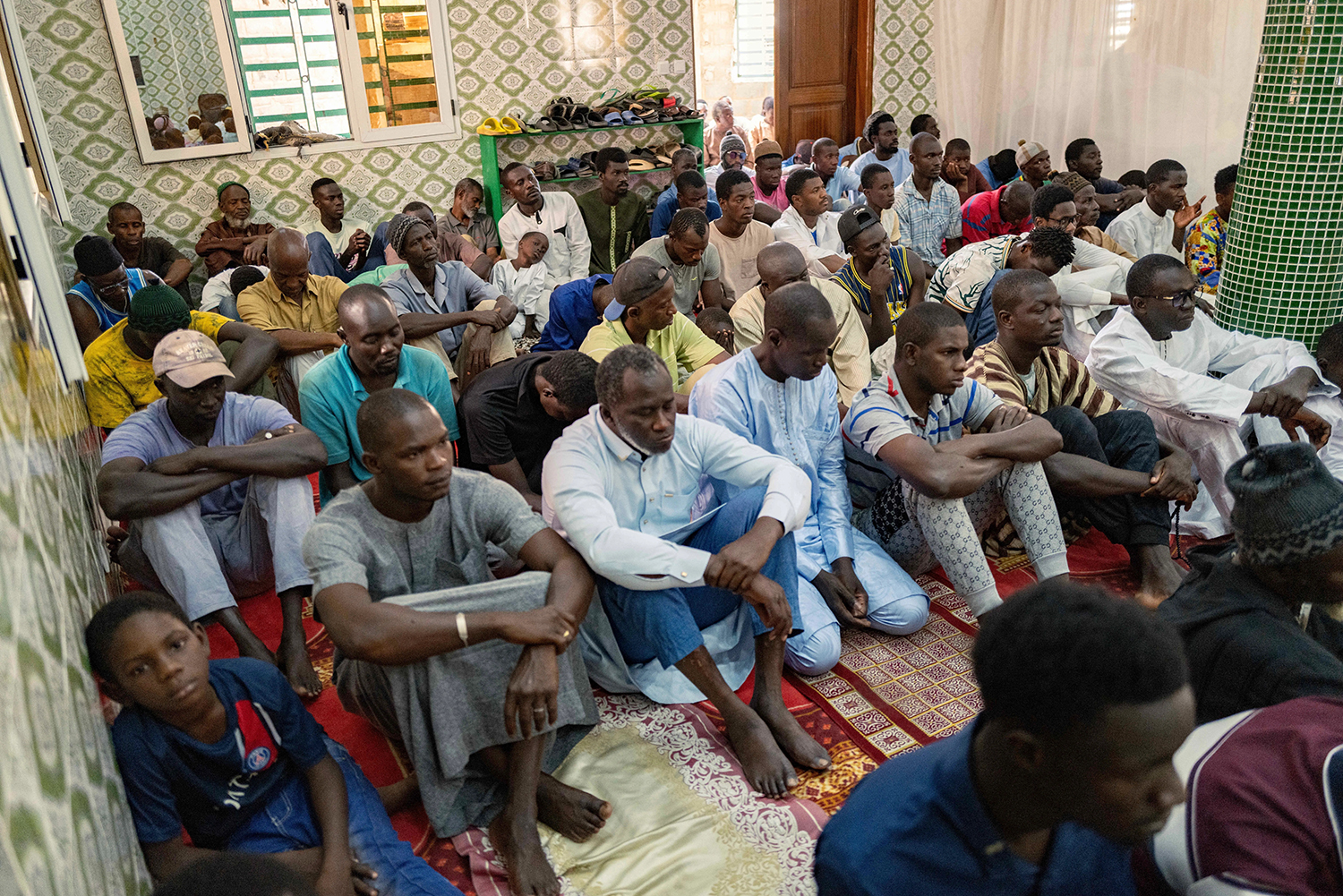
Men join the groups after being recruited based on trust, leadership and commitment. [AP Photo]
Dakar
In a modest gathering in Senegal’s capital, Dakar, Imam Ibrahima Diane recently told a group of men why helping with household chores is not only responsible but also religiously justified.
“The prophet himself says that a man who does not help to support his wife and children is not a good Muslim,” the 53-year-old said, recalling how he bathes his baby and assists his wife with daily duties.
Some men chuckled in disbelief, while others applauded. Diane was speaking at a “school for husbands,” a United Nations-backed initiative that trains respected community men in “positive masculinity” to promote gender equality, improve women’s health, and reshape social norms.
Imam Ibrahima Diane left talks with El Hadj Malick coordinator of the “school for husbands” programme [AP Photo)
In Senegal, as in many parts of West Africa, men often control household decisions, including whether women can access family planning, prenatal care, or hospital deliveries. This dominance has had serious consequences for maternal and child health.
After attending the program, Diane now uses Friday sermons to address issues ranging from reproductive health and HIV stigma to gender-based violence. “Many women appreciate my sermons,” he said. “Some say their husbands’ behaviour has changed. Men also tell me they’ve become better fathers and husbands.”
Launched in 2011, the programme has since grown to at least 20 schools across Senegal, training more than 300 men. It has attracted the attention of the Ministry of Women, Family, Gender and Child Protection, which views it as a valuable tool in tackling maternal and infant mortality.
“Without men’s involvement, attitudes towards maternal health will not change,” said health worker Aida Diouf, who collaborates with the programme. She noted that many husbands still resist allowing their wives to be treated by male health workers.
Men join the groups after being recruited based on trust, leadership and commitment. [AP Photo]
The initiative also addresses girls’ rights, forced marriage, female genital mutilation, and broader equality issues. According to the Ministry of Gender, communities where the schools operate have reported fewer forced marriages and greater acceptance of family planning. Participants are recruited based on respect, leadership, and community trust. They must be married and supportive of women’s health and rights. Once trained, they act as peer educators—hosting discussions, visiting homes, and mobilising other men.
Merchants walk past the Great Mosque of Nietty Mbar. [AP Photo]
Despite progress, challenges remain. In 2023, Senegal recorded 237 maternal deaths per 100,000 live births, while 21 newborns out of every 1,000 died within their first month—figures that remain far above UN global targets.
Programme coordinator El Hadj Malick said cultural attitudes are slow to change, but the human focus helps.
“By educating men about supporting their wives during pregnancy, accompanying them to hospital, and sharing household duties, you are protecting lives,” Malick said. “When we frame it around women’s right to health, it becomes a universal value.”
Source: Aljazeera
Click to read the original story here



