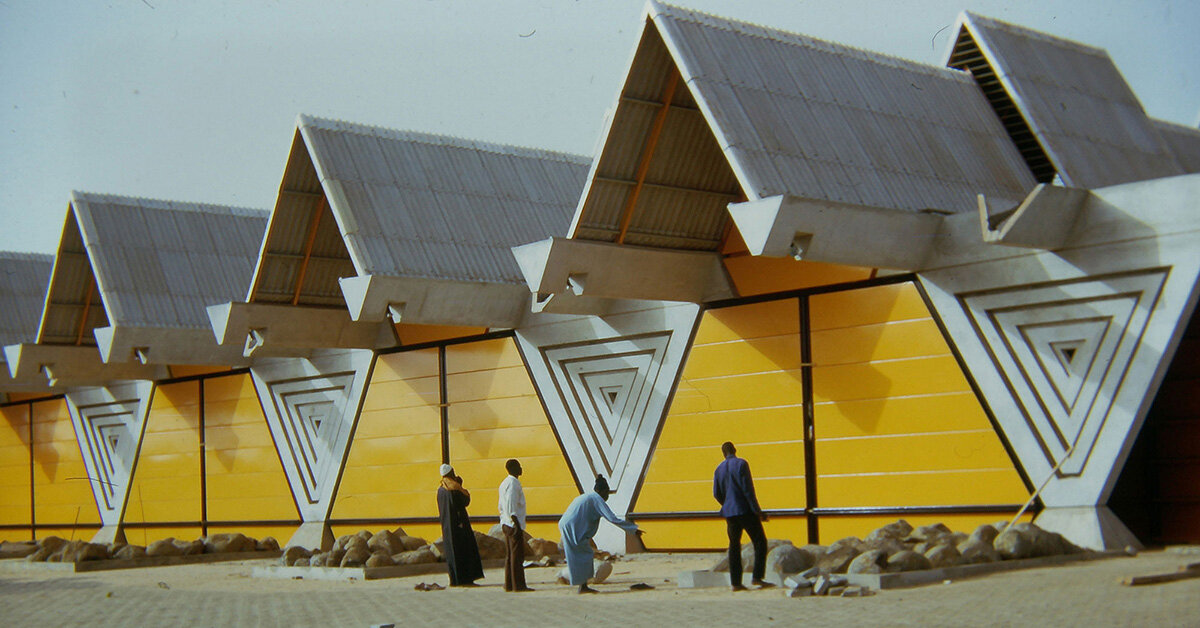
"Architects of Liberation: Modernism in Western Africa" gathers 450 objects from 50 lenders across 17 countries to tell a story modernism's textbooks have long left out — how newly independent nations built architecture as a declaration of identity.
NEW YORK
Walk through the Robert B. Menschel Galleries on the third floor of the Museum of Modern Art this summer, and you'll encounter a version of architectural modernism that rarely makes it into the standard survey course. There are no familiar names like Le Corbusier or Mies van der Rohe presiding over these rooms. Instead, the walls are filled with cityscapes, school buildings, housing blocks, and civic monuments raised across seven West African nations in the decades after colonial rule ended — buildings that, until now, have existed mostly in scattered archives, private collections, and the memories of the architects and communities who built them.
"Architects of Liberation: Modernism in Western Africa," which opened July 5 and runs through January 2, 2027, bills itself as the first major exhibition to examine modern architecture across Benin, Cameroon, Côte d'Ivoire, Ghana, Nigeria, Senegal, and Togo through the specific lens of political independence — the roughly quarter-century stretch from the late 1950s through the early 1980s when a wave of newly sovereign nations turned to architecture as one of the clearest tools available for declaring who they now were.
A Continent Building Itself Anew
The scale of the undertaking is significant by any museum's standards. The show draws on approximately 450 objects — original and newly commissioned architectural models, unpublished archival material, new films, and photography commissioned specifically for the exhibition — sourced from more than 50 lenders spread across 17 countries. That geographic and institutional sprawl reflects just how scattered this history has been; much of the material MoMA is presenting has never been assembled in one place before, let alone displayed for a broad museum-going public.
The exhibition is organized not chronologically or by nation, but around "anchor projects" that open onto broader categories, including cityscapes, education, and housing — a curatorial choice that lets visitors see how similar architectural problems (how do you design a national university? a housing estate? a government ministry building meant to project sovereignty rather than colonial administration?) were answered differently by different architects working in different national contexts, often while explicitly reaching for a shared visual language of Pan-Africanism.
Leading the project is Martino Stierli, MoMA's Philip Johnson Chief Curator of Architecture and Design, working alongside guest curator Ikem Stanley Okoye, an associate professor at the University of Delaware, with curatorial associate Mallory Cohen rounding out the team. The pairing of an in-house MoMA curator with an outside academic specialist is itself notable — a signal that the museum recognized this history required expertise it didn't already have fully in-house, and was willing to build the show around that partnership rather than force the material into an existing departmental frame.
Architecture as a Political Act
What separates this exhibition from a conventional survey of mid-century modernism is its insistence on context. The buildings on display weren't simply modernist experiments that happened to occur in West Africa — the show argues they were deliberate acts of nation-building, designed by architects (many trained abroad, some homegrown) who understood that a newly independent country's built environment would communicate its ambitions as loudly as its flag or its currency. A national assembly building, a university campus, a public housing block — these weren't neutral infrastructure projects. They were, as the exhibition frames it, tools for a generation of leaders to visually and spatially "redefine themselves and their countries in contrast to colonial rule," engaging with ideas of Pan-Africanism and what curators describe as "Africanization" — the deliberate reworking of imported architectural language into something that reflected local identity, climate, and political aspiration.
That framing has resonated with critics and design writers covering the show. Architectural Record noted the exhibition's significance in filling a gap that has persisted in modernism's canon for decades, while ArchDaily's coverage emphasized how thoroughly the show reorients a story that Western architectural history has typically told through a European and North American lens. One essay accompanying the show's launch argued plainly that the exhibition "matters now" — a reference to the broader cultural moment in which institutions across art and design are actively revisiting whose contributions to modernism have been remembered, and whose have been quietly written out.
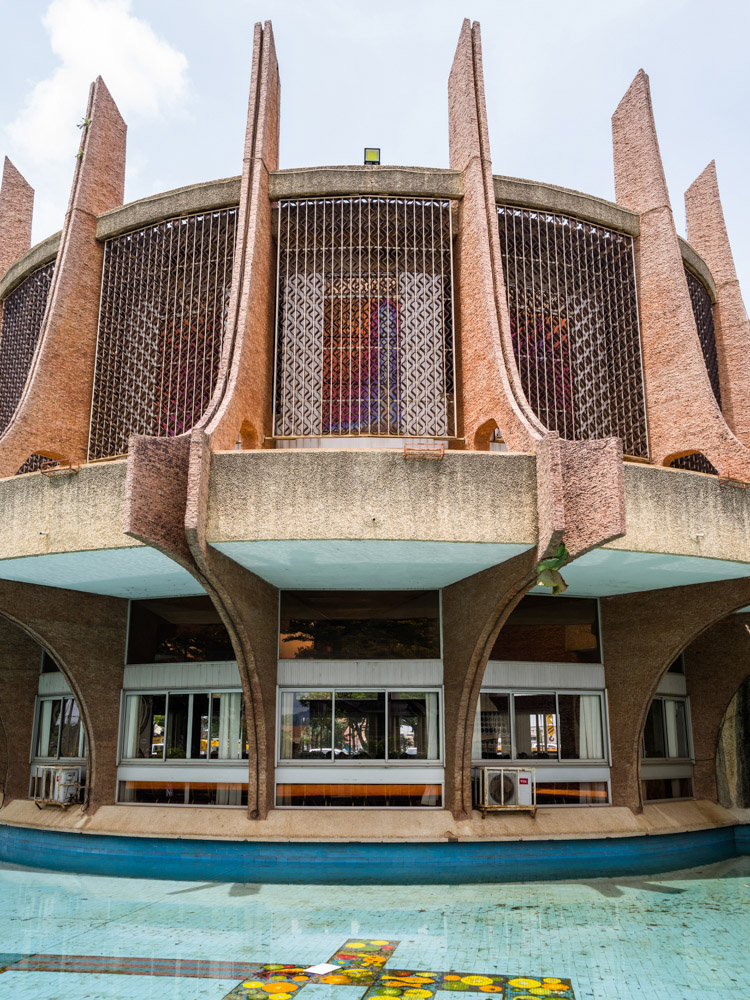
A Personal and Institutional Reckoning
For MoMA specifically, a museum whose architecture and design department has long been credited with canonizing the modernist movement as the world understands it, mounting a show like this carries a certain institutional weight. It's an implicit acknowledgment that the story MoMA itself helped popularize — one centered heavily on European and American architects — was incomplete. By devoting its third-floor galleries to seven countries' worth of independence-era architecture through January, the museum is making a case that West African modernism deserves not a footnote in design history, but its own chapter, told with the same scholarly rigor and object-rich presentation MoMA typically reserves for its most prestigious retrospectives.
What This Means for You
You don't need an architecture degree to find this show worth a visit — or worth learning about if a trip to New York isn't in the cards before January. The exhibition offers something increasingly rare in contemporary design conversation: a genuinely new visual vocabulary, built from buildings most visitors have never seen images of, paired with a story about how architecture can function as an act of political self-determination rather than mere aesthetics. For design enthusiasts tired of revisiting the same canonical mid-century names, this is a chance to encounter an entirely different set of architects, buildings, and ideas — one with direct relevance to ongoing conversations about representation in museums, archives, and design history more broadly.
Looking Ahead
With the show running through the start of 2027, MoMA has given itself — and its visitors — a long runway to engage with this material, including expected public programming, curator talks, and educational initiatives likely to unfold over the coming months. For a museum perpetually balancing its role as a steward of modernism's established canon with growing pressure to broaden that canon's boundaries, "Architects of Liberation" reads as one of its more ambitious recent bets: a wager that audiences are ready for a modernism story that looks, and means, something different than the one they've been told for the past century.
Published By | Features Editor