World Politics
Background
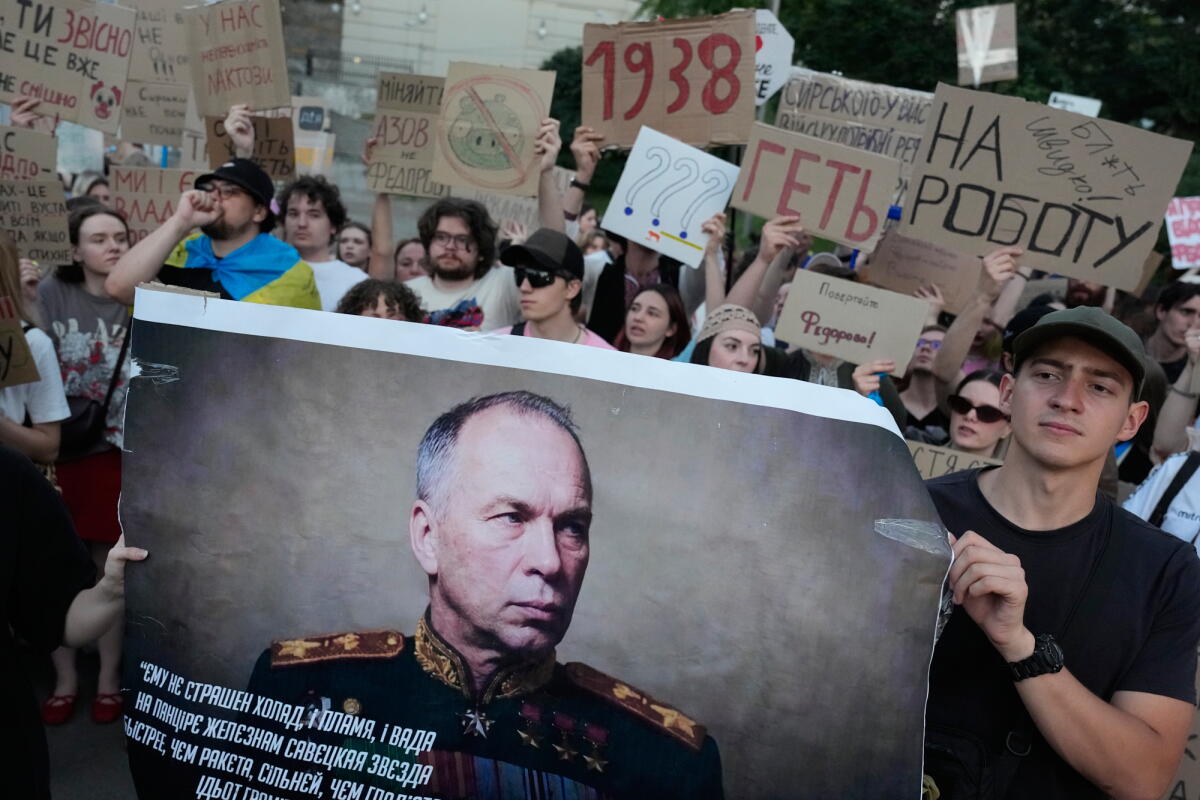
For much of the past two weeks, Ukraine's home front has looked almost as turbulent as its battle lines. On July 15, President Volodymyr Zelensky dismissed Defense Minister Mykhailo Fedorov, a young technocrat who had built a reputation both at home and among Western backers as the architect of Ukraine's drone-warfare modernization and a champion of transparency in a military bureaucracy long dogged by corruption scandals. Fedorov's removal, rather than settling an internal power struggle, ignited it. Within hours, crowds gathered in Kyiv, and over the following days the protests spread to Lviv, Odesa, Dnipro and other cities, growing into the largest sustained street demonstrations Ukraine has seen since Russia's full-scale invasion began in February 2022.
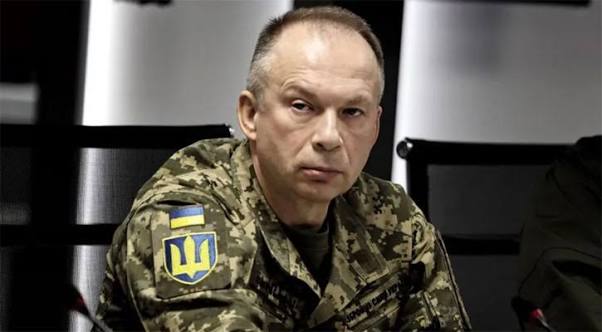
The demonstrators' anger was aimed squarely at Gen. Oleksandr Syrskyi, the commander-in-chief of Ukraine's armed forces since February 2024, when he replaced the widely admired Valerii Zaluzhnyi in a change that was itself controversial at the time. Syrskyi, a veteran of the Soviet military academy system, had overseen a period in which Ukraine's front lines held in some sectors but buckled in others, including the loss of Avdiivka in 2024 and grinding, costly fighting around Pokrovsk and elsewhere in the Donbas. Soldiers, veterans and independent military analysts increasingly described his command style as top-down and Soviet in character: a willingness to order costly frontal assaults, a reliance on newly mobilized and poorly trained infantry funneled into so-called 'Assault Forces' units, and a command culture that critics say tolerated abusive treatment of conscripts and only grudgingly accepted reform.
Fedorov, by contrast, had spent his tenure pushing to accelerate drone production, cut through procurement bottlenecks, and modernize how the military recruited, trained and cared for its soldiers. Multiple reports in the days before his dismissal described an increasingly open and personal rift between the two men, with Fedorov privately and then publicly accusing Syrskyi of blocking reforms Fedorov believed were essential to reducing Ukrainian casualties. When Zelensky sided with Syrskyi and removed Fedorov instead, it read to many Ukrainians — soldiers at the front chief among them — as the president protecting the wrong man.
Key Developments
The protests that followed Fedorov's dismissal were notable not only for their size but for their composition: alongside the usual civil-society activists were off-duty soldiers, veterans, and family members of men serving at the front, a constituency Zelensky has been careful throughout the war not to alienate. Demonstrators carried two explicit demands — reinstate Fedorov, and remove Syrskyi — and chanted that the country needed a new generation of commanders willing to prioritize soldiers' lives over ground held. By July 18, the fourth day of protests, Zelensky used his nightly video address to acknowledge the anger directly, telling citizens 'I hear what people are saying,' while stopping short of committing to any specific personnel change.
Behind closed doors, Zelensky spent the following days meeting with Ukraine's top military commanders in an effort to manage the crisis without appearing to capitulate to street pressure. That effort proved insufficient. On July 21, with protests entering a second week and showing no signs of abating, Zelensky announced he was dismissing Syrskyi as commander-in-chief. In explaining the decision, Zelensky framed it less as a verdict on Syrskyi's battlefield record than as a practical response to an unworkable rift at the top of the military and political establishment, telling reporters that since Fedorov and Syrskyi could not resolve their dispute themselves, 'I will have to resolve it.'
To replace Syrskyi, Zelensky turned to Gen. Mykhailo Drapatyi, a 43-year-old officer who has fought Russia continuously since 2014, when as a young officer he commanded a BMP-2 crew that broke through pro-Russian barricades in Mariupol during the opening phase of the Donbas conflict. Drapatyi's more recent record made him a natural choice for a leadership desperate to project competence and modernization: he oversaw the 2023 liberation of the west bank of the Kherson region and later commanded the operation that pushed Russian forces out of positions around Kupiansk. Within the ranks he is widely described as commanding a level of respect among ordinary soldiers that is difficult to earn and that Syrskyi, by the later stages of his tenure, had largely lost. His appointment took effect the evening of July 21, capping a whirlwind week in which Ukraine's civilian defense minister, its top general and its overall military command structure were all reshuffled inside a matter of days.

Reactions
The reaction inside Ukraine was swift and, for a country exhausted by more than four years of war, unusually celebratory. Kyiv Independent reporting from military sources described soldiers expressing genuine relief and enthusiasm at Drapatyi's appointment, a marked contrast to the fatalism that had characterized soldier commentary on Syrskyi in his final months. Protesters who had spent a week in the streets treated the announcement as a vindication, though many said they would continue watching closely to see whether Fedorov, whose ouster triggered the crisis in the first place, would be brought back into government in some capacity.
Russian reaction, notably, tilted toward alarm rather than satisfaction — a detail Ukrainian commentators were quick to highlight as evidence the change was a substantive upgrade rather than a cosmetic one. Prominent Russian military bloggers circulated old combat footage of Drapatyi's role in the 2014 Mariupol fighting, with one channel with roughly half a million subscribers describing him as a commander who 'hates' Russian soldiers 'consistently.' Independent Russian-language outlet Meduza reported that Russian war correspondents and bloggers registered visible concern over the appointment, in contrast to the muted or indifferent commentary that had often greeted Syrskyi's decisions.
Western governments, which have watched Ukraine's internal political stability nearly as closely as its battlefield performance amid ongoing debates in Washington and European capitals over further aid and Ukraine's NATO and EU accession track, offered more measured responses, generally framing the reshuffle as an internal Ukrainian matter while noting the importance of maintaining unified civilian-military leadership at a critical juncture in the war. Commentary in outlets such as CNN and the Washington Post focused heavily on the political risk Zelensky took in acceding to street pressure, given that Ukraine remains under martial law with elections suspended for the duration of the conflict — a dynamic that makes street protests one of the few remaining channels through which public discontent can translate into concrete political change.
What's Next
The most immediate question is whether Drapatyi's appointment will be followed by the reforms that protesters and Fedorov himself had demanded — changes to how mobilized soldiers are trained, treated and deployed, and a broader move away from the costly assault tactics associated with Syrskyi's tenure. Drapatyi inherits a war that, whatever the merits of Ukraine's new command team, has not fundamentally changed in its strategic contours: Russian forces continue to grind forward in parts of the Donbas even as Ukraine has found increasing success striking Russian oil infrastructure with long-range drones, and the front line overall remains largely static relative to the human and material cost being paid on both sides.
A second open question is Fedorov's own political future. Protesters explicitly demanded his reinstatement as defense minister, and it remains unclear whether Zelensky will move to bring him back into government now that Syrskyi is gone, appoint him to a different senior role, or leave him outside government altogether — a decision likely to shape whether the protest movement views this week's changes as a genuine resolution or only a partial one. Zelensky, for his part, faces the broader challenge of managing a war-time political system under sustained strain: this reshuffle follows the ouster of his chief of staff Andriy Yermak and the resignation of Prime Minister Yuliia Svyrydenko earlier in July amid a corruption scandal, meaning the commander-in-chief change is the third major leadership shake-up inside Zelensky's wartime government within a matter of weeks.
Militarily, analysts will be watching whether Drapatyi moves quickly to alter tactics on the ground, particularly around the pressured Pokrovsk sector, and whether the change produces any near-term shift in casualty rates or the pace of Russian advances. Politically, the events of the past two weeks have underscored a reality that had been building for some time: even under martial law, Ukrainian civil society and its soldiers retain real capacity to force accountability on their own government, a dynamic that is likely to keep shaping how Zelensky manages both the war effort and domestic politics as the conflict grinds into a fifth year.
Published By | News Editor