Written By | Sports Desk

At 44, the most decorated player of her generation traded singles retirement for a mixed-doubles wildcard alongside Carlos Alcaraz, and reminded New York why it never stopped loving her
NEW YORK
For four years, the loudest sound at the US Open was the absence of her. Serena Williams walked off Arthur Ashe Stadium in September 2022 in tears, 23 Grand Slam singles titles behind her, and told the world — carefully, deliberately, never quite using the word "retirement" — that she was "evolving away from tennis." New York roared for nearly an hour that night, unwilling to let her go. This week, she gave the city one more night to roar.
On August 22, the United States Tennis Association announced that Williams, now 44, had been awarded a wildcard into the 2026 US Open mixed doubles draw alongside Carlos Alcaraz, the 22-year-old Spanish phenom and reigning men's game standard-bearer. It was a pairing that made no obvious sense on paper — a four-time Olympic gold medalist who hadn't struck a competitive ball at Flushing Meadows since her farewell, teamed with a five-time major champion who had not played a match himself since April because of injury — and made total sense the moment they stepped onto the court together.
A Wildcard Built for Spectacle
Mixed doubles at the US Open has spent the last two years reinventing itself as appointment viewing rather than an afterthought squeezed between the "real" matches, and the tournament's organizers leaned into that shift again this year, stacking the draw with star power. Williams and Alcaraz's inclusion was the marquee move. Their first-round assignment, against Erin Routliffe and Lloyd Glasspool, sold out within hours of the schedule being released.
They delivered. On August 22, Williams and Alcaraz won their opening match, a tight, crowd-charged contest that ended 5-3, 4-1 under the tournament's fast-set mixed-doubles scoring format. Williams, serving at nearly 45, still found the corners; Alcaraz, rust and all, supplied the athleticism to cover the court behind her. The stadium, which had said goodbye to her in tears, spent the evening on its feet instead.
Four days later, on August 26, the run ended. Williams and Alcaraz fell to Flavio Cobolli and Belinda Bencic in the quarterfinals, 5-4(4), 4-1, in a match that stayed competitive into a tiebreak before slipping away. It was, by any measure, a short comeback — one win, two matches, four days. It was also, by every account from inside Arthur Ashe, exactly the kind of week the tournament had hoped for.
"I Don't Have Anything to Prove"
Williams was characteristically unsentimental — in public, at least — about what the week meant competitively. "I don't need to win," she told reporters ahead of the tournament. "I've won more than most people have in their whole lives. … It's important that I keep reminding myself of that because I don't have anything to prove, I don't have anything to lose. And everything here is just to gain."
She framed the return less as a comeback than as a lap of honor with a purpose. "Sports are so much more than winning," she said. "It's also about memories. And people carry those memories for a lifetime." It was a notably different register from the raw emotion of 2022, when Williams openly wrestled on camera with the idea of walking away from the only career she'd ever known. This time, at 44, with a business empire, two daughters and a life fully built beyond the baseline, she returned on her own terms, for as long as she wanted to stay, and left the same way.
For Alcaraz, who had been sidelined since April, the pairing offered something different: a low-pressure runway back into competition alongside a legend who needed nothing from him except good tennis. He had reportedly sought the pairing himself, telling organizers it was a "special request" — a young champion angling for the chance to share a court, even briefly, with the player who defined the sport before he was old enough to watch her play it.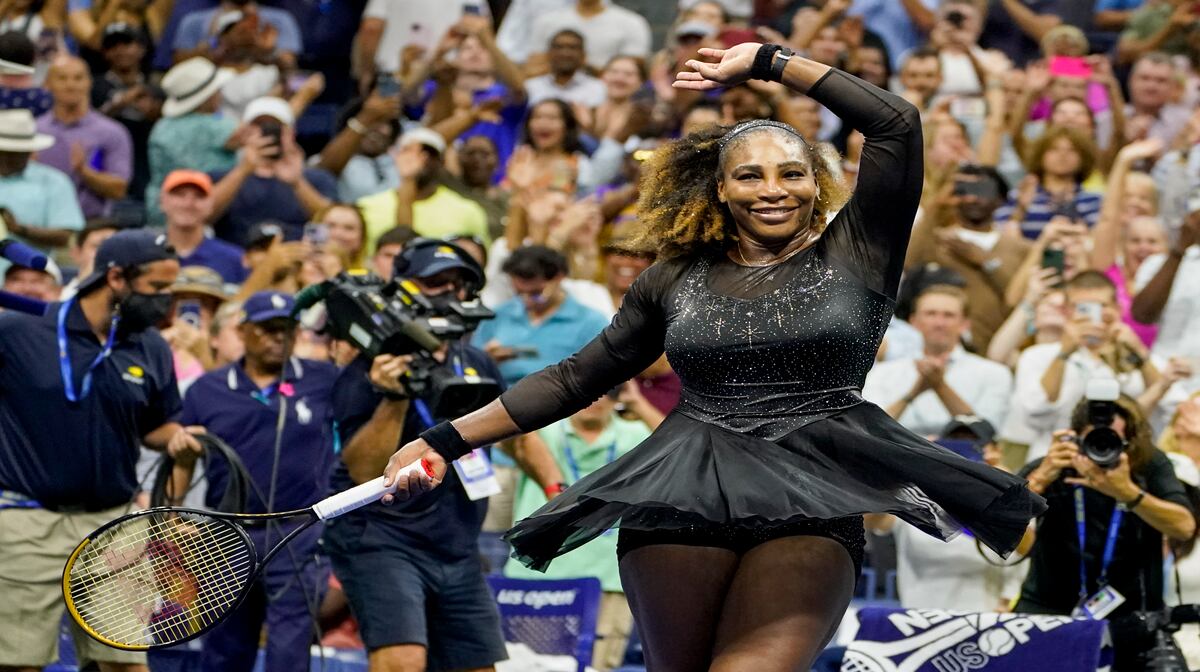
Why It Mattered Beyond the Scoreline
It would be easy to file Williams and Alcaraz's four days together under nostalgia and move on. That undersells what actually happened. Mixed doubles wildcards for legends are not new — tennis has offered farewell exhibitions and one-off comebacks for decades — but what set this one apart was that it was competitive tennis, inside the main draw, with ranking points and a trophy on the line, not a scripted send-off. Williams didn't play an exhibition. She played to win, and for one match, she did.
That distinction matters for how the moment lands with fans. This wasn't Serena Williams performing "Serena Williams" for an evening; it was Serena Williams, four years removed and unranked, walking back into a real draw and beating two credentialed professionals. The USTA's decision to build the moment around mixed doubles — rather than attempt a singles wildcard, which would have invited a much harsher and more literal comparison to her prime — let her compete on terms that were fair to everyone involved, including her.
It also continued a pattern this US Open era has leaned into deliberately: turning mixed doubles into a showcase for crossover stars, after seeing attendance and broadcast interest spike whenever recognizable names entered the draw. Williams and Alcaraz's presence didn't just fill Arthur Ashe; ticket resale sites reported their first-round match among the most in-demand of the tournament's opening days, ahead of several men's and women's singles matches on the same night.
What This Means for You
You don't need to follow tennis closely to feel the pull of this story, because it isn't really about a bracket. It's about what it looks like when someone gets to return to the thing they built their identity around, on their own schedule, without the world deciding for them that the door is closed. Williams didn't need this week. She chose it — and turned a routine wildcard announcement into the most talked-about story of the tournament's opening days.
She has not announced any further competitive plans, and there is no indication this was the beginning of a fuller comeback. It reads, instead, like precisely what she said it was: a chance to make one more memory in the building that made her, and to let New York have one more night with her before the lights came down again.



