Written By | Sports Desk
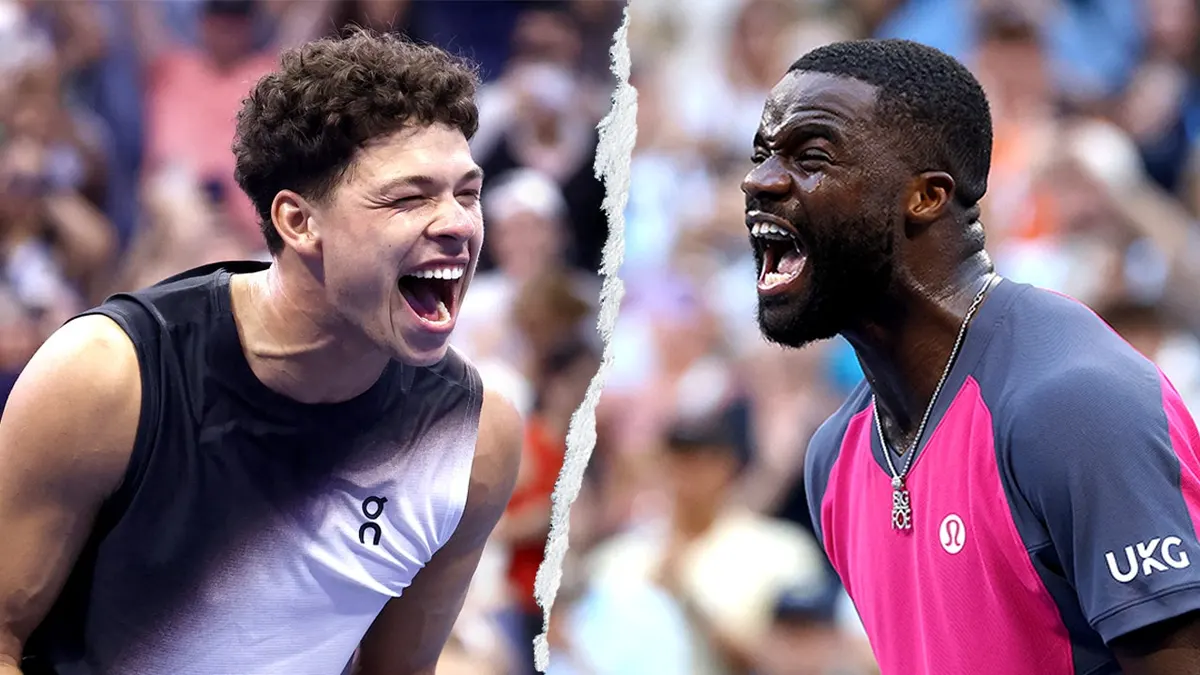
Ben Shelton and Frances Tiafoe meet in an all-American US Open semifinal that guarantees a home finalist on Sunday. Whoever wins inherits the heaviest wait in American tennis.
NEW YORK
At 3:33 on Wednesday morning, in a stadium emptied of everyone except the people who could not bring themselves to leave, Ben Shelton and Carlos Alcaraz met at the net and held on to each other a beat longer than the occasion required. Shelton had just beaten the defending champion 6-7(5), 6-1, 6-3, 1-6, 7-6(10-7), the last of those sets decided by a tie-break that ran all the way to ten points. It was the latest finish in the history of the US Open, breaking the previous record by 43 minutes.
By the time the lights came down over Arthur Ashe Stadium and the last stragglers filed out into a Queens dawn, a number that had not moved in more than two decades had quietly begun to shift.
A drought measured in presidencies
The last American man to win a Grand Slam singles title was Andy Roddick, at this tournament, in 2003. Twenty-three years. In that span the sport has passed through the Federer era, the Nadal era, the Djokovic era and now the Alcaraz-Sinner duopoly, and American men have watched all of it from the middle distance. There have been finals — Taylor Fritz reached this one in 2024 and lost in straight sets to Jannik Sinner — and there have been semifinals, several of them belonging to Frances Tiafoe. There has not been a trophy.
That is what makes tonight strange. Shelton, seeded eighth, plays Tiafoe, seeded eleventh, in the second men's semifinal of the evening. One of them will walk off the court on Friday night knowing he is playing for the title on Sunday. One of them will carry twenty-three years of American frustration onto Arthur Ashe with him.
It has been an unusually crowded fortnight for the home contingent. Five American men reached the last sixteen of a major for the first time since 1995, a statistic that says as much about the intervening thirty-one years as it does about this one. Alex Michelsen, twenty-two and unseeded, made the quarterfinals. Tommy Paul and Fritz were both in the draw's second week. The depth was real; the question, as always, was whether depth converts.
Two very different marathons
Shelton's quarterfinal was the loud one. Alcaraz had entered this tournament as the defending champion and the second seed, returning from a four-month layoff with a right wrist injury and admitting openly that he was not yet at his best. He was still Alcaraz. He took the opening set in a tie-break, was blown off the court in the second and third, roared back to take the fourth 6-1, and then lost a fifth-set breaker that lasted long enough for the date to change twice.
Shelton is twenty-three, left-handed, and serves in a way that makes commentators reach for artillery metaphors. He is also the son of a coach and the product of a college programme — an increasingly rare route into the top ten — and he has spent two years being described as the future of American tennis in tones that suggested the future might never quite arrive.
Tiafoe's quarterfinal was the quieter grind, and arguably the more improbable. Facing Michelsen, a fellow American nine years his junior, Tiafoe lost the first two sets 7-5 and 6-3 and then won three straight: 7-5, 6-3, 7-6. Coming back from two sets down at a major is not a thing that happens often to anyone; doing it at twenty-eight, in the round before the semifinals, against a compatriot who had nothing to lose, is the kind of result that defines a career's late chapter.
The win made Tiafoe the only American man besides Andre Agassi to reach three US Open semifinals this century. Agassi won this tournament twice. Tiafoe has lost every semifinal he has played here, which is the sort of fact that gets read out to a player on television about ninety minutes before he walks onto the court.
The other half of the draw
The first semifinal, played earlier in the evening, pairs Alexander Zverev with Karen Khachanov. Zverev is the top seed and the world No. 2, and his relationship with this tournament is its own long-running story: he reached the final here in 2020, led by two sets, and did not win it. He has now been one of the best players in the world for the better part of a decade without a major title, which gives the evening a certain symmetry — two draws, two droughts, one of them personal and one of them national.
Khachanov, unseeded coming in, is playing his third Grand Slam semifinal. He is the closest thing this tournament has to a spoiler: heavy off both wings, hard to hurry, and entirely uninterested in the narrative everyone else has arrived to watch.
Why it matters beyond the baseline
American tennis has spent two decades telling itself a story about pipelines. Participation numbers, academy investment, college programmes, the USTA's development apparatus — all of it has been justified, at some level, by the promise of a men's major champion, and all of it has been quietly indicted every year one failed to appear. The women have carried the flag alone: Serena Williams, Sloane Stephens, Coco Gauff, Madison Keys.
A men's title on Sunday would not retroactively validate any of that. But it would change the conversation from "what is wrong with American men's tennis" to something more ordinary, which is what most sporting droughts actually need. Droughts are not usually broken by fixing a system. They are broken by one player having one good fortnight.
There is also the simple pleasure of the thing. An all-American semifinal at Flushing Meadows, in a night session, in a stadium that holds nearly 24,000 people and behaves like a football crowd, is a spectacle the tournament has not been able to stage in a generation. Shelton and Tiafoe both play to the gallery, both celebrate extravagantly, and both know exactly what the room wants.
What to watch tonight
Play begins with Zverev and Khachanov; Shelton and Tiafoe follow in the night slot. The women's final, between Aryna Sabalenka and Elena Rybakina, is Saturday. The men's final is Sunday afternoon.
Twenty-three years is a long time to wait for a tennis match. It ends, one way or another, this weekend.



