Written By | Entertainment Desk
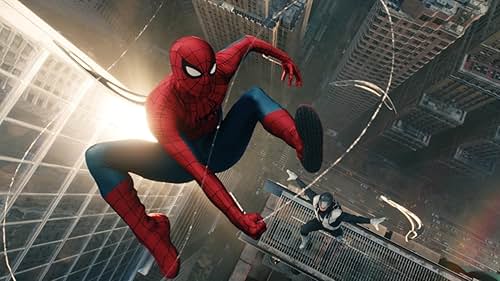
Tom Holland's web-slinger has now crossed $2 billion worldwide in just 17 days, trailing only "Avengers: Endgame" for the fastest climb to that milestone ever recorded
LOS ANGELES
Three weeks ago, "Spider-Man: Brand New Day" opened to $355 million domestically — the second-biggest debut in North American box office history, trailing only 2019's "Avengers: Endgame." At the time, that number alone would have made headlines for months. Instead, it turned out to be the opening act of one of the fastest, most sustained box office runs in movie history, and the numbers keep arriving faster than theater chains can update their marquees.
As of this week, "Brand New Day" has pulled in roughly $855 million domestically and $2.21 billion worldwide, crossing the $2 billion mark in just 17 days — the second-fastest film ever to do so, again behind only "Endgame," which needed 11 days back in 2019. Domestically, the film has already become the fastest movie in history to cross $800 million, a record that belonged, until now, to films with years — not weeks — of theatrical runs to build toward it.
A Franchise That Refused to Slow Down
What makes the run remarkable isn't just the size of the numbers, but their staying power. Big opening weekends are common for superhero tentpoles; what's rare is a film holding audiences through a second and third weekend at the pace "Brand New Day" has managed. The film posted one of the largest second-weekend holds of any major franchise release this year, defying the steep drop-offs that have become the norm even for successful blockbusters in the streaming era. Industry trackers note that word-of-mouth, rather than just opening curiosity, appears to be driving repeat viewership — a dynamic that studios have struggled to manufacture reliably since before the pandemic reshaped moviegoing habits.
Tom Holland, reprising the role of Peter Parker for what is being billed within the franchise as a "rebirth" chapter, has reportedly stood to earn more than $100 million in total compensation tied to the film's box office performance, according to industry estimates — a figure that reflects both his backend deal and the sheer scale of the film's global haul. It's a number that places him firmly among the small handful of actors whose per-film earnings now rival the budgets of mid-sized studio releases entirely on their own.
Why This Particular Spider-Man Film Hit Different
Marketed as a fresh start for the character following the conclusion of Holland's prior trilogy, "Brand New Day" leaned into a stripped-down, personal story rather than the multiverse-spanning spectacle that defined its predecessor, "No Way Home." Early marketing promised a Peter Parker forced to rebuild his life and identity from the ground up, a narrative choice that appears to have resonated with both longtime fans fatigued by multiverse plotting and newer audiences drawn in by a more grounded, character-first pitch.
That approach also gave the film room to lean on practical stakes and emotional beats rather than pure spectacle — a strategy that box office analysts have pointed to as a key driver of its unusually strong holds. Films that generate genuine emotional investment, rather than just spectacle-driven curiosity, tend to sustain ticket sales far longer, and "Brand New Day" appears to be a case study in exactly that dynamic playing out in real time.
An Industry Watching Closely
The box office trade press has treated the film's run less as a single success story than as a referendum on the health of theatrical exhibition itself. Domestic and international theater chains, still working to recover to pre-pandemic attendance levels, have pointed to "Brand New Day" as evidence that audiences will still turn out in force — and repeatedly — for a film that gives them a reason to. Box office analysts tracking the release noted that its climb to $2 billion in 17 days puts it in genuinely rare company: only a handful of films in cinema history, virtually all of them either "Avengers" or "Avatar" installments, have ever crossed that threshold faster.
"This is one of the biggest second weekends we've seen from any franchise release in years," one industry tracker noted of the film's ability to hold audiences well past opening weekend — a detail box office analysts consider more telling of a film's true cultural traction than any single-weekend number.
What This Means for Moviegoers
For casual fans, the headline number is simple: this is, unambiguously, one of the biggest movies of the decade, and if you haven't seen it yet, you're increasingly part of a shrinking minority. But there's a broader takeaway for anyone who cares about the future of moviegoing. A theatrical run this dominant — sustained not by nostalgia bait or franchise obligation but by genuine audience enthusiasm — is being read across the industry as a signal that studios can still build event-sized theatrical experiences worth leaving the house for, even in an era when streaming has trained audiences to wait. Expect the film's success to influence greenlighting decisions across the superhero genre for the next several years, particularly around character-driven reboots versus ensemble mega-crossovers.
It's also worth noting for families and younger fans specifically: unlike some of its multiverse-heavy predecessors, "Brand New Day" was designed to be accessible without a working knowledge of a decade-plus of interconnected franchise lore, which industry watchers believe is part of why it's pulling in audiences beyond the usual opening-weekend superhero crowd.
The Road Ahead
With "Brand New Day" still playing in thousands of theaters domestically and internationally, and no major new blockbuster competition on the immediate horizon to challenge its hold on screens, industry estimates suggest the film has a real shot at climbing into the all-time top ten worldwide grossers — a list currently dominated by "Avatar," "Avengers" and "Star Wars" entries. Whether it gets there will depend on how well it holds through the back half of its run, but three weeks in, "Spider-Man: Brand New Day" has already rewritten expectations for what a "fresh start" superhero film can do at the box office.
For Sony and Marvel, the message is clear: audiences didn't just show up for Spider-Man again. They showed up, and then they kept coming back.



