Written By | International News Agencies
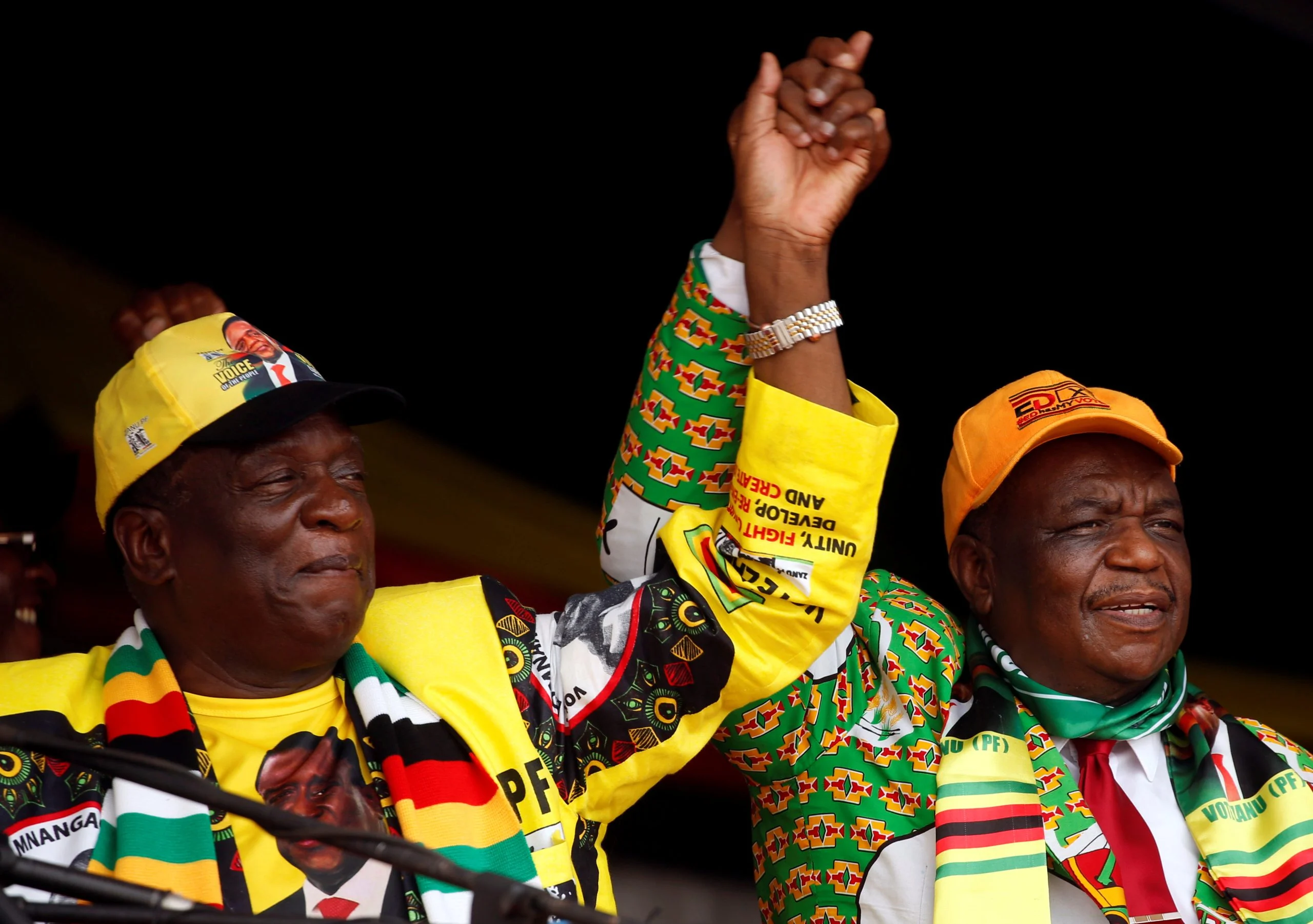
Zimbabwe's constitution imposes a two-term limit on the presidency, which would ordinarily require Mnangagwa to step down after the next general election, expected in 2028
HARARE
Vice President Constantino Chiwenga marked his 70th birthday this week at a private gathering conspicuously empty of anyone aligned with President Emmerson Mnangagwa — the latest, and most visible, sign of a rupture between Zimbabwe's two most powerful men that is now threatening to split the ruling ZANU-PF party over who will lead the country after 2028.
The birthday snub followed reports that Chiwenga allies had been struck from the delegate list for a recent ZANU-PF conference, and it capped months of escalating, if carefully coded, public friction between Mnangagwa and the man who helped install him in power. At the center of the dispute is a ZANU-PF plan — formally adopted at the party's national conference and now moving through a constitutional amendment process — to extend Mnangagwa's presidency to 2030, bypassing the election originally due in 2028 and, critics say, closing off Chiwenga's presumed path to the presidency in the process.
Why This Matters Now
Zimbabwe's constitution imposes a two-term limit on the presidency, which would ordinarily require Mnangagwa to step down after the next general election, expected in 2028. ZANU-PF's push to move that timeline to 2030 — a plan known within the party as "Resolution Number One," adopted at the party's October 2024 national conference in Bulawayo — would require amending the constitution, a process the party has since formally set in motion.
The plan has fractured ZANU-PF into two camps. One, aligned with Mnangagwa, argues the extension is necessary to complete his development agenda. The other, aligned with Chiwenga, insists on adherence to the existing constitutional term limits — a position that happens to align with Chiwenga's own political interests, since he has long been seen as Mnangagwa's most likely successor and stood to be positioned for the presidency at the end of Mnangagwa's constitutionally mandated final term.
The stakes go beyond who occupies State House. Mnangagwa and Chiwenga together orchestrated the November 2017 coup that forced the resignation of longtime ruler Robert Mugabe, an alliance that brought Mnangagwa to power and made Chiwenga, a former commander of the Zimbabwe Defence Forces, the second-most powerful figure in the country. That partnership has now curdled into what regional media have described as a climate of mutual suspicion and internal purges within the party both men once controlled together.
How the Rift Has Played Out
The clearest public sign of the breach came on April 25, when Chiwenga addressed a Roman Catholic gathering in Murewa, in Mashonaland East province. Speaking in explicitly religious terms, he invoked the biblical story of King Hezekiah — a ruler granted an additional 15 years of life who, according to the account, ultimately saw his kingdom unravel — and delivered the line that has since become shorthand for his opposition to the extension plan: "Extra years are not always a blessing." Chiwenga did not name Mnangagwa directly, but the remark was widely understood across Zimbabwe's political class as a pointed warning to a president whose allies are actively working to keep him in office past 2028.
The confrontation has also taken a more concrete, institutional form. According to Zimbabwean media reports, Chiwenga presented a dossier at a ZANU-PF politburo meeting demanding the arrest of businessmen accused of accumulating unexplained wealth through donations funneled into the party — an intervention widely read as an attempt to expose graft tied to Mnangagwa loyalists. Mnangagwa responded by moving to consolidate control over the party machinery: former secretary-general Obert Mpofu was demoted to the comparatively minor information and communication technology portfolio, while loyalists were elevated in his place — Jacob Mudenda to secretary-general, Patrick Chinamasa to treasurer-general, and Ziyambi Ziyambi to secretary for justice.
That reshuffle was followed by reports that delegates aligned with Chiwenga had been removed from the list for a subsequent ZANU-PF conference — a move that, if confirmed, would represent a direct attempt to dilute Chiwenga's influence within the party's internal decision-making structures ahead of further votes on the succession question.
This week's birthday celebration — held at a private residence on the outskirts of Harare, with Mnangagwa-aligned officials notably absent — has been read by Zimbabwean commentators as the most visible public confirmation yet that the rift between the two men has moved from private maneuvering into open, symbolic estrangement.
The Constitutional Mechanics
Beyond the optics, the substantive fight centers on a proposed constitutional amendment that would do more than simply move the election date. According to reporting on the bill's provisions, the amendment would also erode the automatic-succession clause that currently allows the vice president to assume the presidency in the event the sitting president dies, resigns or becomes incapacitated. Analysts say this provision, if enacted, would functionally close off the one clear institutional path by which Chiwenga could ascend to the presidency without winning a contested internal party vote — reinforcing the view among his allies that the 2030 plan is not simply about extending Mnangagwa's tenure but about foreclosing Chiwenga's future entirely.
Some reporting on the internal ZANU-PF dynamic suggests the extension campaign's ultimate aim may go further still: positioning First Lady Auxillia Mnangagwa as a future presidential successor, rather than Chiwenga — a possibility that, if accurate, would explain the intensity of Chiwenga's public resistance despite the risks of confronting a sitting president who controls the security and party apparatus.
Voices in the Standoff
Chiwenga has, so far, stopped short of directly naming Mnangagwa in his public remarks, preferring the kind of scriptural allegory deployed in his April speech. That restraint has itself become a subject of political commentary in Harare, where analysts describe his approach as a calculated strategy: signaling firm opposition to the 2030 extension while avoiding an outright, personalized break that could trigger a more severe response from a president who still commands significant levers of state power, including over the security services Chiwenga himself once led.
ZANU-PF's official position remains that the party's structures — not any individual faction — will determine the party's direction, and pro-Mnangagwa figures within the party have continued to publicly frame the 2030 agenda as a matter of settled party resolution rather than a live internal dispute. The party's own machinery, however, tells a different story: the politburo reshuffle, the conference delegate list changes, and the choreographed absence of Mnangagwa loyalists from Chiwenga's birthday gathering all point to a leadership actively working to marginalize a sitting vice president rather than a party operating from consensus.
Political Implications and Analysis
The dispute represents one of the most serious internal threats to ZANU-PF's cohesion since Mnangagwa took power in 2017 — ironically, through the very same alliance with Chiwenga that is now fracturing. Zimbabwe's opposition, led by Nelson Chamisa's Citizens Coalition for Change, has watched the internal ZANU-PF rift with interest, though it remains structurally weak and divided in its own right, limiting its ability to capitalize directly on ruling-party discord in the near term.
More significant for Zimbabwe's political trajectory is what the fight signals about the durability of the country's constitutional order. Mnangagwa's 2023 re-election — in which he secured 52.6% of the presidential vote against Chamisa's 44.0%, according to official results — was itself contested by opposition figures and international observers who raised concerns about the fairness of the process. A move to unilaterally extend that mandate by two additional years via constitutional amendment, over the objection of the country's own sitting vice president, would further strain Zimbabwe's already fragile democratic credibility, both domestically and among regional bodies such as the Southern African Development Community.
The internal ZANU-PF fight also raises questions about stability within Zimbabwe's security establishment. Chiwenga's background as a former defense forces commander, and his role as co-architect of the 2017 coup, means his marginalization within the party is not merely a political story — it touches directly on the loyalties of a military and security apparatus that has repeatedly proven decisive in Zimbabwe's succession politics, including in the very ouster of Mugabe that first brought Mnangagwa to power.
What to Watch Next
The clearest indicator of where this standoff is heading will be the fate of the constitutional amendment itself: whether it advances through Zimbabwe's parliament, where ZANU-PF holds a commanding majority, and whether Chiwenga's allies attempt to slow or obstruct it through procedural means available to them within the party and legislature.
Also worth watching is whether the dispute escalates from symbolic gestures — snubbed invitations, reshuffled delegate lists — into more consequential moves, such as further demotions of Chiwenga loyalists from senior party or government posts, or conversely, any sign that Chiwenga is building outside alliances, including with figures in the security establishment, that could position him for a more direct confrontation. Zimbabwe's history offers a cautionary precedent: the last time a ZANU-PF succession dispute reached this level of intensity, it ended with Mugabe's removal from office by the military. Whether the current rift stays contained within party structures, or spills into the kind of decisive intervention that reshaped Zimbabwean politics in 2017, is likely to become clearer in the months ahead as the constitutional amendment process moves forward.



