Written By |

Part of the business community in Mbarara City that attended the training at Adit Mall on Wednesday. [Photo: Joshua Nahamya]
By Joshua Nahamya
Mbarara City
Absa Bank Uganda, through its flagship Business Club, has launched a series of Regional SME Forums starting in Masaka, Mbarara, and Fort Portal, aimed at strengthening financial record-keeping, ensuring compliance, and preparing enterprises for sustainable growth.
According to Moses Rutahigwa, Retail and Business Banking Director at Absa Bank Uganda, the forums will eventually roll out nationwide, allowing small and medium enterprises (SMEs) across Uganda’s regional growth hubs to benefit from direct engagement with experts, tailored financial solutions, and networking opportunities.
“Many of the challenges faced by SMEs are not unique to Kampala. By going to the regions, we ensure that entrepreneurs in Masaka, Mbarara, Fort Portal, and beyond have access to the knowledge, networks, and solutions they need to thrive,” Rutahigwa stated.
Jude Kugonza showing some of the aircrafts they have in their confine
The initiative, delivered in partnership with Uganda Airlines, DHL, Grant Thornton, and Enterprise Uganda, is designed to equip entrepreneurs with practical skills, strategic partnerships, and long-term growth opportunities.
Rutahigwa noted that the forums reaffirm Absa’s commitment to supporting SMEs with an annual turnover of up to UGX 15 billion, describing them as the “backbone of Uganda’s economy.”
Calls from the Business Community
Local business leaders used the forum to raise concerns and propose solutions. Fred Kafoko, a prominent businessman in Mbarara City, challenged Uganda Airlines to launch more domestic flights to support business operations.
“From Entebbe to Nairobi it is just a 45-minute flight, but from Mbarara to Kampala I spend 4 hours. What are you doing if I want to board a plane from Mbarara to Arua, Kisoro, and the rest?” Kafoko asked.
He also cited congestion and disorganization at the Dubai terminal compared to other international airlines.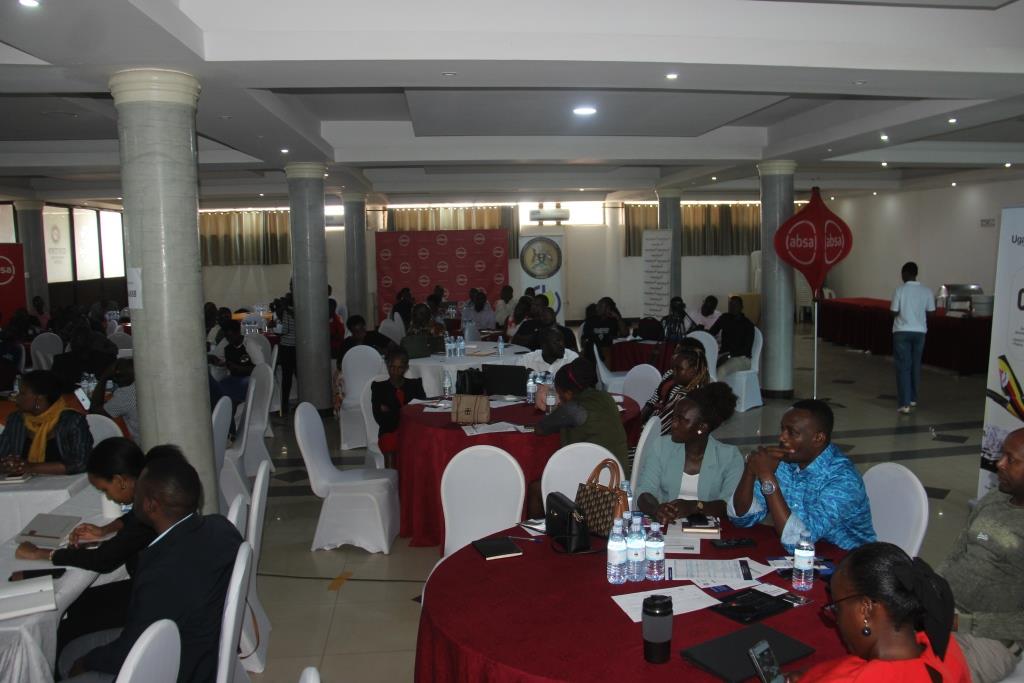
Some of the people who attended the Absa training in Mbarara City
Meanwhile, Betty Mbazira Kasabiti, an agro-processor from Isingiro District, commended Absa for enlightening entrepreneurs about its products but urged partner institutions such as Enterprise Uganda to establish branch offices in the regions.
“We incur a lot of costs to access services from Kampala. Having regional offices would reduce the burden,” Kasabiti noted.
She also encouraged family involvement in business to ensure continuity.
“You find that what parents want their children to do is not what they are doing, and this has collapsed many enterprises. It is important that mindsets change, so businesses are built on family foundations rather than just the vision bearers,” she emphasized.
Uganda Airlines on Market Access
Jude Kugonza, from the Commercial Department of Uganda Airlines, urged smallholder farmers and SMEs to form organized groups to access trade discounts and expand into regional and international markets.
“When businesses come together under one body, we are able to give them discounted prices on tickets and facilitate market linkages. This helps them close deals and connect with suppliers in different economic hubs where we fly,” Kugonza explained.
He revealed that starting December 2026, Uganda Airlines plans to launch domestic flights ahead of the 2027 African Cup of Nations (AFCON), which will be jointly hosted by Uganda, Kenya, and Tanzania.
“By the time AFCON begins, we shall have launched domestic flights to open more markets for Ugandan businesses,” Kugonza assured.
Absa’s Commitment to SMEs
Stella Xerenzy Atim, Head of Enterprise Banking at Absa Bank Uganda, highlighted that the regional engagements are designed to address financial barriers such as delayed payments, high lending costs, lack of collateral, and limited access to international markets.
“We are here to get feedback so we can tailor solutions to serve you better. We have introduced products like unsecured business loans of up to UGX 200 million, e-commerce financing, and asset trade finance,” Atim said.
Stella Xerenzy Atim, Head of Enterprise Absa Bank Uganda. [Photo: Joshua Nahamya]
She encouraged entrepreneurs to formalize, digitize, and structure their businesses to attract financing and investors.
Absa also announced a 7% interest rate on SACCO deposits and a forthcoming SACCO loan product.
“We might not be in every location, but through strategic partnerships with SACCOs and digital platforms like agent and mobile banking, we can reach the last mile,” Atim explained.
The Bigger Picture
Through initiatives like the Regional SME Forums, Absa and its partners are bridging gaps that hinder entrepreneurs, enabling them to scale and compete both regionally and globally.
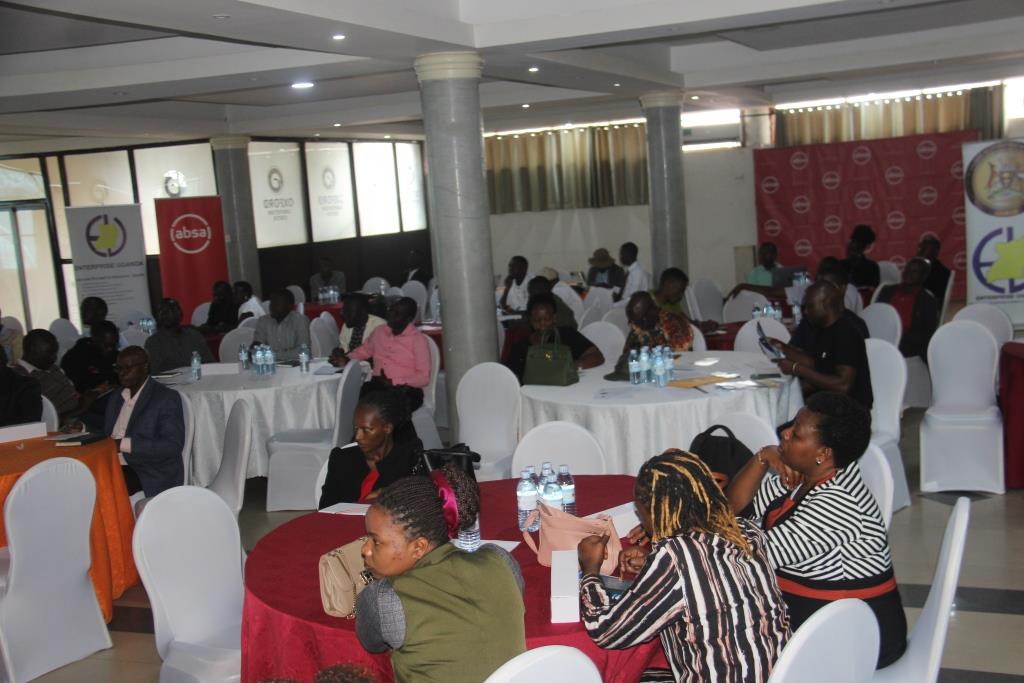
Some of the participants attending the banking engagemnet at Adit Mall in Mbarara City. [Photo: Joshua Nahamya]
Absa Bank, with a history of 130 years, currently operates in 10 African countries. Its Business Club, relaunched earlier this year, is anchored on four pillars: Access to Markets, Knowledge & Capacity Building, Networking & Growth, and Financial & Non-Financial Services.
According to the Uganda Investment Authority (UIA), SMEs account for about 90% of private sector employment and contribute over 80% of Uganda’s GDP. The Uganda Bureau of Statistics (UBOS) further notes that SMEs generate 80% of manufactured output, contribute 20% to GDP, and employ more than 2.5 million Ugandans.
Torch Media Africa



