Written By |
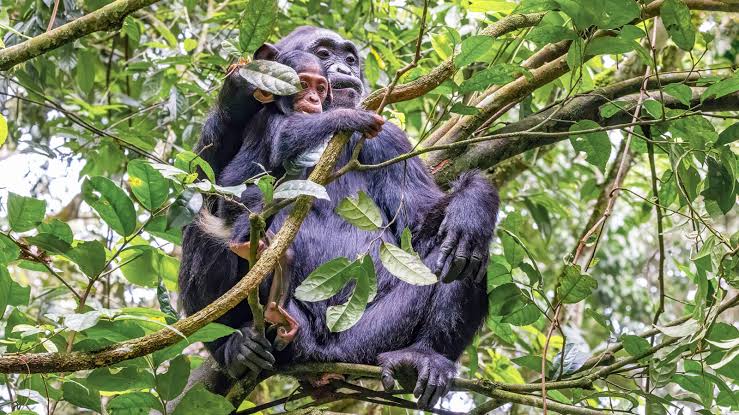
Chimpanzee tracking is the headline experience, and it is run from the Kanyanchu visitor centre, where guides brief small groups before the morning and afternoon departures
TOURISM
The Primate Capital
Before you see them, you hear them. A low hoot rises from somewhere in the canopy, builds into a pant, then explodes into a shrieking chorus that rolls across the forest like a stadium crowd. Your guide lifts a hand and the group freezes. Forty metres above the leaf litter, a male chimpanzee swings down a liana, regards the line of humans with the weary calm of a commuter, and settles into a fig tree to eat. This is Kibale National Park, and this is why people come.
Tucked into western Uganda near Fort Portal, Kibale protects roughly 795 square kilometres of moist evergreen and semi-deciduous forest, a rare surviving stretch of the band of rainforest that once linked the Albertine Rift to the lowlands. It is widely called the primate capital of Africa, and the title is earned: the park shelters about thirteen primate species, including red colobus, L'Hoest's monkeys, grey-cheeked mangabeys, black-and-white colobus and one of the densest chimpanzee populations anywhere, estimated at well over a thousand animals.
A Forest with a Long Memory
Kibale was gazetted as a forest reserve in the 1920s and became a national park in 1993, a decision that balanced conservation against the needs of the farming communities pressing at its edges. Its southern tip joins Queen Elizabeth National Park, creating a corridor along which elephants, buffalo and other wildlife can still move. Research has been central to its story. The Makerere University Biological Field Station at Kanyawara has hosted decades of continuous chimpanzee study, and the Ngogo community, one of the largest wild chimpanzee groups ever documented, has produced landmark findings on primate social bonds, cooperation and diet.
The forest is more than its famous residents. Giant mahogany and ironwood trees rise beyond fifty metres, the understorey is thick with ferns and orchids, and more than 370 tree species have been recorded. Over 350 bird species include the green-breasted pitta, a sought-after jewel for birders, and the African grey parrot. Butterflies, forest elephants, bushpigs and the occasional leopard round out a wildlife list that rewards slow, patient walking.
Meeting the Chimpanzees
Chimpanzee tracking is the headline experience, and it is run from the Kanyanchu visitor centre, where guides brief small groups before the morning and afternoon departures. Groups follow rangers who have tracked the habituated community since dawn, and the walk can last anywhere from twenty minutes to several hours depending on where the apes have chosen to feed. Once found, visitors get one hour in their company, keeping a distance of at least eight metres and wearing a mask if they have any cold or flu symptoms, since chimpanzees are susceptible to human respiratory disease.
For those who want more, the chimpanzee habituation experience lets visitors spend a full day with researchers and trackers as they work to accustom a new community to human presence. You follow the animals from the moment they leave their nests until they build new ones at dusk, an immersive and physically demanding day that many describe as the most intimate wildlife encounter of their lives.
Beyond the apes, Kibale offers guided nature walks, night walks to spot bushbabies and pottos, and birding trails. Just outside the park, the community-run Bigodi Wetland Sanctuary, a short drive from Kanyanchu, protects a papyrus-and-palm swamp alive with monkeys and birds and returns income directly to local villages. The crater lakes around Fort Portal, a short hop north, make an easy add-on.
Planning Your Visit
Kibale is about five to six hours by road from Kampala, passing through Mubende and Fort Portal, and the park headquarters at Kanyanchu lie roughly 35 kilometres south of the town. Fort Portal has the widest range of lodges and restaurants, while forest lodges closer to the park offer sunrise starts. Chimpanzee sightings run close to year-round at high rates, but the drier months of June to September and December to February make for easier trails; March to May and October to November bring heavier rain and muddier going, though also fewer visitors and lush scenery. Sturdy waterproof boots, long sleeves and trousers, a light rain jacket and insect repellent are essential.
Permits must be booked in advance through a Uganda Tourism Board-licensed operator or the Uganda Wildlife Authority, and they sell out in peak season. Current published rates put chimpanzee tracking at US$250 for foreign non-residents and habituation at US$300, with East African citizens paying a fraction in shillings. Be aware that, according to a published tariff summary, new rates take effect on 1 January 2027, lifting tracking to US$300 and habituation to US$400 for foreign non-residents, so travellers booking now for early next year should confirm which rate applies with their operator or the UWA. Park entry and guide arrangements are separate from permit costs, so confirm what is included.
This Week in Ugandan Tourism
Record receipts. Figures reported in early October 2026 show Uganda's tourism earnings hit a record UGX 5.829 trillion (about US$1.62 billion) in 2025, up 21.3 percent, on 1.64 million international arrivals, up 19.7 percent. In the first half of 2026 arrivals reached 739,815, up 3.7 percent, while receipts rose about 25.6 percent to roughly UGX 2.3 trillion and the average stay lengthened to 8.3 nights.
EU backing for conservation. Around mid-October 2026, following the Uganda-EU Partnership Dialogue, the European Union committed €50 million to conservation and tourism in Uganda. A project-by-project breakdown had not been published at the time of writing. Separately, the finance ministry has reportedly set a goal of US$5 billion in annual tourism receipts by 2030.
Regional visa push. Reports on 11 October 2026 highlighted the East Africa Tourist Visa linking Uganda, Kenya and Rwanda, quoted at US$100 for a multiple-entry, 90-day pass. The report cited no official source or start date, so travellers should check immigration portals before planning. A Uganda-Kenya Coast Tourism and Innovation Summit is slated for Mombasa in late October to build joint packages around the visa.
Markets widening. Trade promotion continues, with the Pearl of Africa Tourism Expo drawing reportedly more than 350 domestic exhibitors and 120 international buyers from 40 countries, and Uganda targeting China, Turkey, Egypt and Canada as growth corridors alongside traditional markets in the US, UK and India.
Why Kibale, now? As rates are set to rise in January and arrivals keep climbing, Kibale remains one of the best-value wildlife encounters on the continent. Go while the forest is loud.