Written By | Health News Agencies
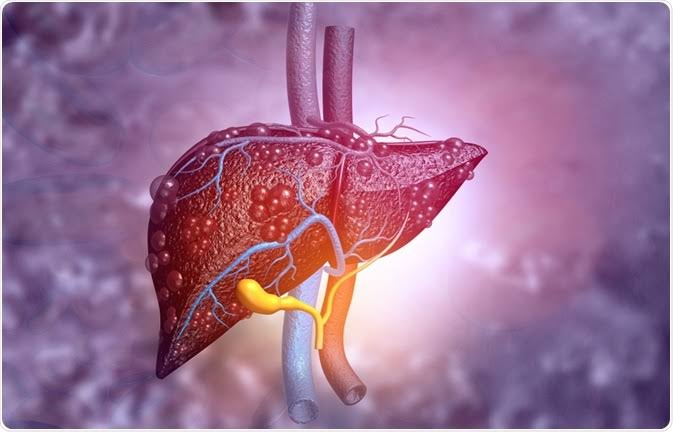
A University of Michigan compound called DT-109 stopped and reversed advanced liver damage in primates by starving a rogue gut bacterium of its power to poison the liver
A University of Michigan compound called DT-109 stopped and reversed advanced liver damage in primates by starving a rogue gut bacterium of its power to poison the liver
ANN ARBOR, Michigan
For a disease that now touches roughly one in three people worldwide, fatty liver disease has an infuriatingly short list of treatments. But a new study out of the University of Michigan is pointing to a strategy nobody expected would work this well: instead of attacking the liver directly, hit the gut.
Researchers at Michigan Medicine report that an experimental compound called DT-109 — a simple, glycine-based tripeptide, essentially a chain of just three amino acids — reversed metabolic dysfunction-associated steatohepatitis, or MASH, the severe and potentially deadly form of fatty liver disease, in animal models. The results, published this month in The Journal of Clinical Investigation, were most striking in nonhuman primates, whose liver biology and gut microbiome closely mirror our own, offering researchers a rare degree of confidence that the mechanism could translate to human patients.
The twist that has hepatologists paying attention: DT-109 doesn't appear to work by targeting the liver at all. It works by sealing up a leak in the gut.
A Disease Hiding in Plain Sight
MASH — until recently better known by its older name, NASH, or nonalcoholic steatohepatitis — is the aggressive endpoint of a much broader epidemic. Metabolic dysfunction-associated steatotic liver disease, or MASLD, the umbrella condition that begins as simple fatty buildup in the liver, is now estimated to affect more than 31% of the global population, making it the most common liver disorder on Earth. In the United States alone, biopsy-confirmed prevalence sits near 22% of adults — roughly 51.6 million people walking around with fat accumulating in their liver, often without a single symptom.
For most of those people, the disease stays quiet. But for a meaningful subset — particularly those who also have obesity and type 2 diabetes, where at-risk MASH prevalence jumps to 29%, compared to just 3% in people with neither condition — the disease progresses into MASH: active inflammation and cellular damage that can scar the liver over time. Roughly one in five MASH patients goes on to develop cirrhosis, and from there, the road can lead to liver failure or liver cancer.
Until 2024, doctors had nothing specifically designed to treat it. That changed when the FDA granted accelerated approval to Madrigal Pharmaceuticals' resmetirom, sold as Rezdiffra, the first drug ever approved specifically for MASH with moderate to advanced fibrosis. Its commercial trajectory has been explosive — more than 42,250 patients were on the drug as of the first quarter of 2026, a 2.5-fold jump from a year earlier, and it has already reached blockbuster sales status. But Rezdiffra works by directly targeting thyroid hormone receptors in the liver. DT-109 is chasing the disease from a completely different angle, and if it pans out, could eventually complement — or in some patients, replace — that approach.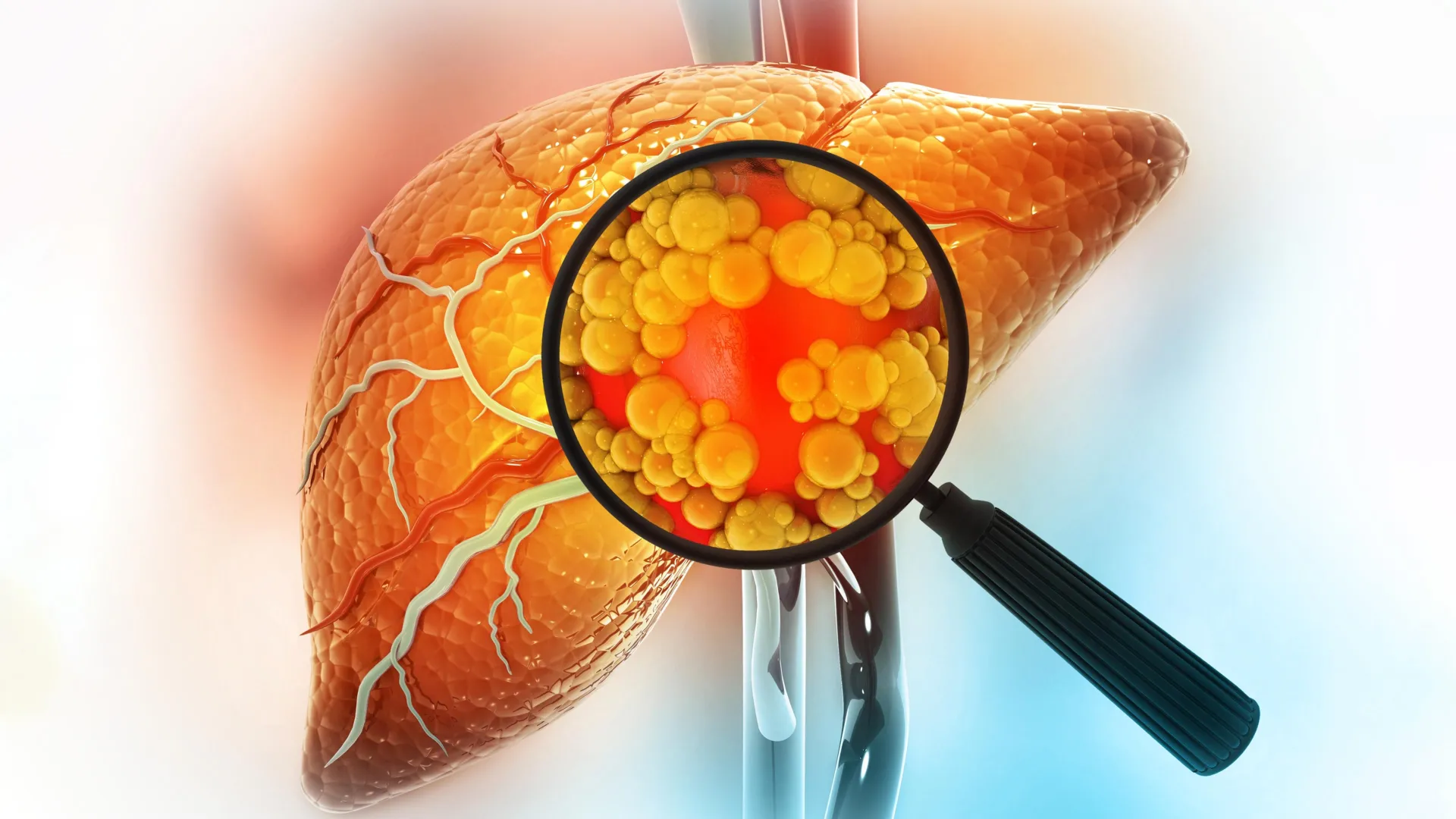
The Bacterium Behind the Curtain
The Michigan team's discovery began with a question that sounds almost too simple: why does a disease of the liver so often show up alongside disruption in the gut?
The answer they landed on involves a bacterium most people have never heard of: Clostridium perfringens. In MASH patients and animal models alike, the researchers found this bacterium tends to overgrow in the gut, and in doing so, it generates ammonia as a byproduct. That ammonia doesn't stay contained — it damages the intestinal lining, degrading what's known as the gut epithelial barrier, the thin wall of cells that normally keeps the contents of the intestine separated from the bloodstream.
Once that barrier is compromised, harmful microbial products — including more of that ammonia, along with other toxic byproducts of gut bacteria — leak into systemic circulation and travel straight to the liver, which is the first organ downstream of the gut in the body's blood supply. There, researchers believe, this steady drip of microbial toxins fuels the inflammation and cellular damage that define MASH.
"We see clear evidence that DT-109 protects the gut epithelial barrier, reducing the systemic influx of harmful microbial products that are thought to contribute to MASH development and progression," said Dr. Eugene Chen, the study's senior author and the Frederick G. L. Huetwell Professor of Cardiovascular Medicine at the University of Michigan Medical School.
In the animal studies, DT-109 reduced the population of Clostridium perfringens in the gut, cut down the ammonia it was producing, and measurably strengthened the intestinal barrier. The downstream effect was a reduction in liver inflammation and a significant improvement in MASH severity — not just a slowing of the disease, but a reversal of damage that had already occurred.
Why the Primate Data Matters So Much
Mouse studies are the routine first stop for experimental drugs, and DT-109 cleared that bar. But it's the nonhuman primate results that have researchers especially encouraged, for a simple reason: mouse gut microbiomes and liver metabolism differ from human biology in ways that have sunk plenty of promising rodent-stage drugs before they ever reached a human trial. Primates are a much closer proxy.
That the compound performed well in primates — reducing liver inflammation and improving MASH severity in animals whose gut bacteria and liver physiology track closely with our own — gives the Michigan team a stronger basis than usual for optimism heading toward the next stage of testing. This isn't DT-109's first appearance in the literature, either; the same compound has previously shown promise in nonhuman primates against atherosclerosis and vascular calcification, suggesting the tripeptide may have a broader metabolic footprint beyond the liver alone, potentially tackling the cardiovascular complications that so often travel alongside fatty liver disease in the same patients.
What This Means for You
If you've never heard the term MASH before, you're not alone — but you may already be at risk without knowing it. Because early-stage fatty liver disease typically causes no symptoms, most people who have it are unaware, and it's often discovered incidentally, through routine bloodwork showing elevated liver enzymes or imaging done for an unrelated reason.
The people at highest risk are those with obesity, type 2 diabetes, high cholesterol, or metabolic syndrome more broadly — the same cluster of conditions driving so much of modern chronic disease. If that describes you or someone in your family, experts generally recommend talking to a doctor about liver function screening, particularly if routine bloodwork has ever flagged elevated liver enzymes.
DT-109 itself is still firmly in the experimental pipeline. It has not been tested in human clinical trials, and the Michigan team's next step will be pursuing that transition from animal models to human studies — a process that typically takes years and is far from guaranteed to succeed, even with strong preclinical data. Patients living with MASH today should not expect access to this specific compound anytime soon, and should continue working with their doctors on the treatment options currently available, including Rezdiffra where appropriate, along with the foundational lifestyle interventions — weight loss, exercise, and dietary changes — that remain the backbone of MASH management regardless of what medications are added on top.
What the study does offer, right now, is a genuinely new way of thinking about a disease that has stumped drug developers for years: instead of only chasing the liver itself, look upstream, at the gut bacteria quietly feeding it poison one meal at a time.
The Road Ahead
The MASH drug landscape has been one of pharma's most notoriously difficult frontiers — littered with high-profile trial failures over the past decade before Rezdiffra finally broke through in 2024. A therapy that works through an entirely different mechanism, targeting the gut-liver axis rather than the liver in isolation, would represent a genuinely novel category rather than a me-too competitor.
That's still a big "if." Preclinical success, even in primates, is not the same as clinical success in humans, and the history of liver disease drug development is littered with compounds that looked spectacular in animal models and then failed to replicate those results in people. But for a disease affecting an estimated one in three people on the planet, with treatment options that can currently be counted on one hand, a new mechanism worth chasing is itself a headline. The Michigan team's next moves — securing funding, designing a Phase 1 human safety trial, and recruiting the first patients — will determine whether DT-109 becomes the second drug in MASH's short treatment history, or another promising compound that didn't survive the leap from lab to clinic.



