KAMPALA
While Kenya and Nigeria dominate Africa's tech headlines, Uganda has spent the past two years building the less glamorous foundations of a digital economy: a state-backed fiber backbone, a national biometric ID system, and a fintech and agritech scene that is quietly compounding. None of it generates Lagos or Nairobi valuations, but together these pieces are reshaping how 49 million Ugandans access money, services, and markets—while exposing the risks of building digital infrastructure faster than the governance to match it.
A State-Built Fiber Backbone, Phase Five
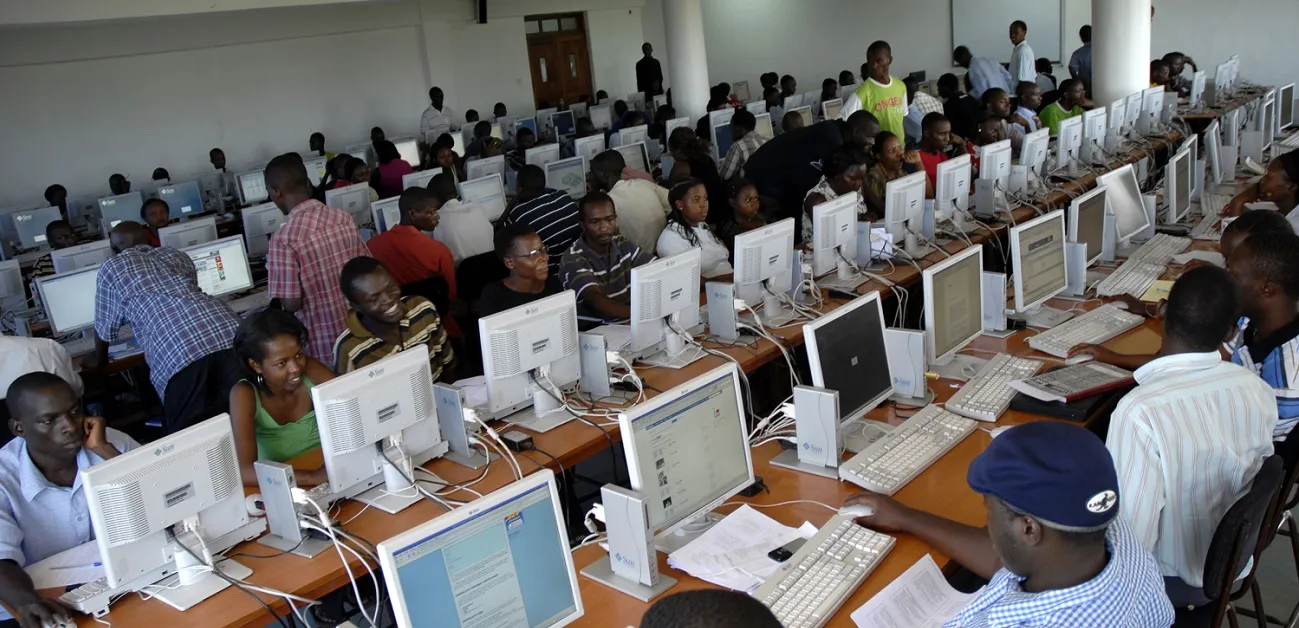
Uganda's National Backbone Infrastructure (NBI) project, financed by China's Ex-Im Bank and built by Huawei, entered its fifth construction phase in December 2024 and continued through 2026. The first four phases laid 4,172 kilometers of fiber across 63 districts and installed 526 public Wi-Fi sites, covering roughly 50% of the country. Wholesale bandwidth has dropped from over $1,000 per megabit per second a decade ago to roughly $35 today, with officials projecting a further drop to around $15 as phase five extends into remote districts.
The current phase carries $150 million in committed investment, with parallel funding from the World Bank and African Development Bank. Foreign direct investment in digital infrastructure is estimated at over $500 million for 2026. For a landlocked economy where bandwidth cost has historically constrained everything from call-center outsourcing to e-commerce logistics, the backbone's expansion is less a tech story than an industrial-policy one—cheaper bandwidth as the precondition for fintech, agritech, and digital-government services layered on top.
Ndaga Muntu: Biometric Identity at Scale, and at a Cost
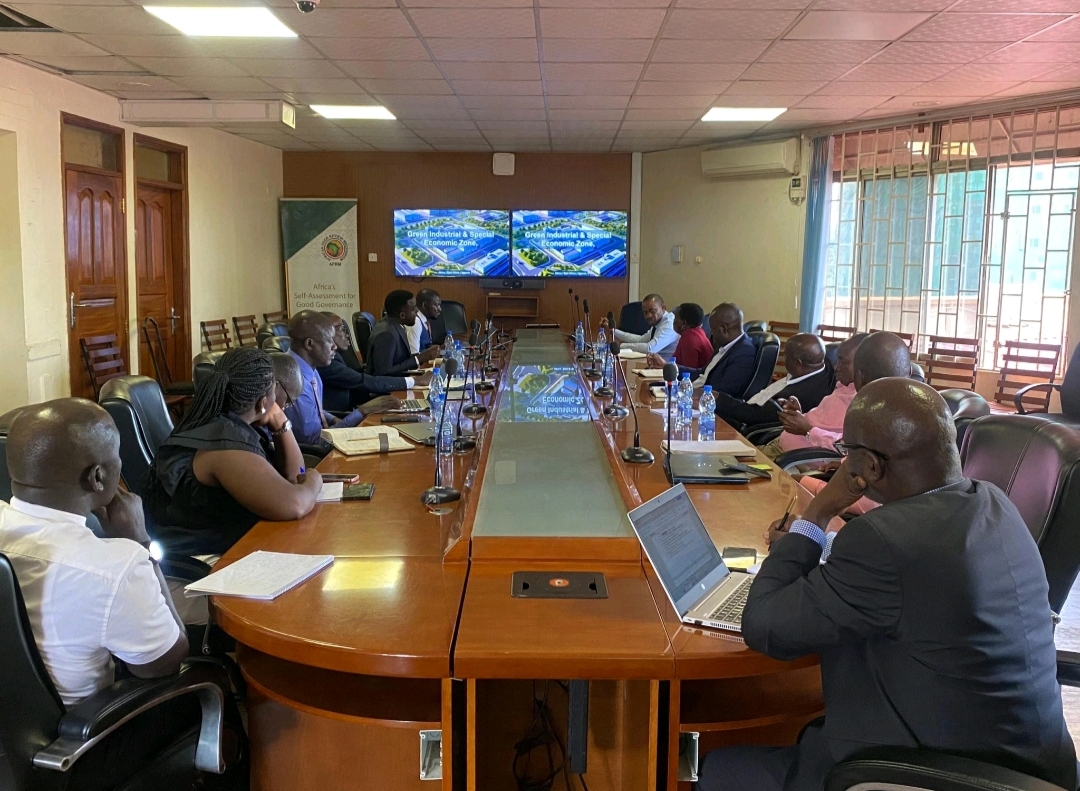
Uganda's national digital ID program, Ndaga Muntu, run by NIRA, has been mid-rollout since 2024. NIRA distributed over 5,665 biometric registration kits as part of the 2024-2026 enrollment drive, and in March 2026 began deploying upgraded IriTech kits adding iris-scanning via the IriShield BK binocular scanner—a response to fingerprint failure rates among elderly residents and manual laborers.
Ndaga Muntu has also become a cautionary tale. Uganda's Initiative for Social and Economic Rights (ISER) has documented legal challenges over exclusion: citizens unable to obtain an ID—and therefore unable to access SIM registration, banking, or social protection—have taken the matter to court. Digital-rights researchers at CIPESA have flagged the program as an example of poorly sequenced infrastructure deepening exclusion even as it claims to expand access. In response, Uganda launched a National Call for Innovators in May 2026, inviting developers and startups to submit prototypes for government digital services—an attempt to widen beyond a single state contractor who builds the country's digital infrastructure. The application window closed June 1, 2026.
Mobile Money: From Payments Layer to Revenue Battleground
Mobile money remains the backbone of everyday Ugandan finance. MTN Mobile Money alone moved an average of UGX 435 billion daily in 2024—about UGX 159 trillion (over $40 billion) for the year—dwarfing formal banking volumes. MarkWide Research values Uganda's mobile money market at $920.5 million in 2026, projecting $2.64 billion by 2035 at a 12.4% CAGR, as services move beyond P2P into merchant payments, savings, and cross-border remittances.
That growth is attracting infrastructure-layer entrants. Kampala-based MAM Telecom is building a payment and settlement stack targeting agent liquidity management, PSP settlement rails, and merchant support, with an eye on East African expansion. Uganda's central bank has opened a regulatory sandbox to attract fintech founders—part of an effort to formalize a sector that tax authorities are now actively working to capture.
Agritech: Digitizing the Smallholder Supply Chain
Agriculture still employs the majority of Ugandans, and 2026 has brought visible momentum. Kampala-based Essymart announced in January 2026 that it had expanded to over 5,000 smallholder farming households across eastern Uganda, providing digital access to inputs, extension advice, and markets; participating farmers reported income increases of up to 45%. Renew Capital has backed agritech ventures including Akellobanker and Xente, part of a pattern where international VCs—Knife Capital, TLcom, Partech—have opened local offices and led Series A rounds totaling roughly $34 million across a dozen Ugandan startups.
More broadly, Uganda's tech ecosystem attracted $67 million in 2024, a 145% jump, with 234 new tech startups registered—roughly 78% in fintech, agritech, and healthtech. Around 45% of Kampala startups reach profitability within 18 months, well above the global average of 28%—a sign that Uganda's tech sector, while smaller, is not simply burning VC cash to chase growth.

AI Policy Catches Up to the Infrastructure
Uganda's National Fourth Industrial Revolution (4IR) Strategy, first adopted in 2020, continues to anchor AI policy, with the Ministry of ICT pushing in 2026 to translate it into an operational National AI and Emerging Technologies Strategy. In May, the ministry convened a National Stakeholders Dialogue on UNESCO's AI Readiness Assessment Methodology, evaluating Uganda's capacity for AI governance. Uganda was also named among the first cohort of countries in UNESCO's Global Skills Academy, expanding AI curricula across the TVET system. Separately, the ICT ministry has piloted a homegrown AI language model project for local-language NLP—an area where most commercial tools remain weak for Ugandan languages.
The Bigger Picture
None of Uganda's individual initiatives—a state-run fiber backbone, a contested ID system, a growing mobile money market, a capital-efficient startup scene, or an emerging AI framework—would make headlines alone. Together, they describe a country deliberately laying digital plumbing before chasing unicorn valuations. The unresolved question, underscored by the Ndaga Muntu exclusion disputes, is whether Uganda can build that plumbing fast enough to capture the economic upside without leaving behind the citizens least equipped to navigate biometric registration and digital onboarding in the first place.
Published By | Features Editor