Written By | International News Desk
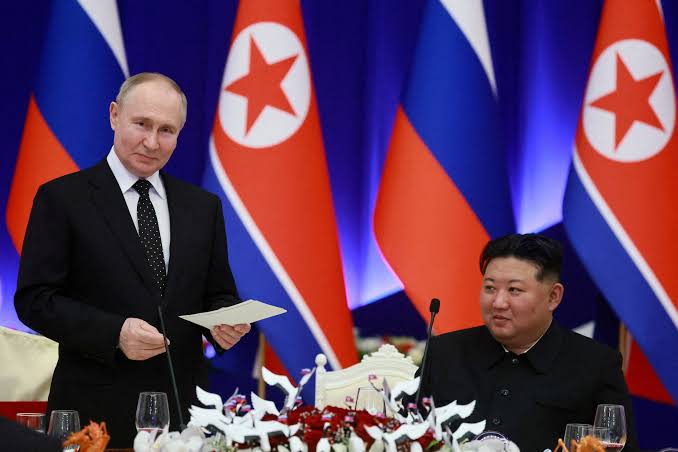
The turning point came in June 2024, when Vladimir Putin traveled to Pyongyang for a summit with Kim Jong Un, the first visit by a Russian leader to North Korea in nearly a quarter-century
Background
North Korea's relationship with Russia has been transformed since Moscow's full-scale invasion of Ukraine in 2022, evolving from a relatively distant, sanctions-constrained partnership into what both governments now describe as a comprehensive strategic alliance. The turning point came in June 2024, when Vladimir Putin traveled to Pyongyang for a summit with Kim Jong Un, the first visit by a Russian leader to North Korea in nearly a quarter-century. The two signed a Comprehensive Strategic Partnership Treaty that included a mutual-defense clause, obligating each side to provide assistance if the other faced armed aggression — language reminiscent of Cold War-era Soviet-North Korean agreements that had lapsed in the post-Soviet period.
That treaty has since been operationalized in a way few analysts expected so quickly. North Korea deployed an estimated 14,000 soldiers to Russia's Kursk region to help repel a Ukrainian incursion, a deployment both governments initially declined to confirm but ultimately acknowledged officially in April 2025. Putin praised the North Korean troops as “heroic,” and Kim announced plans for a monument in Pyongyang commemorating the Kursk campaign. Beyond troops, North Korea has supplied artillery shells, ballistic missiles, and other weapons systems that have materially supported Russia's war effort, in exchange for what Western intelligence agencies and independent analysts believe includes Russian technology transfers touching satellite, missile, and possibly submarine programs. The relationship has also unfolded against a wider backdrop of realignment: Kim held a summit with Chinese leader Xi Jinping in Beijing in June 2026, prompting commentary that Pyongyang is now actively balancing—and being courted by—both of its major power patrons simultaneously.
The partnership carries risks and benefits for both sides that go beyond the battlefield. For Russia, North Korean manpower and munitions have provided a relatively low-cost supplement to a war effort strained by manpower shortages and Western sanctions on its defense-industrial base, while North Korean workers have also been reported inside Russia in construction and other labor roles tied to the broader cooperation agreement. For North Korea, the relationship offers something Kim has sought for years: legitimacy as a great-power partner rather than an isolated pariah state, combat experience for its military under modern conditions, hard currency, food and energy assistance, and — according to Western officials and independent researchers — access to Russian technical expertise that could accelerate North Korean missile, satellite, and potentially submarine-based weapons programs. That technology dimension is precisely why the relationship draws such close scrutiny in Seoul, Tokyo and Washington, since any meaningful upgrade to North Korea's strategic weapons capability would alter the security calculus on the Korean Peninsula regardless of how the war in Ukraine itself concludes.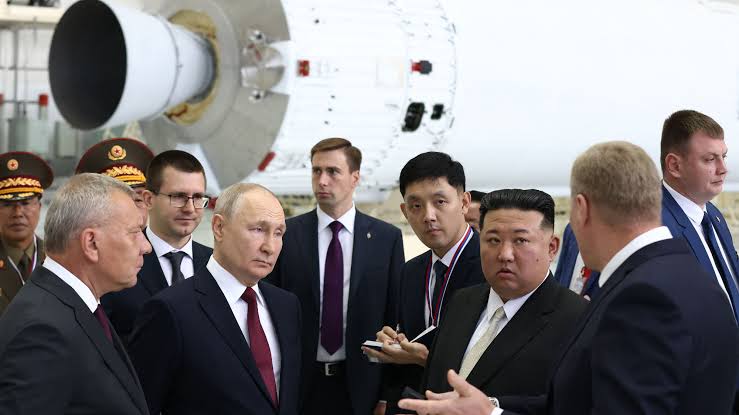
Key Developments
The latest chapter unfolded this past week in Moscow. North Korean Foreign Minister Choe Son Hui arrived in the Russian capital on Friday, July 17, at the invitation of her counterpart, Sergei Lavrov. She met with Vladimir Putin inside the Kremlin on Sunday, July 19, and then held a formal “strategic dialogue” with Lavrov on Monday, July 20 — the third such dialogue between the two foreign ministries. According to North Korea's state news agency KCNA, the talks covered implementation of the 2024 partnership treaty, plans for further high-level visits, “multi-faceted cooperation,” and diplomatic coordination on international issues of shared concern, with both sides saying they reached “consensus on all the issues brought up for discussion.”
The language each side used afterward was notably reciprocal and expansive. Russia voiced “full support” for North Korea's efforts to defend its sovereignty against what Moscow characterized as “hostile” threats — an implicit reference to the United States, South Korea, and Japan. North Korea, for its part, expressed “invariable support for all the internal and external policies of the Russian Federation to eliminate the root cause of the Ukrainian dispute,” effectively endorsing Moscow's framing of the war. During the Kremlin meeting, Putin specifically thanked Pyongyang for its military assistance in retaking Kursk and said Russia would not forget the North Korean soldiers' service.
What has drawn the most attention from Korea-watchers, however, is less what was said than the fact that the visit happened at all without an obvious triggering occasion — no multilateral summit, no treaty anniversary, no state visit milestone. That absence of a clear pretext is precisely why analysts believe Choe's trip functioned as advance diplomatic groundwork, most likely for a visit to Russia by Kim Jong Un himself later this year. Kim last traveled to Russia in September 2023 for a summit with Putin at the Vostochny Cosmodrome in the Russian Far East, and Putin reciprocated with his June 2024 Pyongyang trip; the two leaders have since maintained what has effectively become an annual summit rhythm, and Putin is understood to have renewed his invitation for Kim to visit again during the 2024 meeting.
Reactions
South Korea's government has responded cautiously. Yoon Min Ho, spokesperson for Seoul's Unification Ministry, which handles North Korea policy, said on Monday that the South was “closely monitoring” the Moscow meetings but declined to assess whether the two sides were actively negotiating the specifics of a Kim-Putin summit. Regional analysts have offered more pointed interpretations. Hong Min, a senior research fellow at the Korea Institute for National Unification, argued that the visit lets Pyongyang send “a strategic signal to both China and the United States” by demonstrating that its partnership with Russia remains firmly intact, even as North Korea simultaneously cultivates its relationship with Beijing.
The broader response from South Korea and its allies has taken the form of accelerated defense cooperation rather than direct commentary on the Moscow talks. At the NATO summit held in Ankara on July 7-8, South Korean President Lee Jae Myung pushed to deepen Seoul's institutional ties with the alliance, proposing what he termed a “Korea-NATO Defense Industry Partnership 2.0” encompassing joint defense research, joint production, and shared operational capabilities. While not explicitly framed as a response to the deepening Russia-North Korea axis, the timing and substance of Lee's proposal reflect a widely shared view among South Korean and NATO officials that the Moscow-Pyongyang alignment — layered on top of North Korea's continuing missile and nuclear programs — represents a long-term security challenge requiring closer coordination between European and Northeast Asian partners. Japan and the United States have not issued detailed public statements specifically on this week's Choe-Lavrov-Putin meetings, though both governments have repeatedly flagged North Korean troop deployments to Russia and associated technology transfers as a top-tier security concern in recent policy statements.
What's Next
The immediate question is whether Choe's visit produces a concrete date for Kim Jong Un to travel to Russia, which would mark his first trip there since the September 2023 summit and would be closely watched for any indications of new commitments — additional troop deployments, expanded weapons transfers, or fresh Russian technology assistance to North Korea's missile and satellite programs. Given the established pattern of roughly annual Putin-Kim meetings, a summit later in 2026 would be broadly consistent with precedent, though neither government has confirmed a date or venue.
More broadly, the trajectory of the Russia-North Korea relationship will continue to be read by Seoul, Tokyo, and Washington as a barometer of a wider strategic realignment involving Russia, China, and North Korea, unfolding at the same time as separate, unrelated crises — including the ongoing U.S.-Iran conflict and instability in the Middle East — are already straining Western diplomatic and military bandwidth. South Korea's push for deeper NATO defense-industrial ties suggests that regional and European security planning is increasingly being conducted with this axis in mind, even absent any single dramatic announcement. For now, the practical marker to watch is simple: whether Kim Jong Un's travel calendar produces a trip to Moscow in the coming months, which would convert this week's ministerial-level diplomacy into the kind of leader-level summit that has, in the past, coincided with major shifts in North Korea's military support for Russia's war.
Analysts will also be watching whether Pyongyang uses any forthcoming summit to extract further concessions from Moscow beyond food, fuel, and cash — particularly around sanctions relief at the United Nations, where Russia holds a Security Council veto it has already used to shield North Korea from additional censure over its missile tests. A renewed or expanded troop and equipment commitment tied to a Kim visit would also raise the question of how sustainable North Korea's contribution to Russia's war effort remains, given reported casualties among the roughly 14,000 soldiers sent to Kursk and the strain that extended deployments abroad place on a North Korean military that must also maintain readiness on its own heavily fortified border with South Korea. Whatever the outcome, this week's Moscow meetings make clear that, more than three years into the war in Ukraine, the Russia-North Korea relationship has moved well past a wartime expedient and is being treated by both governments as a durable strategic pillar.



