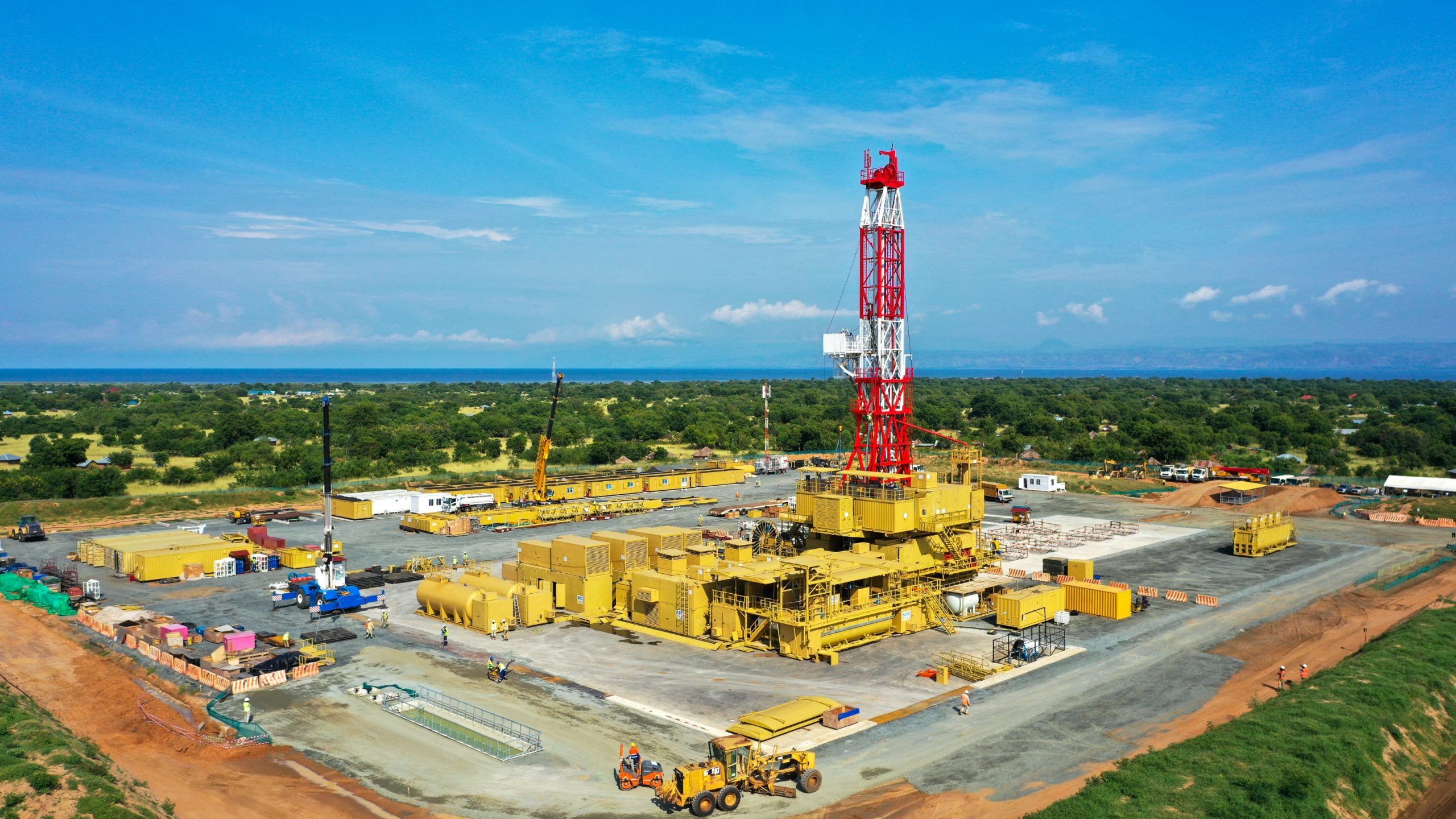
Uganda's government is projecting economic growth of 10.2 percent for the 2026/27 financial year, which would mark the country's fastest expansion in more than three decades, as long-delayed commercial oil production is finally set to begin. The forecast, laid out by Finance Minister Henry Musasizi when he presented the country's largest-ever national budget in June, has become the organizing narrative for Uganda's economic policy this year, shaping everything from budget priorities to a running dispute between the president and Parliament over tax legislation.
A Record Budget Built Around Oil
Musasizi presented the Shs84.4 trillion budget for the financial year that began in July 2026, describing it as anchored on oil revenues, infrastructure development, agriculture and industrial expansion. The resource envelope is drawn from a mix of sources: domestic revenue of roughly Shs45.96 trillion, domestic borrowing of about Shs11.97 trillion, debt refinancing of Shs13.97 trillion, external budget support of Shs1.22 trillion and project financing of Shs11.27 trillion. Government officials and local media have flagged a projected oil revenue windfall of roughly Shs1.44 trillion as commercial production ramps up, a figure that, while modest relative to the overall budget, is treated domestically as the first tangible fiscal dividend from a project that has been in development for close to two decades since major discoveries were confirmed in the Albertine Graben region near Lake Albert.
The 10.2 percent growth projection for FY2026/27 follows a solid, if less spectacular, performance in the year just ended: the economy expanded 6.4 percent in FY2025/26, according to the Ministry of Finance's June performance report, up slightly from 6.3 percent the prior year. Officials attribute that momentum to resilient domestic demand, improved business activity, and continued rollout of government programs such as the Parish Development Model and lending through the Uganda Development Bank, alongside investment across the government's ATMS priority sectors — agro-industrialization, tourism, minerals, and science and technology.
Signs of Macroeconomic Strength
Beyond the headline growth figures, several other indicators point to a broadly stable macroeconomic picture heading into the oil era. The Ministry of Finance and the central bank have both highlighted that inflation remains under control, the Ugandan shilling has held stable against major currencies, and export earnings have hit record levels this year. Uganda recorded a Balance of Payments surplus of $2.47 billion in the twelve months to March 2026, described by officials as the largest such surplus in fifteen years, driven by strong export performance and continued inflows of foreign investment.
Credit conditions have also loosened somewhat: average lending rates have edged down as lower inflation, a stable exchange rate and ample liquidity in the banking sector reduce borrowing costs for businesses and households, and outstanding private sector credit expanded to Shs26.72 trillion, driven mainly by increased lending to the manufacturing and trade sectors. Separately, the UK's export credit agency, UKEF, has backed a €193 million loan for a major agricultural project in Uganda, a sign that international financing continues to flow into the country's priority sectors even as global conditions remain uneven; officials have specifically noted that Uganda's economy grew despite supply-chain disruption linked to tensions in the Middle East over the past year.

Uganda's policy establishment used the mid-July CPA Economic Forum, held in Kampala from July 15 to 17 under the theme "Powering Uganda's US$500 Billion Future," to make the case publicly that the country is entering a new phase of economic transformation. Professionals and policymakers at the forum discussed how agro-industrialization, tourism, mineral development and science-and-technology investment could combine with oil revenues to push Uganda toward a $500 billion economy over the coming years — a long-term ambition officials have referenced repeatedly in budget and investment messaging this year. High-frequency indicators presented around the forum pointed to rising investor confidence, with an average return on investment cited at roughly 14 percent.
A Presidential Check on Parliament's Tax Plans
Even as the growth story dominates the official narrative, a parallel fight over tax policy has exposed friction between the executive and the legislature. In mid-July, President Museveni declined to assent to two pieces of tax legislation passed by the outgoing 11th Parliament ahead of the new financial year: the Income Tax (Amendment) Bill, 2026, and the Excise Duty (Amendment) Bill, 2026, sending both back to Parliament for reconsideration.
On the income tax bill, Museveni objected to a clause exempting land-based casinos from withholding tax on winnings, warning that the carve-out could encourage businesses to restructure transactions specifically to avoid tax obligations, opening the door to revenue leakage. On the excise duty bill, Parliament had approved a steep increase in the levy on single-use plastics — from the current 2.5 percent or $70 per tonne to 25 percent or $1,500 per tonne, whichever is higher — a change intended to curb plastic pollution and align with environmental goals. Museveni agreed with the underlying environmental objective but argued the size of the increase was too aggressive and risked unintended economic consequences for manufacturers and consumers alike, effectively asking Parliament to find a middle path between environmental ambition and cost of living pressure.
The episode is a reminder that even amid an optimistic growth narrative, Uganda's revenue-raising machinery remains a site of real negotiation rather than rubber-stamped consensus — a dynamic that will matter increasingly as the government looks to translate oil windfalls and a widening tax base into the domestic revenue it needs to fund an Shs84 trillion-plus budget without over-relying on borrowing.
Why It Matters
For a country that has waited since the mid-2000s for its oil resources to translate into fiscal reality, the start of commercial production carries outsized symbolic and practical weight. A sustained double-digit growth rate would be a marked change from Uganda's recent historical average and would give the government significantly more room to fund infrastructure, health and education commitments without further straining public debt, which has grown substantially over the past decade as successive governments borrowed to finance oil-sector infrastructure, road construction and the East African Crude Oil Pipeline. At the same time, resource-driven growth carries well-documented risks — revenue volatility tied to global oil prices, currency effects from large capital inflows, and governance challenges around how windfall revenue is spent — that Uganda's institutions will be tested on in the years immediately ahead.
What to Watch Next
Over the coming months, the most concrete markers to watch will be the actual start date and initial output levels of commercial crude production, and whether the Shs1.44 trillion oil revenue estimate embedded in the budget materializes as forecast. On the tax front, it remains to be seen how Parliament responds to Museveni's objections and whether a revised version of the income tax and excise duty bills clears before the fiscal year is well underway. More broadly, analysts and multilateral lenders such as the World Bank and African Development Bank are likely to scrutinize whether the 10.2 percent growth projection holds up against global oil price volatility and whether the proceeds from Uganda's new oil wealth visibly translate into public investment, or instead become a point of political contention over transparency and allocation — a debate that has accompanied nearly every African oil discovery of the past two decades.
Published By | News Editor