Written By | News Agencies
Guinea-Bissau's instability did not begin with this coup
BISSAU
Nine months after soldiers overthrew Guinea-Bissau's government a day before contested election results were due, the military junta running the West African nation has set Aug. 30 as the date for a referendum that would fundamentally rewrite the country's constitution — handing sweeping new authority to the presidency before voters even choose who holds that office. The referendum, confirmed by transitional president Gen. Horta N'Tam in a decree issued after a favorable opinion from the Supreme Court, asks Guinea-Bissauans to approve a shift from the country's parliamentary system to a presidential one, allowing the head of state to unilaterally appoint the prime minister and Cabinet and to dissolve parliament. It is scheduled just over three months before the general elections meant to restore civilian rule, on Dec. 6 — meaning whoever wins the presidency in December could inherit powers well beyond those exercised by any of Guinea-Bissau's elected leaders in recent memory.
From Contested Election to Military Rule
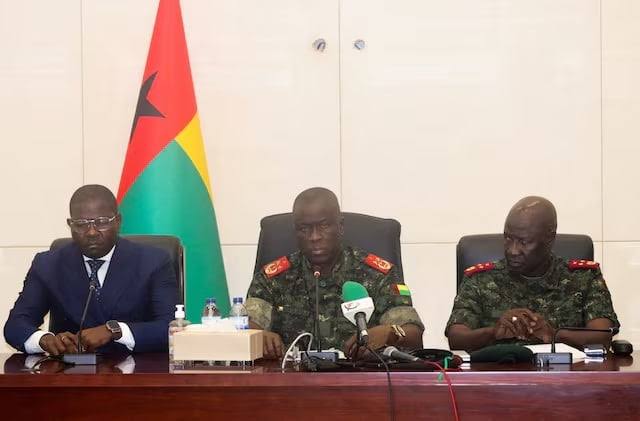
The crisis began Nov. 26, 2025, when army officers calling themselves the Military High Command seized power just a day before the electoral commission was set to announce results of a presidential election held days earlier. Both incumbent President Umaro Sissoco Embaló, who was seeking a second term, and opposition candidate Fernando Dias had claimed victory. The military said it acted to "avoid a bloodbath" between rival camps of supporters. Embaló was toppled, the electoral process was suspended, and Maj. Gen. Horta N'Tam — sometimes referred to in earlier reporting as Horta Inta-a — was installed the following day as transitional president for what the junta described as a one-year mandate.
A transitional charter published in early December 2025 explicitly barred N'Tam from running in whatever election eventually followed, an attempt to preempt accusations that the coup was a vehicle for personal power. On Jan. 21, 2026, the junta issued a decree setting Dec. 6, 2026, as the date for combined presidential and legislative elections — the first official electoral timetable since the coup, announced days after a visit to Bissau by a delegation from the Economic Community of West African States (ECOWAS) led by Sierra Leone's President Julius Maada Bio, the bloc's chairperson, and Senegal's President Bassirou Diomaye Faye. The two leaders pressed junta officials for what they called a "short, structured and transparent transition."
Guinea-Bissau's instability did not begin with this coup. The country, which gained independence from Portugal in 1974, has endured five military takeovers and numerous attempted coups since then, one of the least stable records of any state in West Africa. Embaló himself had ruled increasingly by decree in his final years in office, notably dissolving an opposition-dominated parliament in December 2023 rather than govern alongside a hostile legislative majority — a precedent that some Guinea-Bissauan observers now cite uneasily as they assess the junta's own push to concentrate power in the presidency.
What the Referendum Would Change
The proposed constitutional amendment, approved by the junta and endorsed by the Supreme Court, would end the practice, in place since independence, of the prime minister being drawn from parliament's majority party or coalition — an arrangement that produced years of unstable coalition governments but also gave the legislature a check on executive authority. Under the new system, the president would appoint the prime minister and Cabinet directly and would gain the power to dissolve parliament, mirroring presidential systems found elsewhere in the region and giving the office far greater unilateral control over the machinery of government. Voters will be asked to approve or reject this change on Aug. 30, five months before whoever wins December's presidential election would take office under the new rules — assuming the referendum passes and the December vote proceeds as scheduled.
The timing has drawn scrutiny because it places the fundamental architecture of Guinea-Bissau's post-coup political system in the hands of a junta-controlled referendum process, before the civilian electorate has had any opportunity to elect a government under a normal legislative and constitutional order. Critics of similar maneuvers elsewhere in Africa — most recently in Togo, where ECOWAS's regional court ruled constitutional changes unconstitutional, and in Zimbabwe, where the Senate approved extending the president's term — have warned that referendums conducted under military or single-party control tend to be structured to guarantee the desired outcome rather than to test genuine public sentiment. Guinea-Bissau's junta has not detailed independent oversight mechanisms for the Aug. 30 vote, though it has said "all the conditions for organizing free, fair and transparent elections have been met," according to N'Tam's public remarks accompanying the December election decree.
Regional Forces Deploy as Stabilization Effort
As the political calendar unfolds, West African regional forces have begun arriving in the country under the ECOWAS Stabilisation Support Mission in Guinea-Bissau (ESSMGB), which succeeds the earlier ECOWAS Mission in Guinea-Bissau (ECOMIB) that had been deployed following the country's 2012 coup. On Aug. 2, the Nigerian Air Force airlifted the first batch of 86 Nigerian troops — 12 officers and 74 soldiers — from Nnamdi Azikiwe International Airport in Abuja aboard a C-130 Hercules aircraft, marking Nigeria's latest contribution to a mission intended to support security-sector reform and preserve political stability through the transition period. Nigeria has historically been among the largest troop contributors to ECOWAS peace-support operations across West Africa, including in Liberia, Sierra Leone and The Gambia, and its early commitment of forces signals the bloc's determination to keep close watch on Guinea-Bissau's transition even as it stops short of directly intervening in the junta's domestic political maneuvering.
The Political Stakes
The referendum represents a pivotal test of whether Guinea-Bissau's coup leaders intend to hand back genuine civilian authority in December or to first reshape the presidency into an office powerful enough to dominate whatever government follows — regardless of who wins. Because N'Tam himself is barred from standing in the December election, the immediate personal stakes for the transitional leader are lower than in many coup scenarios elsewhere on the continent. But the structural stakes for Guinea-Bissau's democracy are arguably higher: if voters approve the shift to a presidential system on Aug. 30, the December winner — whoever that is — would take office with the unilateral power to appoint the government and dissolve parliament, sharply reducing the legislature's traditional role as a check on the executive just as the country attempts to rebuild trust in its institutions after a coup.
Opposition figures and civil society groups in Bissau have not yet mounted a unified public response to the referendum date, though the pattern is one regional observers know well: proposed constitutional changes that concentrate executive power are frequently framed by their proponents as measures to end chronic governmental instability — Guinea-Bissau's coalition governments have indeed been notoriously fragile — while critics see them as opportunities to entrench whoever eventually controls the presidency, coup leaders or their allies included.
The comparison regional analysts reach for most often is Senegal, where a 2024 push by then-President Macky Sall's camp to delay elections and a subsequent constitutional reform curbing presidential powers drew sustained public pushback and, eventually, court intervention. Guinea-Bissau's case runs in the opposite direction — expanding, rather than curbing, presidential authority — and does so without the benefit of a sitting elected legislature to debate the change, since the parliament Embaló dissolved in December 2023 was never reconstituted before the coup. That absence of an institutional counterweight means the referendum campaign itself, in the five weeks between now and Aug. 30, will likely be the only real public forum in which Guinea-Bissauans can contest the substance of the change before it potentially becomes binding.
Fernando Dias, the opposition candidate whose contested November 2025 candidacy helped trigger the coup, has kept a relatively low public profile since Embaló's ouster, and it remains unclear whether he intends to contest December's presidential election or how he views the proposed shift to a presidential system that would substantially reshape the office he was seeking. His positioning — and that of any other declared candidates — over the coming weeks will offer an early signal of whether Guinea-Bissau's fractured political class views the referendum as a genuine threat to democratic norms or as a rule change most are prepared to accept in exchange for a firm date to finally hold elections.
What to Watch
The coming weeks will test both the credibility of the Aug. 30 referendum process and ECOWAS's willingness to press the junta on it. Key questions include whether the junta permits genuine public debate and independent monitoring of the referendum campaign; whether ECOWAS, having already pushed successfully for a defined election date, will now weigh in on the substance of the constitutional change itself; and whether Fernando Dias — the opposition candidate whose contested November 2025 candidacy helped trigger the coup — or other political figures emerge as declared candidates for the December presidential race. The outcome of the Aug. 30 vote will likely determine not just the balance of power in Guinea-Bissau's next government, but the credibility of the broader transition that ECOWAS and the international community have invested significant diplomatic capital in overseeing.



