Written By | News Agencies
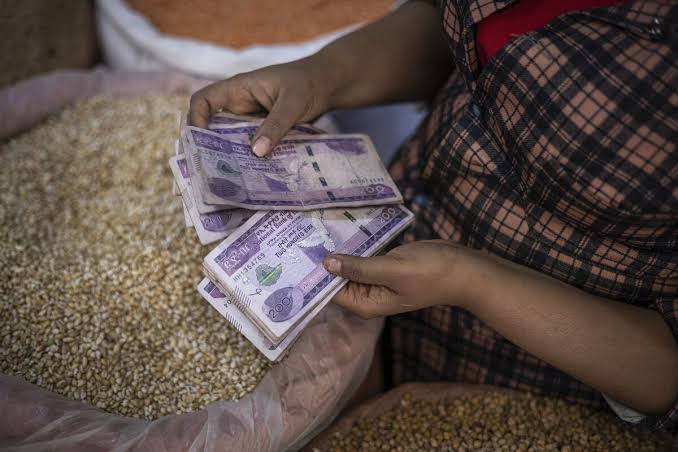
Despite the currency turbulence, Ethiopia's real economy has kept expanding at a pace few African economies can match
Economic & Social Transformation
Two years after Addis Ababa floated the birr and opened the door to the largest IMF program in the country's history, Ethiopia has become the paradox of African macroeconomics: a government running double-digit inflation and a rapidly weakening currency, while posting some of the fastest GDP growth on the continent. On July 1, 2026, the IMF Executive Board completed the fifth review of Ethiopia's four-year Extended Credit Facility (ECF) arrangement, unlocking roughly $464 million (SDR 342.05 million) in fresh disbursements and validating, at least in the Fund's eyes, a reform program that has reshaped the country's exchange rate, banking sector, and fiscal position since July 2024. The review is also a signal that the hardest political choice of the reform era — letting the birr trade freely rather than propping it up through administrative controls — has not derailed growth, even if it has not tamed prices either.
A Currency Float and an IMF Program Two Years In
Ethiopia's reform program traces back to July 2024, when the National Bank of Ethiopia abandoned its long-standing managed exchange rate and let the birr float, closing a gap between the official and black-market rates that had distorted trade, starved importers of hard currency, and fed a large parallel market. The move was a precondition for the IMF's $3.4 billion, four-year ECF arrangement approved that same month, alongside a companion Resilience and Sustainability Facility. Two years on, the currency has depreciated sharply: banks were quoting the birr near 151 to the US dollar by mid-2026, while the parallel market pushed above 180 birr per dollar in January 2026, according to IMF and market reporting compiled by financial outlets tracking the reform. Interbank foreign-exchange trading volumes have nonetheless deepened, surpassing one trillion birr in September 2025, evidence that a functioning interbank market — largely absent before the float — is taking shape.
The fifth ECF review, completed on July 1, 2026, followed a staff-level agreement reached on June 3, 2026, and came a day after what analysts described as Ethiopia's biggest monetary policy shift since the float itself, according to financial newsletter Birr Metrics. The IMF's own country report (No. 26/20) and subsequent statements frame the program's core objectives as restoring macroeconomic stability, rebuilding foreign reserves, and clearing the path for external debt treatment under the G20 Common Framework — a process still working through creditor negotiations with bilateral and commercial lenders.
Growth That Outpaces Nearly Every Peer
Despite the currency turbulence, Ethiopia's real economy has kept expanding at a pace few African economies can match. The African Development Bank's country outlook puts GDP growth at 7.8% in the 2025/26 fiscal year and 8.5% in 2026/27, crediting ongoing liberalization reforms, an anticipated external debt treatment, renewed donor and creditor financing, and a gradual reduction in internal conflict following the 2022 Pretoria peace agreement that ended the Tigray war. Separate United Nations Development Programme and IMF figures cited in mid-2026 reporting put growth for calendar 2025 closer to 9.8%, again the fastest pace in East Africa, ahead of Rwanda's 7.5% and Uganda's 6.4% for the same year — though estimates vary depending on whether they track the Ethiopian fiscal year (which runs July to June) or the calendar year, and whether they come from the IMF, the AfDB, or the World Bank. The IMF's own forecast trajectory has growth easing slightly to 7.1%–7.2% for 2025/26, still comfortably above the sub-Saharan African average of roughly 4%.
Inflation, meanwhile, remains the program's stubborn problem. Average inflation was expected to ease to around 11.7% from roughly 16% a year earlier, but the IMF has flagged that price pressures are proving stickier than hoped, with inflation forecast to tick back up to 12.3% in the 2026/27 fiscal year — keeping it well outside the Fund's preferred medium-term target range. That combination of high growth and high inflation is, in effect, the price Ethiopia is paying for unwinding years of currency overvaluation and monetary financing of the budget deficit, a practice the ECF program is explicitly designed to end.
Coffee, Still the Backbone of Export Earnings
Agriculture, and coffee in particular, remains the anchor of Ethiopia's external accounts and rural livelihoods. Ethiopia is the world's fifth-largest coffee producer and exporter, and the crop is still the country's number one export earner, historically accounting for 30% to 45% of total export revenue depending on the season and global price cycle; broader estimates put coffee's footprint at roughly 5% of GDP, 10% of agricultural output, and as much as 60% of export earnings in strong years. In the most recent full fiscal year for which detailed trade data has been published, Ethiopia earned about $1.3 billion from coffee exports on roughly 240,000 tonnes shipped abroad — a reminder that even as the government pursues industrial and services-led diversification, smallholder coffee farmers remain the single largest source of the foreign currency the IMF program is trying to help the country earn and retain.
The Grand Ethiopian Renaissance Dam: Power as a New Export
If coffee represents Ethiopia's traditional export economy, the Grand Ethiopian Renaissance Dam (GERD) represents its newest one. The $5 billion, 5.15-gigawatt hydropower project on the Blue Nile — Africa's largest hydroelectric facility and among the twenty largest in the world — was formally inaugurated in September 2025 after roughly fourteen years of construction, financed almost entirely through domestic bonds and public contributions rather than foreign loans. With the dam complete, Ethiopia has begun monetizing it directly: the country earned about $61 million from electricity exports to Djibouti, Sudan, and Kenya in 2025, and has signed a 25-year power purchase arrangement with Kenya starting at 200 megawatts and rising to 400 megawatts over time. The dam remains a source of regional friction — Egypt continues to view it as an existential threat to its Nile water security, and as of the 2025 inauguration, Addis Ababa, Cairo, and Khartoum had still not concluded a comprehensive, binding agreement on the dam's long-term filling and operation. For Ethiopia's economic planners, though, GERD is increasingly discussed less as a diplomatic flashpoint and more as a new, exportable revenue line to sit alongside coffee, textiles, and remittances.
Poverty, Inequality, and the Limits of Growth
The headline growth numbers sit uneasily alongside Ethiopia's social indicators. The national poverty rate stood at 27% in 2024, according to figures compiled in country risk assessments, while the Gini coefficient — a standard measure of income inequality — reached 0.455, indicating a meaningfully unequal distribution of the gains from a decade of rapid growth. Unemployment nationally was estimated at 8%, but youth unemployment was far higher, at 27.2%, underlining a demographic mismatch between Ethiopia's fast-growing working-age population and the formal jobs available to absorb it. The country's 2025 Human Development Index value remained low, at 0.497, a reflection of gaps in education, health, and income that growth alone has not closed. Earlier progress was more dramatic in percentage terms: poverty fell from 39% to 24% between 2004 and 2016, but multidimensional poverty — which captures deprivations in health, education, and living standards rather than income alone — still affected an estimated 68.7% of the population as of the most recent detailed assessment, with a further 18.4% considered vulnerable to falling into it. The government's current response leans on macroeconomic reform, expanded social protection, targeted safety-net programs, and agricultural resilience initiatives, but the scale of multidimensional poverty suggests these programs are working against a very large base.
Risks Ahead
Ethiopia's near-term outlook hinges on three linked variables: whether external debt treatment under the Common Framework concludes on terms that ease financing pressure without derailing creditor relations; whether inflation can be brought down without the government resorting to the kind of administrative price controls or monetary financing the ECF program is meant to prevent; and whether the still-fragile peace following the Tigray conflict holds, given the AfDB's explicit citation of reduced internal conflict as a growth driver. The World Bank's own telecom market assessment and other sector-specific reviews have separately flagged competition and governance concerns in state-linked enterprises, suggesting that liberalization pressures extend well beyond the exchange rate. For a government betting its growth model on continued reform, the fifth ECF review is less a finish line than a checkpoint — the sixth review, due later in the program's four-year arc, will test whether growth of 7–9% can coexist with inflation closer to the Fund's targets and a currency that has found a more durable equilibrium.



