Written By | Business Experts
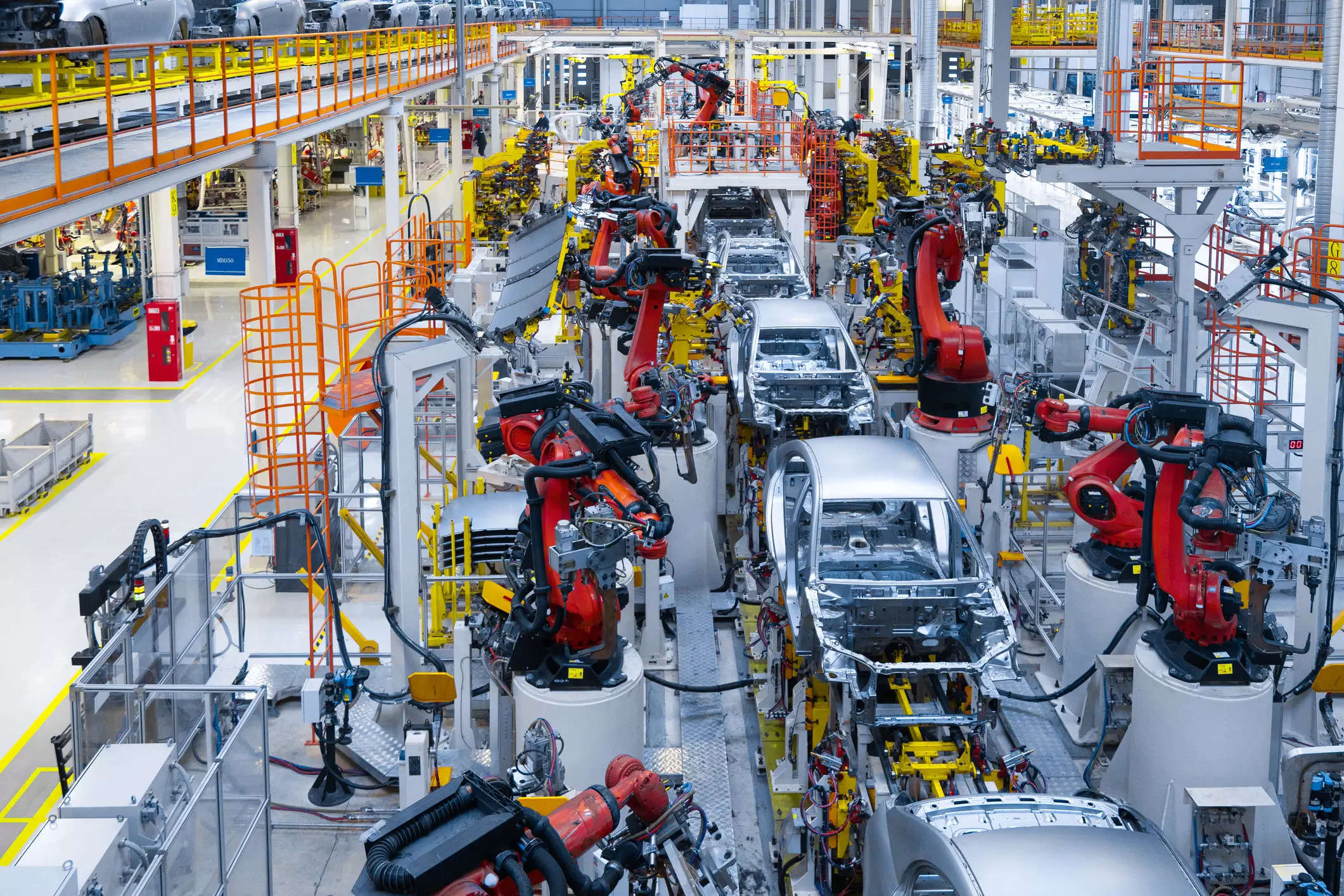
Morocco's automotive industry has become the clearest symbol of its industrial ambitions
Two decades ago, Morocco's economy was synonymous with phosphate rock, tourism, and remittances. Today, the kingdom has engineered one of the most deliberate industrial transformations on the African continent — building an automotive sector that rivals some European producers, doubling down on phosphate fertilizers that underpin global food security, and constructing one of the world's largest solar energy complexes. The result, visible in trade data and investment flows through the first half of 2026, is an economy diversifying away from commodity dependence even as it leans on its oldest export to fund the next phase of growth.
An Automotive Powerhouse Built From Scratch
Morocco's automotive industry has become the clearest symbol of its industrial ambitions. According to Morocco World News, the sector generated 58.28 billion Moroccan dirhams in export revenue during the first four months of 2026 alone, with automotive exports rising 33.5% year-on-year. Annual automotive export values now approach $15 billion.
The industry's scale is no accident. Manufacturing now accounts for roughly a quarter of national GDP. Industry analysts estimate the sector will grow from $4.76 billion in 2026 to $8.45 billion by 2031. Production capacity already exceeds one million vehicles a year, with plans to push that to two million units.
This growth traces back to deliberate industrial policy launched in the early 2010s: tax incentives, dedicated free zones around Tangier and Kenitra, and proximity to European markets attracted anchor investors like Renault and Stellantis. The strategy has since expanded into electric vehicle components and battery supply chains.
Phosphates: The Old Export Funding the New Economy
Even as automotive exports climb, Morocco's phosphate reserves remain central to its strategy. The country produced approximately 36 million metric tons of phosphate rock in 2025. State-owned OCP Group, which controls roughly 70% of global phosphate reserves and holds a 31% market share, produced around 12 million tonnes of finished fertilizer in 2024 and has set a target of 20 million tonnes annually by 2027.
To fund expansion, OCP raised $1.5 billion in April 2026 through its first international hybrid bond, earmarked for new capacity and lower-carbon fertilizers. Recent export figures show Morocco shipping millions of tonnes of DAP, MAP, and TSP annually — flows that have made the country an indispensable supplier to South Asia, Latin America, and Sub-Saharan Africa.
Analysts at the Middle East Institute describe OCP as a "quiet giant" reshaping global food security calculations. Morocco's position as a stable, Western-aligned exporter of a commodity essential to global agriculture gives it leverage in trade negotiations with both the EU and AfCFTA partners.
Betting the Desert on Solar and Green Hydrogen
Morocco's third pillar is energy. The Noor Ouarzazate complex, spanning 3,000 hectares with 580 megawatts of capacity, remains one of the largest solar installations in the world. The newer Noor Midelt complex adds 800 megawatts, while the Noor Atlas programme launched an initial 305-megawatt phase in March 2026.
The government's 2026 finance bill strengthens incentives for the energy transition, part of a target to generate more than 52% of installed electricity capacity from renewables by 2030. Battery storage is a growing priority for 2026.
Green hydrogen has emerged as the next frontier. Morocco signed its first land-reservation agreements in 2025 for six large-scale green hydrogen projects in its southern regions, representing a combined investment of roughly 370 billion dirhams. The Power-to-X strategy targets at least 5 gigawatts of renewable capacity dedicated to synthetic fuel production by 2040.
Growth Outlook and the Social Reality Behind the Numbers
Macroeconomic forecasts for 2026 reflect cautious optimism. The IMF projects real GDP growth of 4.4% for 2026 and 4.5% in 2027. Morocco's central bank has issued a more bullish projection of 5.6%.
Beneath the headline figures, the labor market tells a more uneven story. National unemployment eased only marginally from 13.3% to 13%, while underemployment rose to 10.9%. The gender gap remains stark: male unemployment fell to 10.6% while female unemployment climbed to 21.6%. Youth unemployment for those aged 15 to 24, though improving slightly to 38.4%, remains one of the most pressing challenges.
There are signs of momentum: the economy added roughly 193,000 positions in 2025, more than double the 82,000 created the previous year. Inequality has been gradually narrowing, and the extreme poverty rate is forecast at just 0.60%.
A Template for Diversification, With Caveats
Morocco's experience offers a case study in how a resource-dependent economy can diversify without abandoning its initial wealth. Phosphate revenue and OCP's institutional capacity have functioned as a launchpad for industrial policy, while EU trade access and AfCFTA integration give Moroccan goods two large addressable markets.
The risk is that the benefits continue to concentrate in urban, coastal, and industrial zones while rural unemployment, gender gaps, and youth joblessness remain stubbornly high. Morocco's challenge for the remainder of the decade will be translating industrial diversification into broader-based social gains — not just stronger export figures.
Sources: Morocco World News; IMF; OCP Group; Mordor Intelligence; Middle East Institute; Ecofin Agency



